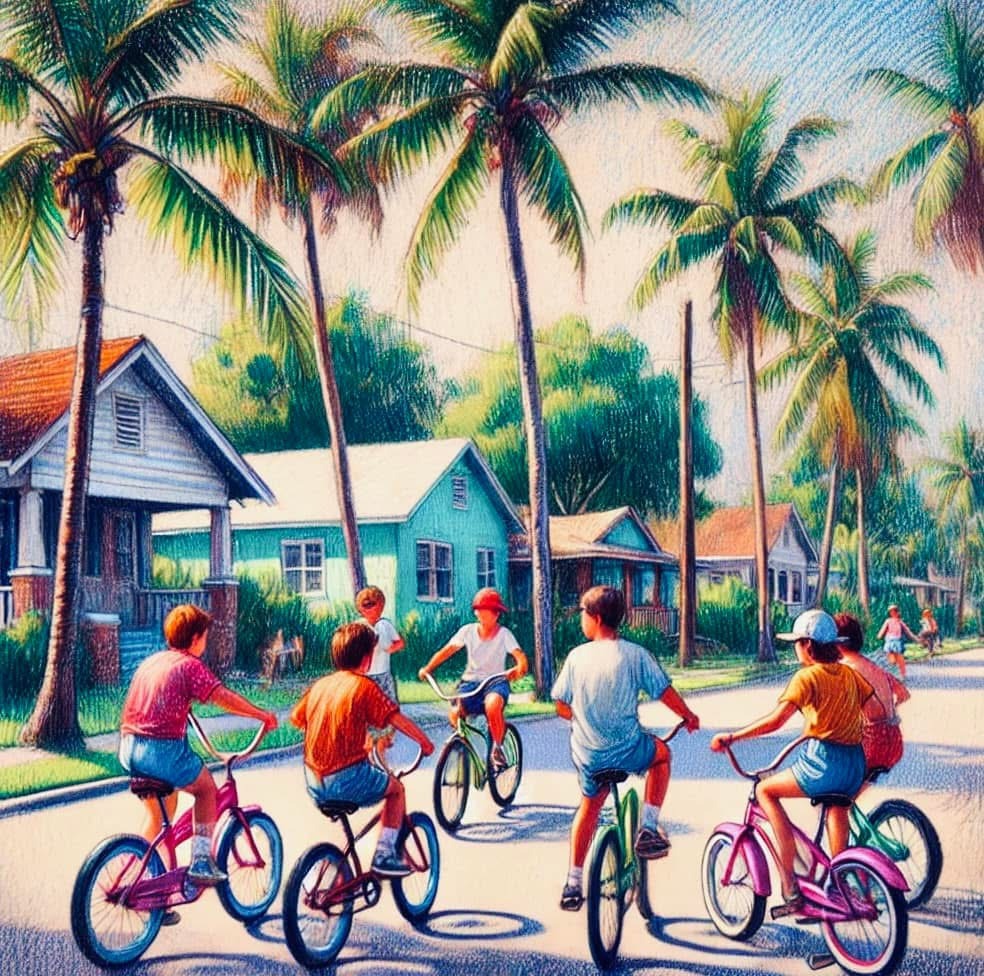
I think my love of bicycles goes all the way back to growing up. For kids, a bicycle was our first real taste of independence. Long before we could drive, a bike let us disappear down the street, find our friends, explore another neighborhood, and turn an ordinary afternoon into an adventure. Growing up around South Florida, with warm weather and palm-lined streets, there was almost always somewhere to ride all year long.
That feeling never really left me. As I got older, biking became much more than a way to get around. It became another part of the same outdoor life that eventually included hiking, backpacking, climbing, canoeing, kayaking, and traveling. A bicycle was simple. Put some air in the tires, grab a water bottle, and go.
Unlike hiking, paddling, or backpacking, biking rarely left me with many photos of myself. When you are hiking, you stop at a summit. When you are paddling, you drift beside a beach or sandbar. On a bike, you just keep moving. Both hands are busy, the trail keeps coming at you, and the best moments are usually over before anyone thinks about taking out a camera. So the few biking photographs I have carry a lot of memories.
Growing up on two wheels
When I think about bicycles, I first think about being a kid. We did not need organized rides, trail maps, GPS tracks, or expensive gear. We simply got on our bikes and rode. A bicycle expanded a kid's world enormously. Suddenly the next street, the next neighborhood, the beach, a friend's house, or some place we had never bothered to explore was within reach. There was only one rule - be home by dinnertime!
Those childhood rides were probably some of my earliest lessons in the kind of freedom I would spend the rest of my life chasing. I have always loved traveling under my own power. Walking into the mountains, paddling down a river, climbing a rock face, or pedaling a bicycle all have something in common: you feel every mile and you earn the view.
Mountain bikes changed everything
Later, in the 1980s, mountain bikes opened up an entirely different world. A road no longer had to be paved. Trails, dirt roads, woods roads, old logging routes, and rough country all became possibilities. That suited me perfectly. I was never especially interested in doing the same loop over and over just for the mileage. I wanted to see where something went.
By the time I was deeply involved in hiking and climbing in New England, biking fit naturally into my life. I could cover much more ground than I could on foot and still be completely immersed in the woods and mountains. The knobby tires, low gears, and rugged frames of mountain bikes made it possible to wander for hours.
For me, the best part of a bicycle was never the bicycle itself. It was where the bicycle could take me.
Taking the bike West
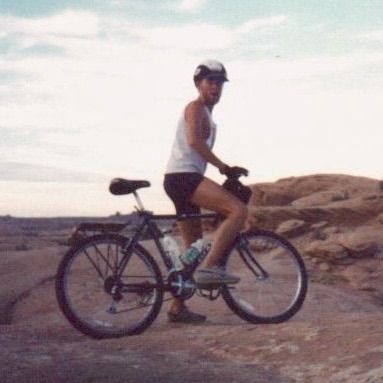
My bikes often traveled with me. On western trips, if I could get a bicycle onto the car, it came along. The West had already become a huge part of my life through climbing, backpacking, hostels, hot springs, desert wandering, and long road trips. Adding a bike simply gave me another way to explore.
I loved the scale of the western landscape. Red rock, open desert, slickrock, huge skies, and roads that seemed to disappear forever made riding feel completely different from New England. On foot, a distant formation might be an all-day objective. On a bike, the entire scale of the day changed. I could cover miles while still moving slowly enough to notice the rock, the wind, the heat, and the changing light.
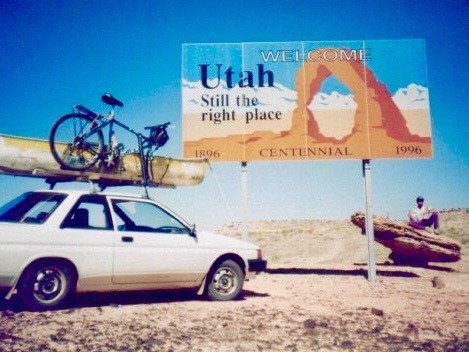
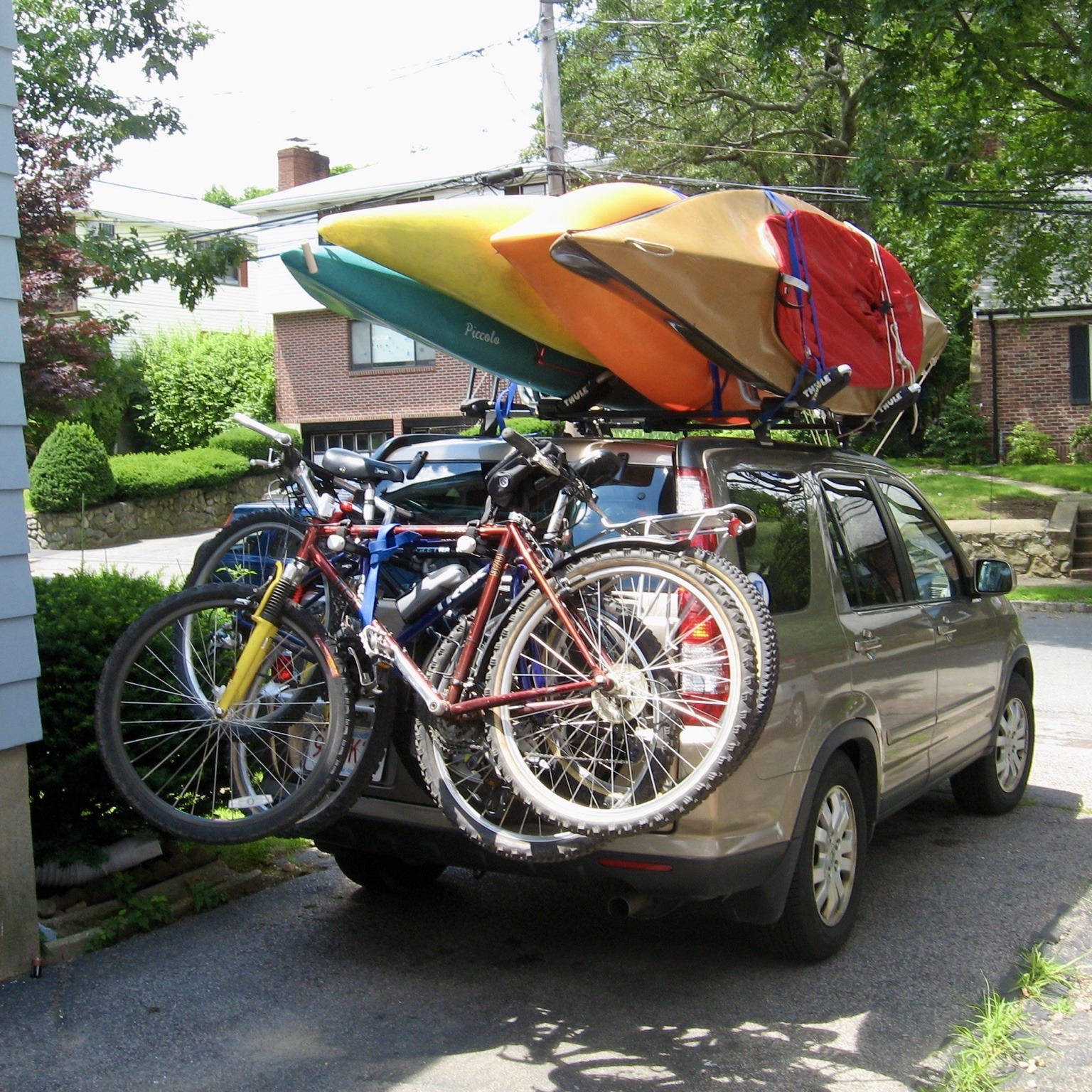
The photo at the Utah sign says a lot about the way I traveled. The car was not simply transportation. It was the base camp. Bikes went on top. Boats went wherever I could strap them. Climbing gear, camping equipment, and whatever else I thought I might use came along. I even stored firewood and tons of other stuff in the canoe on the roof. I never wanted to arrive somewhere beautiful and realize I had left the right toy at home.
Winter mountain biking
For a few years, I became fascinated with mountain biking in winter. This was long before fat bikes became common. We were riding regular mountain bikes with knobby tires, and the trick was finding the right snow conditions.
Once snowmobiles came through and packed down the trails, especially after slightly wet snow, the riding could be excellent. The snowmobile traffic compressed the snow into a firm track through the mountains and woods. If the temperature and snow were right, the knobby mountain bike tires had surprisingly good traction.
I could ride those trails for hours and hours. It was a completely different winter experience from hiking, snowshoeing, or climbing. You were moving quickly through a frozen landscape, following these narrow packed corridors deep into the woods. The conditions could change, of course, and fresh snow or a thaw could completely alter a trail, but when everything came together it was fantastic.
Wood screws, knobby tires, and frozen lakes
For a couple of winters, I even got into riding mountain bikes on frozen lakes. We did not go out and buy expensive factory-made studded tires. We bought wood screws.
We would take the tire off the rim and drive screws from the inside of the tire outward through the knobs. Then we put the tire back together so the screw heads were protected from the tube. The screw tips stuck out through the tread and bit directly into the ice.
The traction was incredible. With enough screws in the right places, you could actually race on glare ice. The bike would lean into turns and the tires would hold in a way that made no sense until you experienced it. It was one of those slightly crazy outdoor experiments that worked far better than I ever expected.
There was something wonderfully absurd about it: a bunch of us out on a frozen New England lake, racing bicycles fitted with homemade screw-studded tires. But those were exactly the kinds of adventures I loved. Somebody had an idea, we figured out how to make it work, and then we went outside and tried it.
The last big weekend before the accident
One biking memory has stayed with me because of what happened only a few days later. The weekend before the big car accident that shattered my hip and pelvis in 2002, I spent all day Sunday biking on several different frozen lakes around Ashburnham. So many skaters and ice fisherman were saying 'WTF?" as I sped past them!
The accident happened on a Thursday. At the time, of course, I had no idea that the previous weekend would become such a dividing line in my life. I had simply been outside doing what I always did — moving from place to place, finding good ice, riding, exploring, and making a day out of it.
Then came the head-on collision, the shattered acetabulum, eleven pelvic breaks, two plates, twelve screws, a twelve-and-a-half-hour surgery, months in a nursing home, and a very long recovery. In an instant, the kind of biking, climbing, and hard physical adventure that had been normal for me was no longer something I could take for granted. The surgeons and medical staff made that painfully clear to me. "Those days are over" was what they were trying to tell me.
I sometimes think back to that weekend on the lakes. There is no dramatic photograph of the day and no reason I would have thought to document it carefully. It was just another adventure. That is part of what makes the memory so powerful now. We almost never know when an ordinary day is going to become the last day of a particular chapter of our lives. I'm pretty sure that's why I've completely quit road biking in Florida; just way too dangerous for me nowadays.
Biking was part of everything else
I have never been very good at separating outdoor activities into neat categories. Biking overlapped with travel. Travel overlapped with climbing. Climbing trips became backpacking trips. Paddling gear and bicycles ended up on the same vehicle. If there was room for one more boat or bike, I usually found a way to strap it on.
That photograph of the vehicle loaded with kayaks and bikes makes me laugh because it is such an accurate picture of my life. I have owned a lot of boats, carried bicycles all over the place, and spent decades arranging gear on roofs and racks. Other people might see a ridiculously overloaded vehicle. I see options.
That has always been the point. If the river looked good, paddle. If the trail looked interesting, ride. If the mountain was calling, hike or climb. I never wanted the outdoors to be a single sport.
Boston, Cape Cod, the Islands, and everyday riding
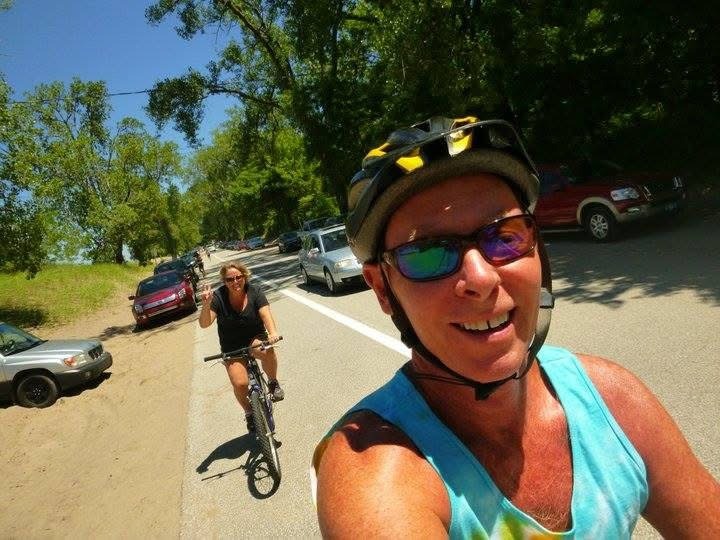
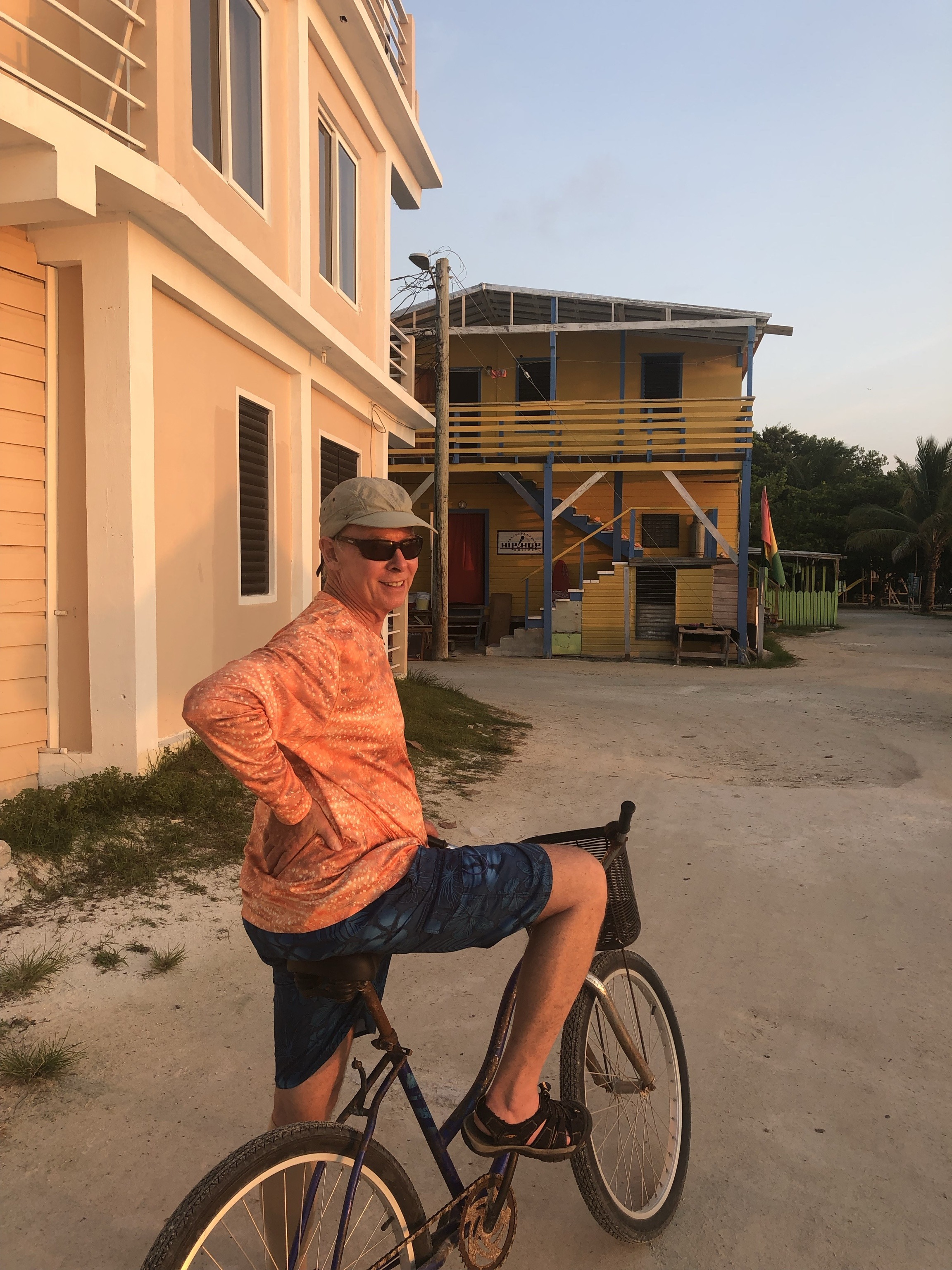
For years, biking was also part of ordinary life around Boston, Cape Cod, Martha's Vineyard, and Nantucket. Those places were perfect for exploring by bicycle. Around Boston, a bike could get you through neighborhoods, along river paths, across town, and into places where a car was more trouble than it was worth. It was transportation, exercise, and adventure all at once. Bikes and pedestrians generally have priority over vehicles in most of New England, so I took full advantage of cycling every chance I got, sometimes for eight hours at a time!
Cape Cod was another kind of biking paradise. The Cape always felt made for slow exploring: salt air, sandy roads, beach towns, ponds, pine woods, seafood stops, and little side roads that invited you to keep going. Some of the best rides were not about distance at all. They were about the feeling of being outside all day, moving through one beautiful place after another.
Martha's Vineyard and Nantucket had that same magic. Both are incredibly bike-friendly. On the islands, a bicycle made everything feel closer and more personal. You could ride past beaches, cottages, harbors, old stone walls, and open fields without being sealed inside a car. The pace was just right. You saw more, smelled more, and felt more connected to the place.
Those island and Cape rides were another version of the same freedom I felt as a kid. A bike made the world bigger, but it also made it more intimate. You could wander, stop, turn around, get ice cream, find a beach, or just follow a road because it looked interesting.
Biking with Bernie and the boys
Some of my favorite biking memories were with Bernie and her boys from 2004 to 2010. They got into biking too, and that opened up a whole new way for us to share time outside together. There is something especially fun about watching kids discover that a bicycle is not just a toy. It is freedom. It is transportation. It is adventure. It is the beginning of being able to go places under your own power.
Instead of the usual TV and videogames all day, whenever I said "I'm going for a bike ride, does anyone want to go?", everyone's hand went up. We rode together, worked on bikes together, and built a lot of family memories around those rides. Like so many outdoor activities, biking was a way to get everyone out of the house and into the world. The boys could burn off energy, gain confidence, and learn how satisfying it feels to move through a landscape using your own legs.
Those years reminded me of my own childhood. Biking was not complicated. It did not need to be expensive or fancy. It was simply something we could all do together, and the more they rode, the more they understood why I had loved it for so long.
Riding to school and fixing bikes with Dad
Long before mountain bikes, western trips, and frozen-lake adventures, bikes were simply how we got around. We rode our bikes to elementary school in Fort Lauderdale every day. That was normal. It was part of growing up, part of being independent, and part of learning how to take care of yourself and your things.
With six kids in the family, bicycles were not just recreation. They were necessary equipment, and they were always breaking, squeaking, going flat, bending, or needing adjustment. On Saturdays and Sundays, I often helped my dad repair the bikes. There were tires to patch, chains to oil, seats and handlebars to adjust, brakes to fiddle with, and wheels that always seemed to need attention.
Those weekend repair sessions taught me a lot. I learned that if you used something hard, you had to maintain it. I learned that bicycles were simple enough to understand but complicated enough to keep you busy. Most of all, I learned the satisfaction of fixing something with your own hands and then riding it again.
My first mountain bike
Buying my first mountain bike changed the way I looked at bicycles. It was not just a bike for streets or school or getting around town. It was a bike that seemed to say, "Go ahead. Try that trail. See where that dirt road goes."
After that first mountain bike in 1990, I had a lot of different mountain bikes over the years. Some were better than others, but every one of them carried a piece of my outdoor life. I was always working on them, adjusting them, replacing parts, fixing flats, tuning gears, messing with brakes, and trying to keep them ready for whatever ride came next.
That mechanical side became part of the fun. A mountain bike was not just something you bought and ignored. It was something you learned, maintained, modified, and trusted. When you were miles from the car on a rough trail, all those little repairs and adjustments mattered.
Looking back, it makes sense that I loved working on bikes. I had started young, helping my dad keep the family bicycles going. Later, I was doing the same thing for my own bikes, only the rides had gotten bigger, rougher, colder, sandier, rockier, and a lot more adventurous.
Always another bike, always another ride
For a long stretch of my life, there was always another bike around. Sometimes there were several. Sometimes way too many! Mountain bikes, road bikes, older bikes, bikes being repaired, bikes waiting for parts, and bikes leaning somewhere because I had just come back from a ride or was getting ready for the next one.
That is how a lot of my outdoor life worked. Gear was not collected to sit around. It was there because it opened doors. A bicycle meant I could ride across town, explore the Cape, head into Boston, wander around an island, follow a woods road, cross packed snow, or glide across a frozen lake on homemade studded tires.
In that sense, every bike was really a key. It unlocked another kind of day.
Still rolling
After the big car accident in 2002, biking was never quite the same part of my life that it had been before. My body had changed, and as all the doctors warned me, I had to change with it. Climbing eventually disappeared from my life, hard hiking became more complicated, and some of the rougher biking adventures belonged to an earlier chapter.
But I never lost the instinct that began when I was a kid on a bicycle: go outside and see where you can get to under your own power. These days that urge is just as likely to put me in a kayak or on a paddleboard. The equipment changes. The body changes. The places change. The curiosity is exactly the same.
My biking years did not produce thousands of photographs, but they left me with vivid memories: palm-lined streets as a kid, mountain trails, packed snowmobile routes winding through New England woods, homemade studded tires biting into lake ice, bicycles strapped to cars headed West, red rock under my wheels, and the wonderful feeling of looking down a road or trail and wondering where it goes.
Life is short. Sometimes the best plan really is to get on the bike and find out what is around the next bend.