TIM DRISKELL’S ADVENTURES
Hillsborough River · May 21, 2025

Seventeen Runs

Eight twisting miles through the shaded floodplain with Wendy, Bob, Gary, Thomas and friends.

Seventeen Runs is the kind of place that makes a paddling day feel like an expedition. The Hillsborough River divides, bends and squeezes between cypress, palms and fallen timber, then opens briefly before drawing the boats back into the forest. On this warm May day, our group stayed together through the turns, shallows and narrow passages—and shared one especially memorable encounter with a large alligator resting along the bank.

DateMay 21, 2025
DistanceAbout 7.9 miles
RiverHillsborough River
PaddlersWendy, Bob, Gary, Thomas & friends

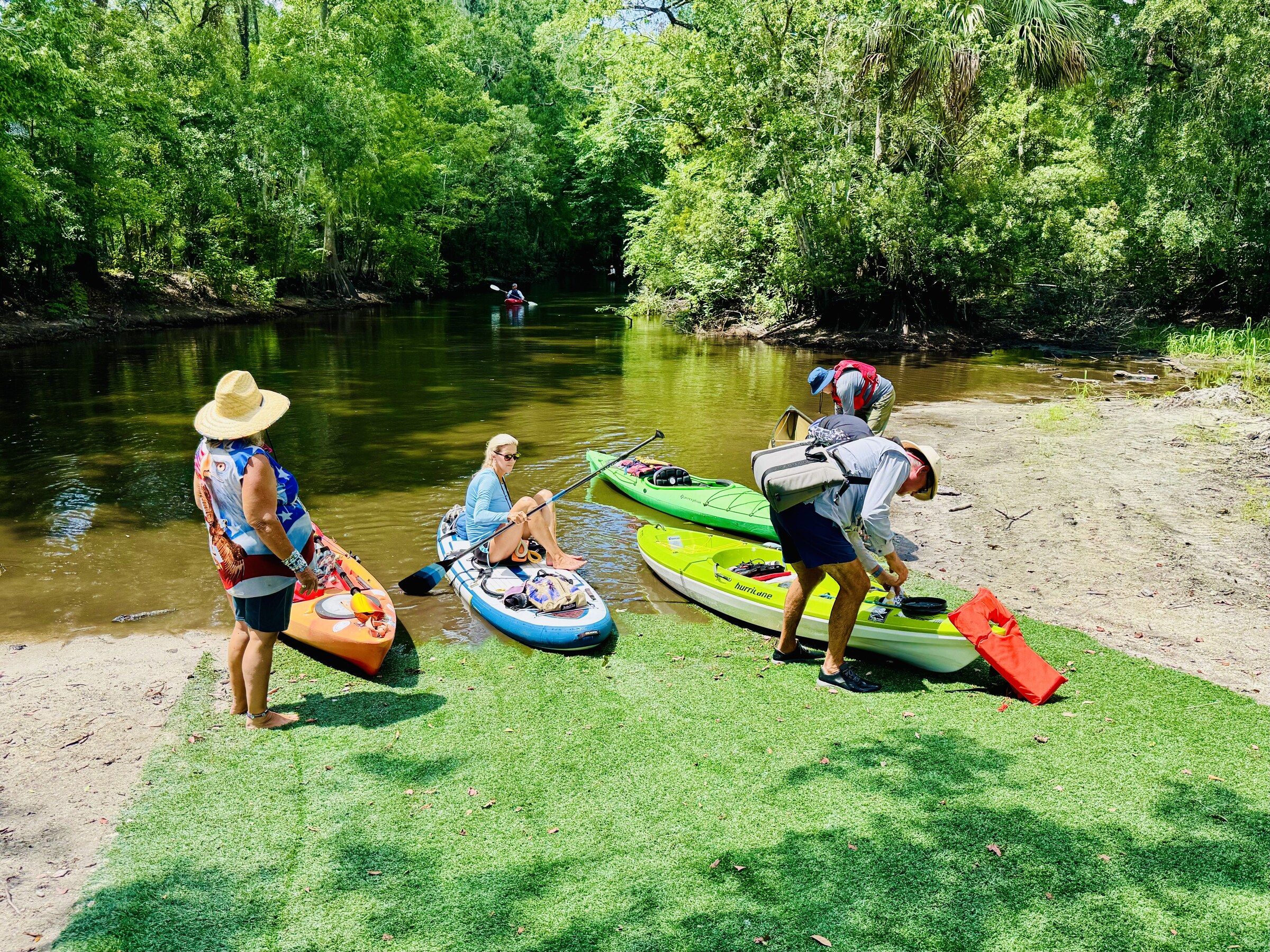
Gathering at the river

The day began in bright Florida sun as boats came off the vehicles and everyone gathered at the water. Once the group was afloat, the developed edge quickly disappeared behind us. Live oaks arched over the river and the first bends gave us a preview of the green corridor ahead.
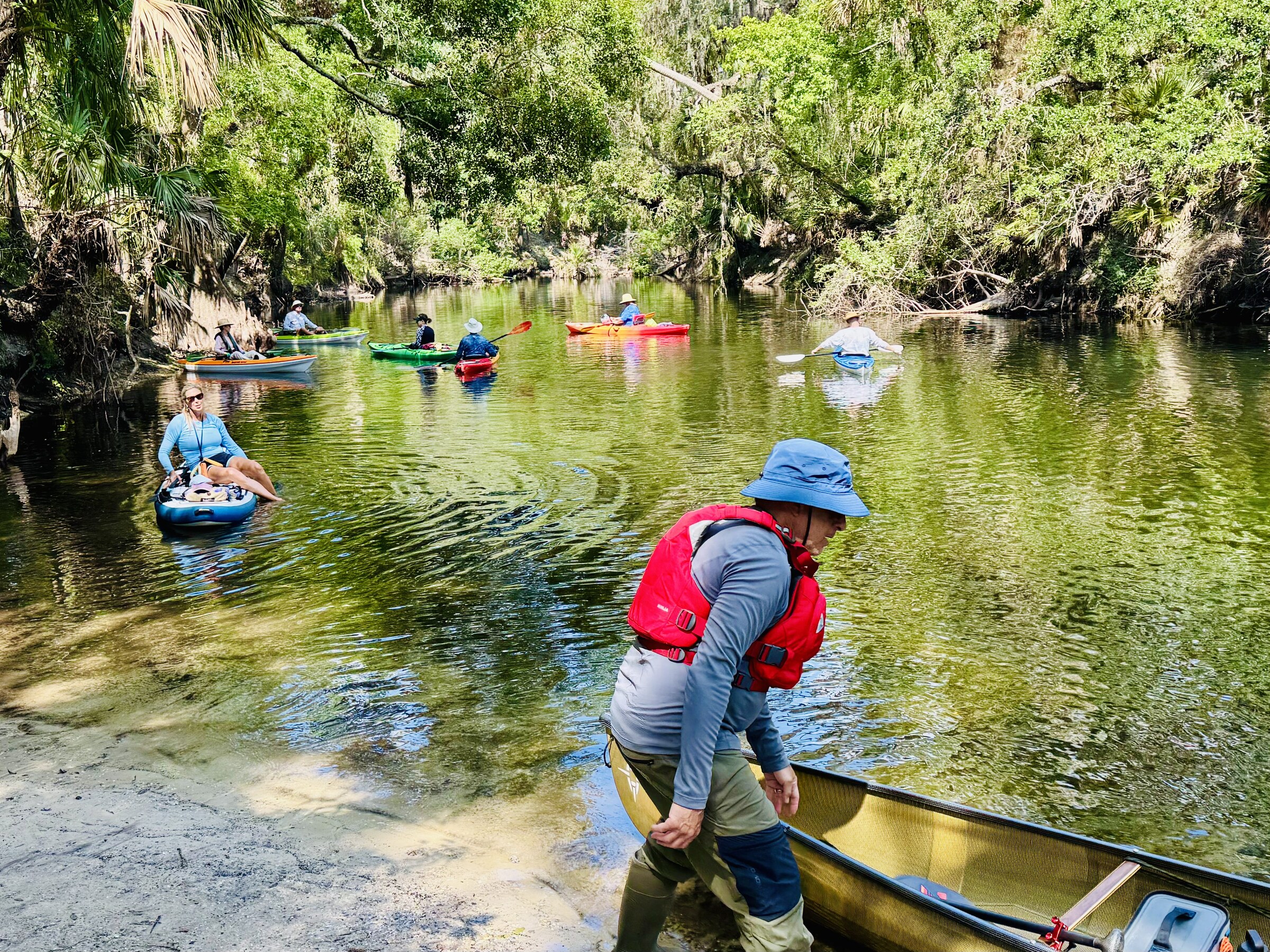
Paddlers launching boats at the edge of the Hillsborough River
Launching into clear, shaded water at the start of the day.
A colorful group of kayaks gathered near the launch
The group settles into boats before heading downstream.
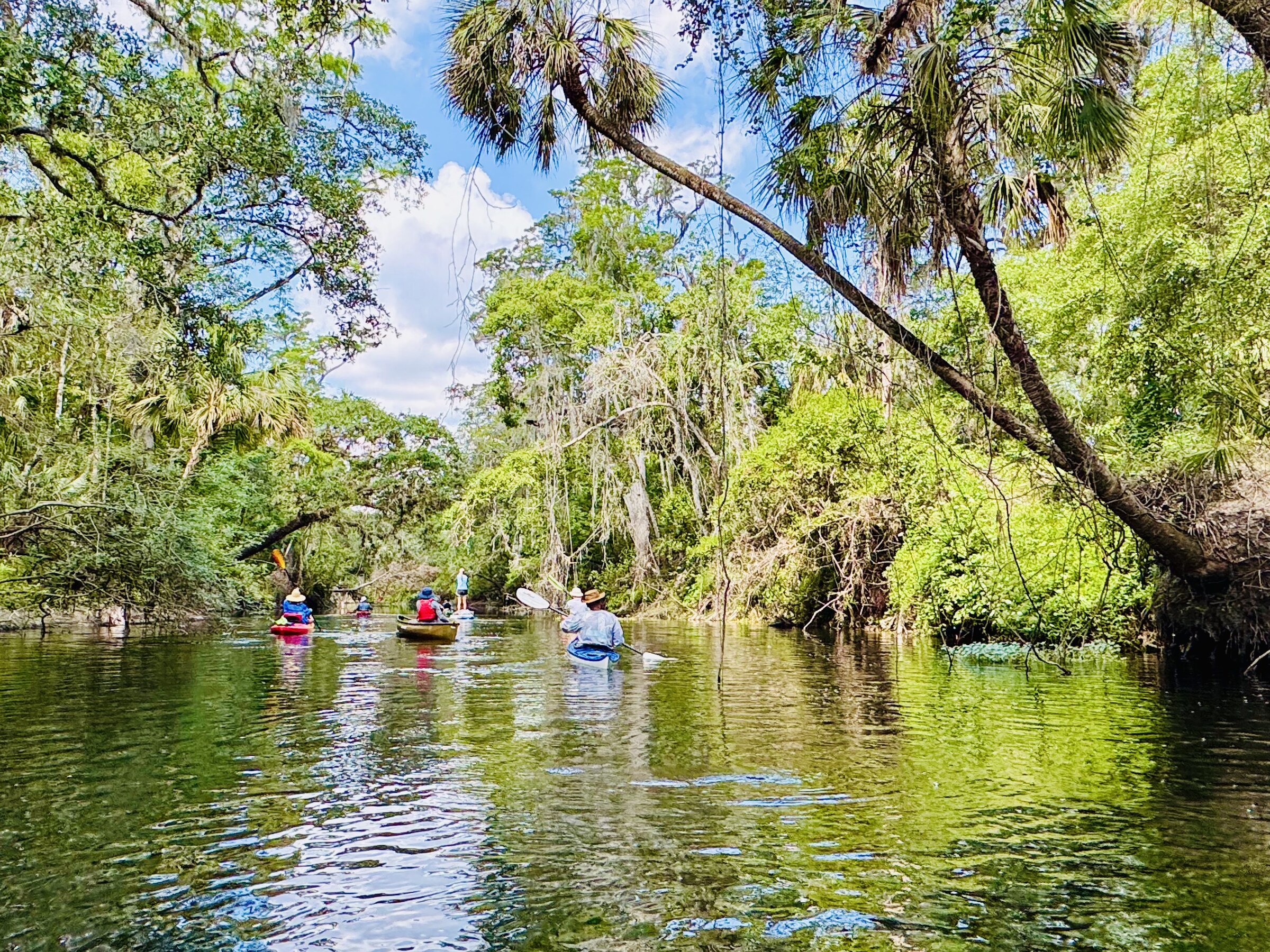
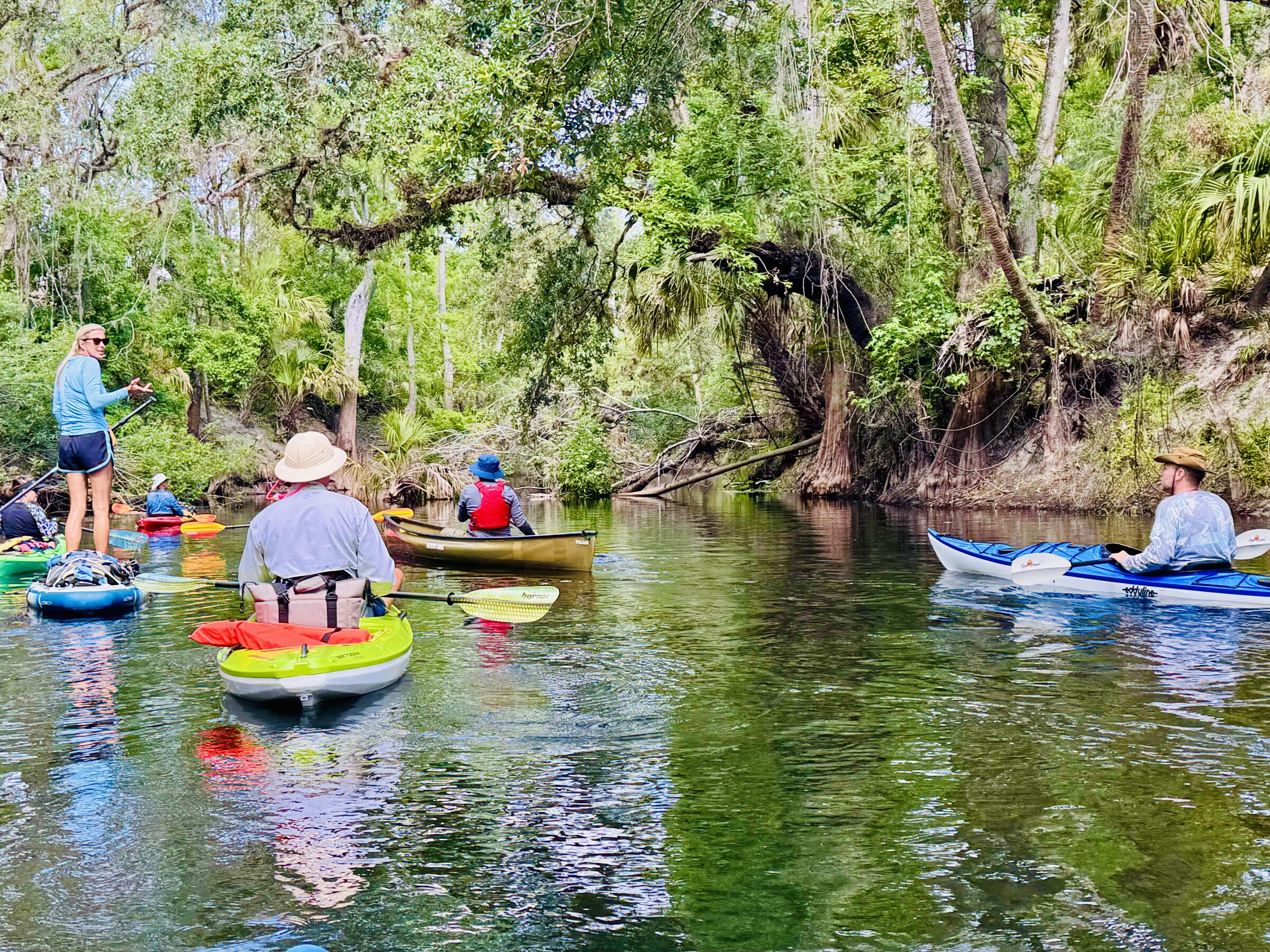
Kayakers traveling beneath live oaks on the Hillsborough River
Moving into the green tunnel beneath old live oaks and palms.
Paddlers spread across the wooded river
Easy water and plenty of room early in the trip.
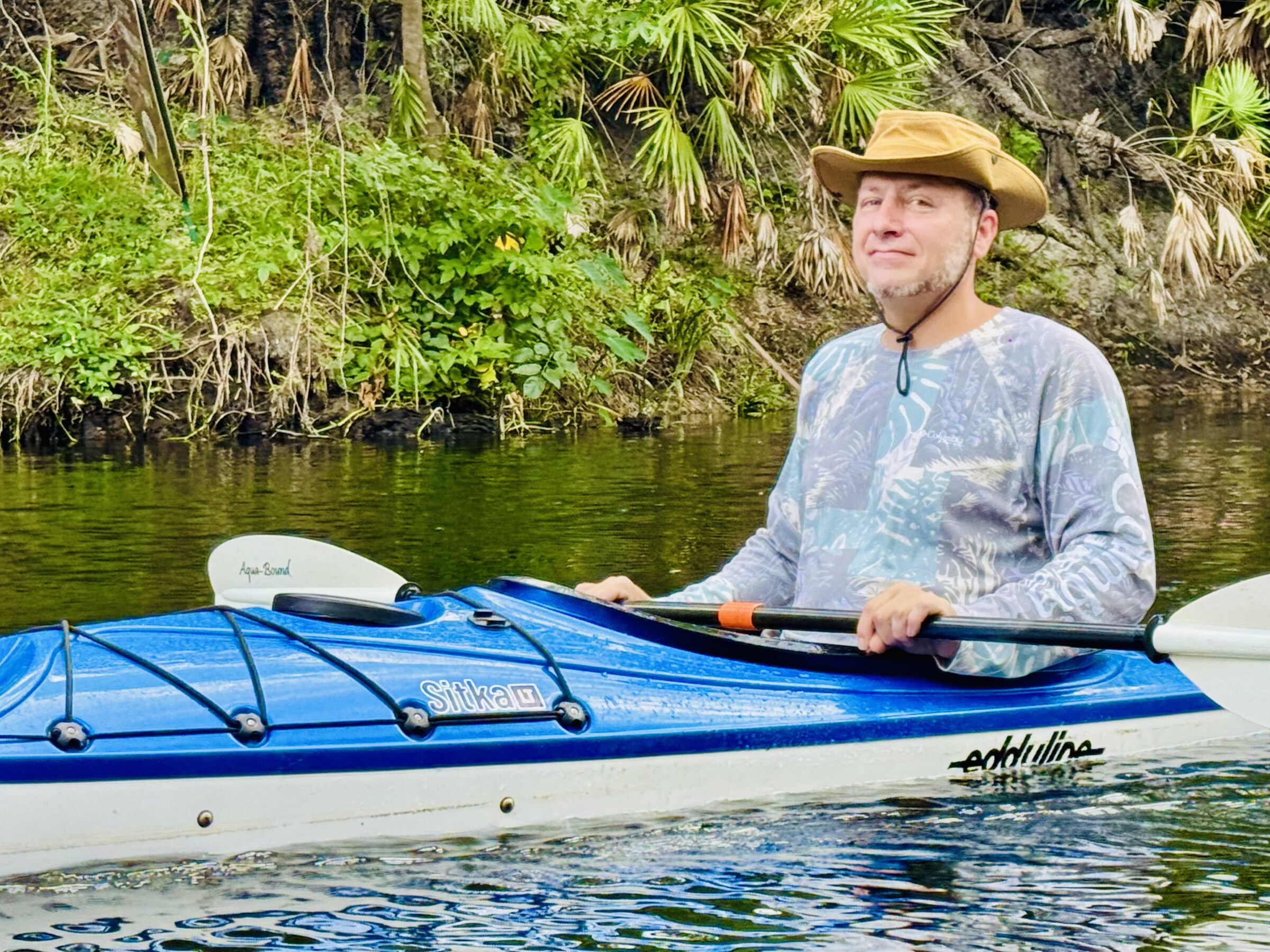
Paddler smiling from a blue kayak
A relaxed start before the river begins to tighten.
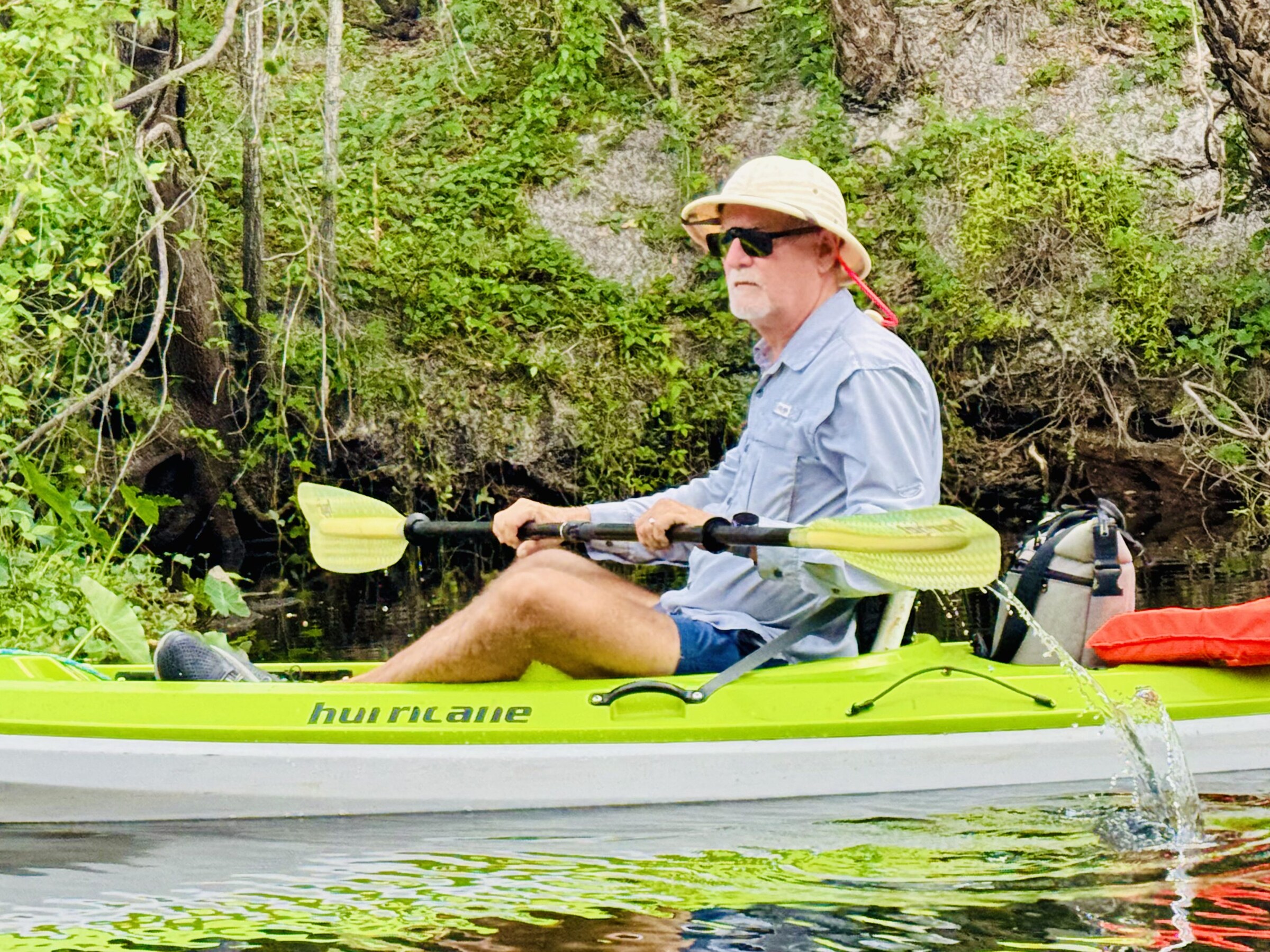
Paddler wearing a hat in a green kayak
Good company on a beautiful stretch of river.
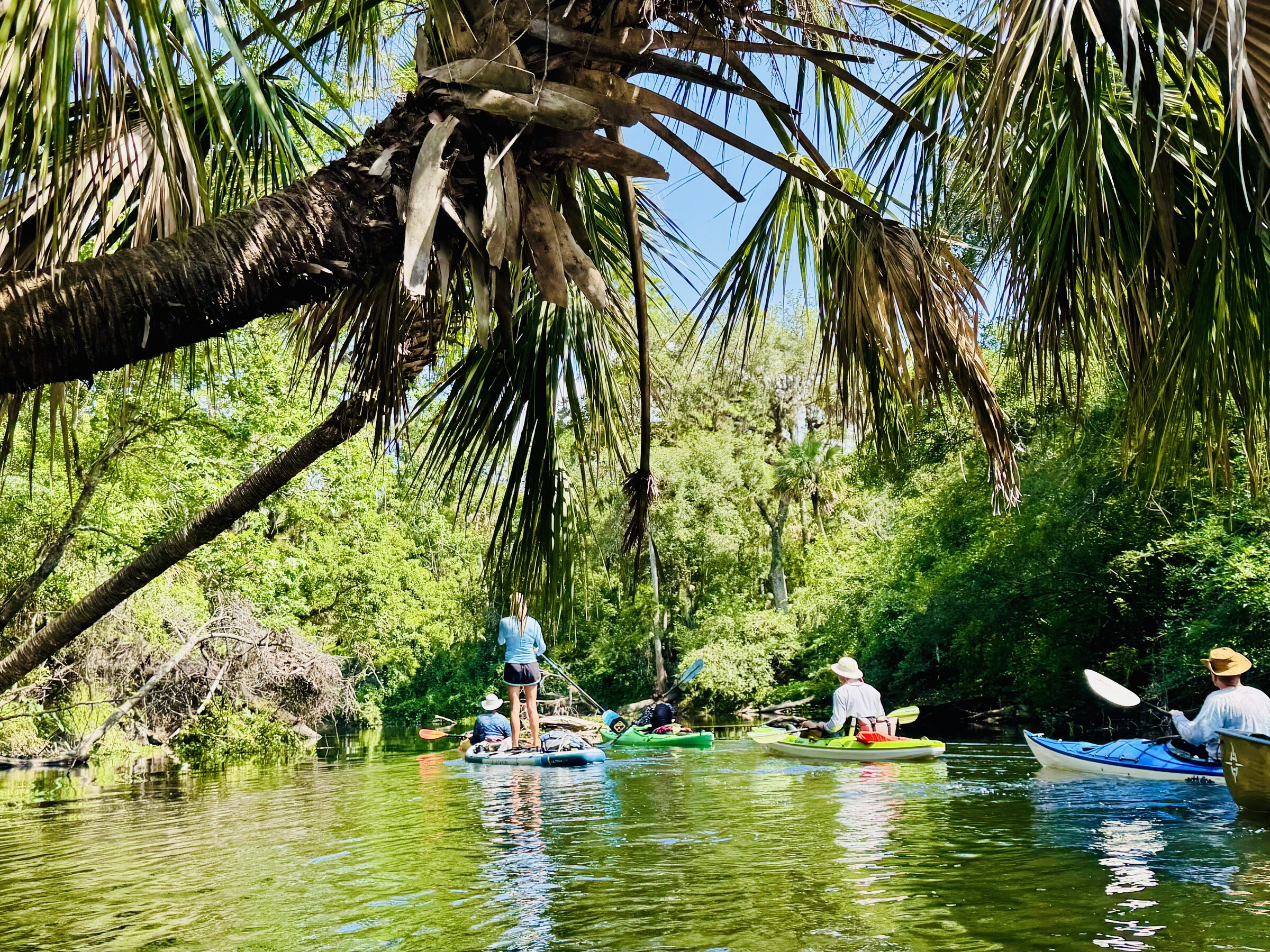
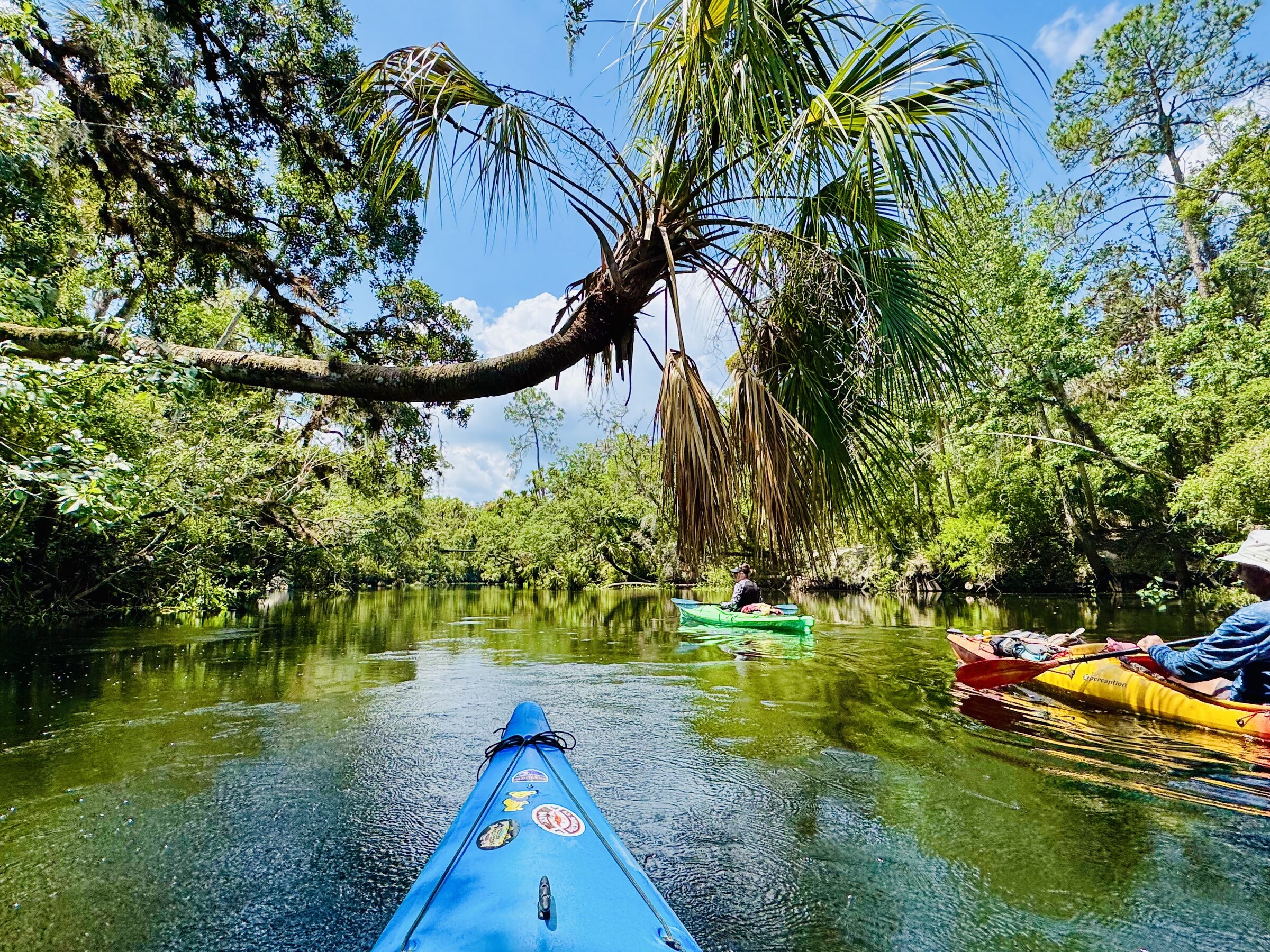
Kayaks passing beneath overhanging palm fronds
Palms lean over the dark, reflective water.
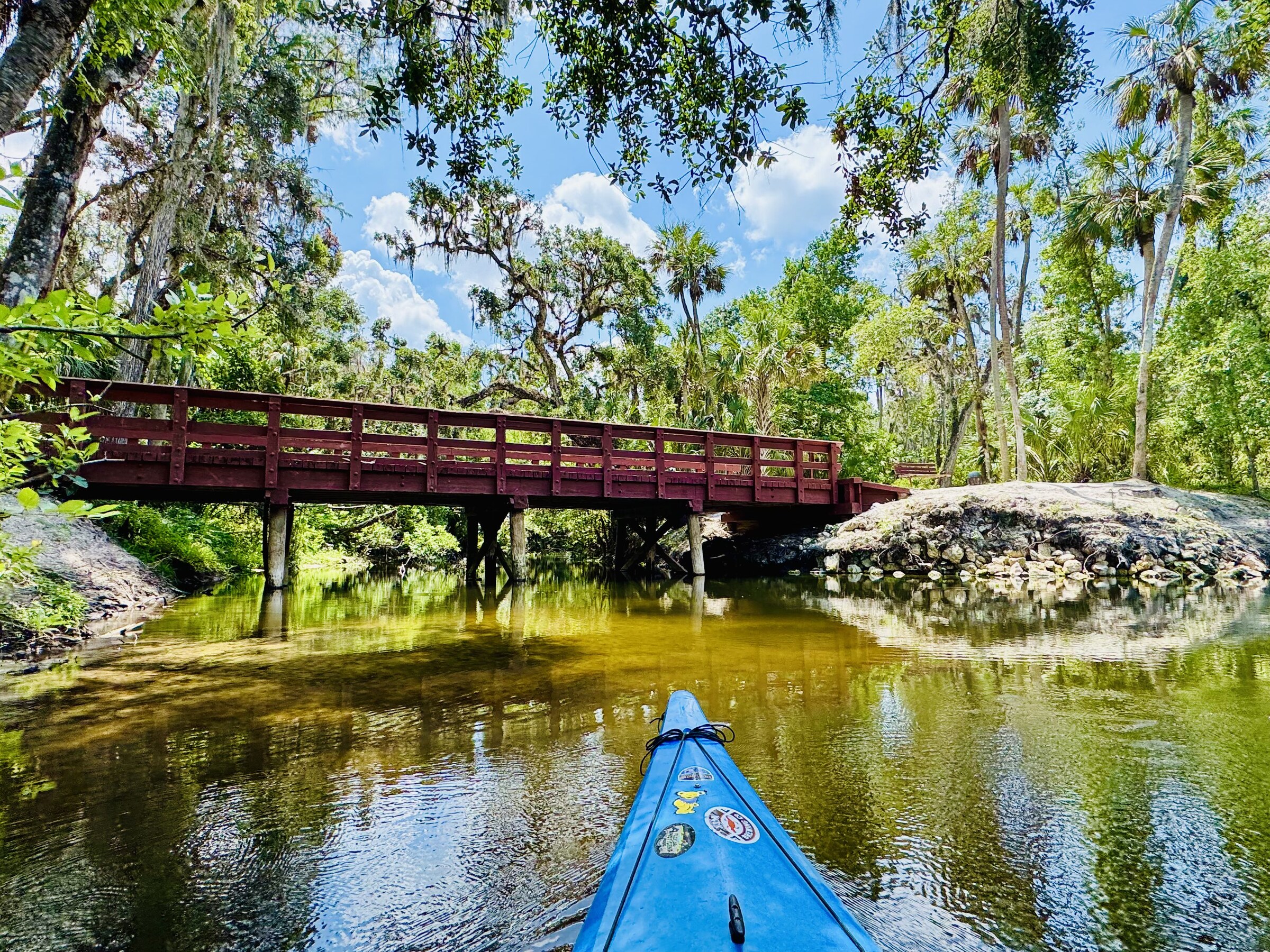
A red bridge crossing the river ahead of a blue kayak
Passing beneath one of the few unmistakable landmarks along the route.

Into Seventeen Runs

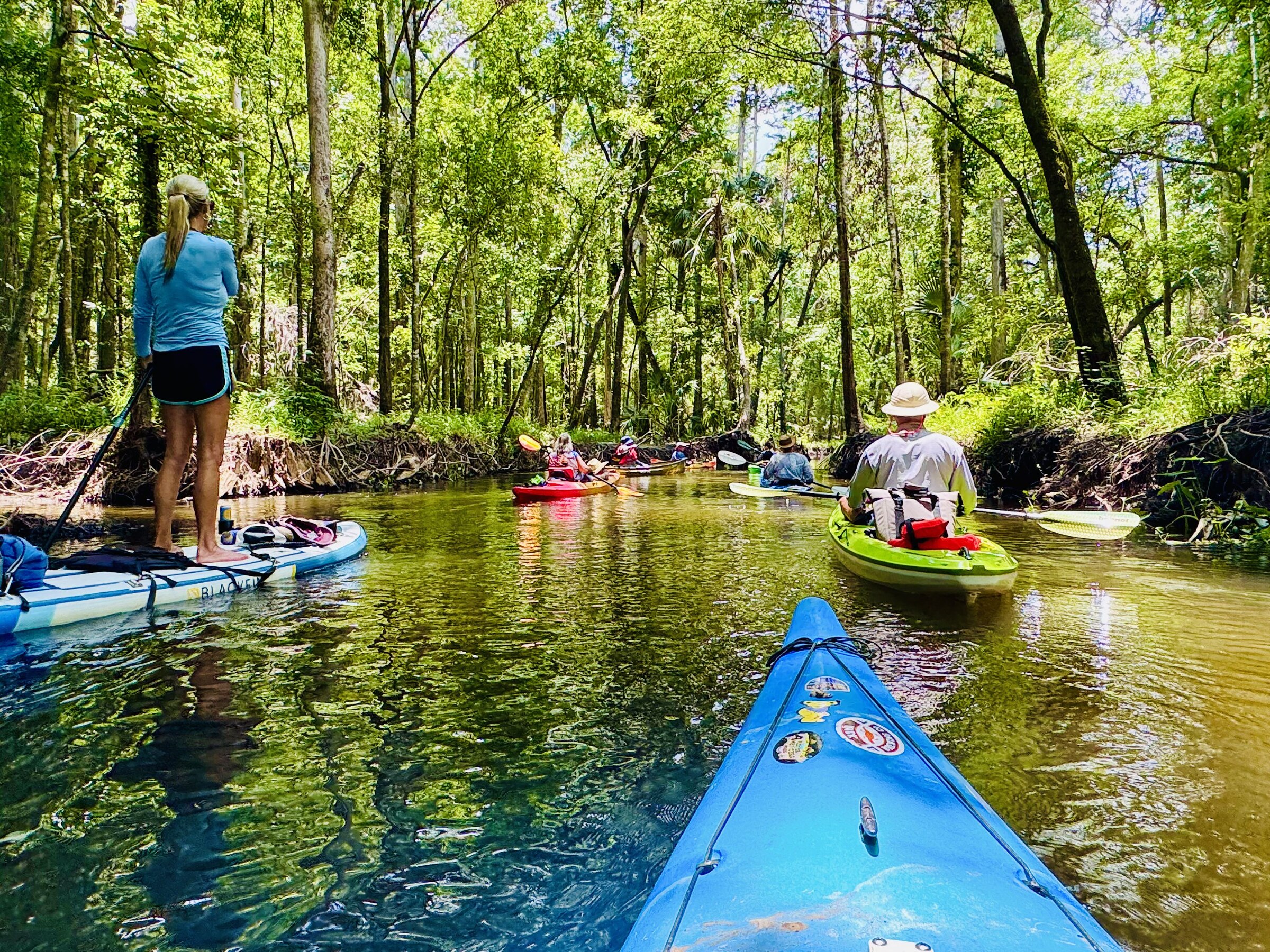
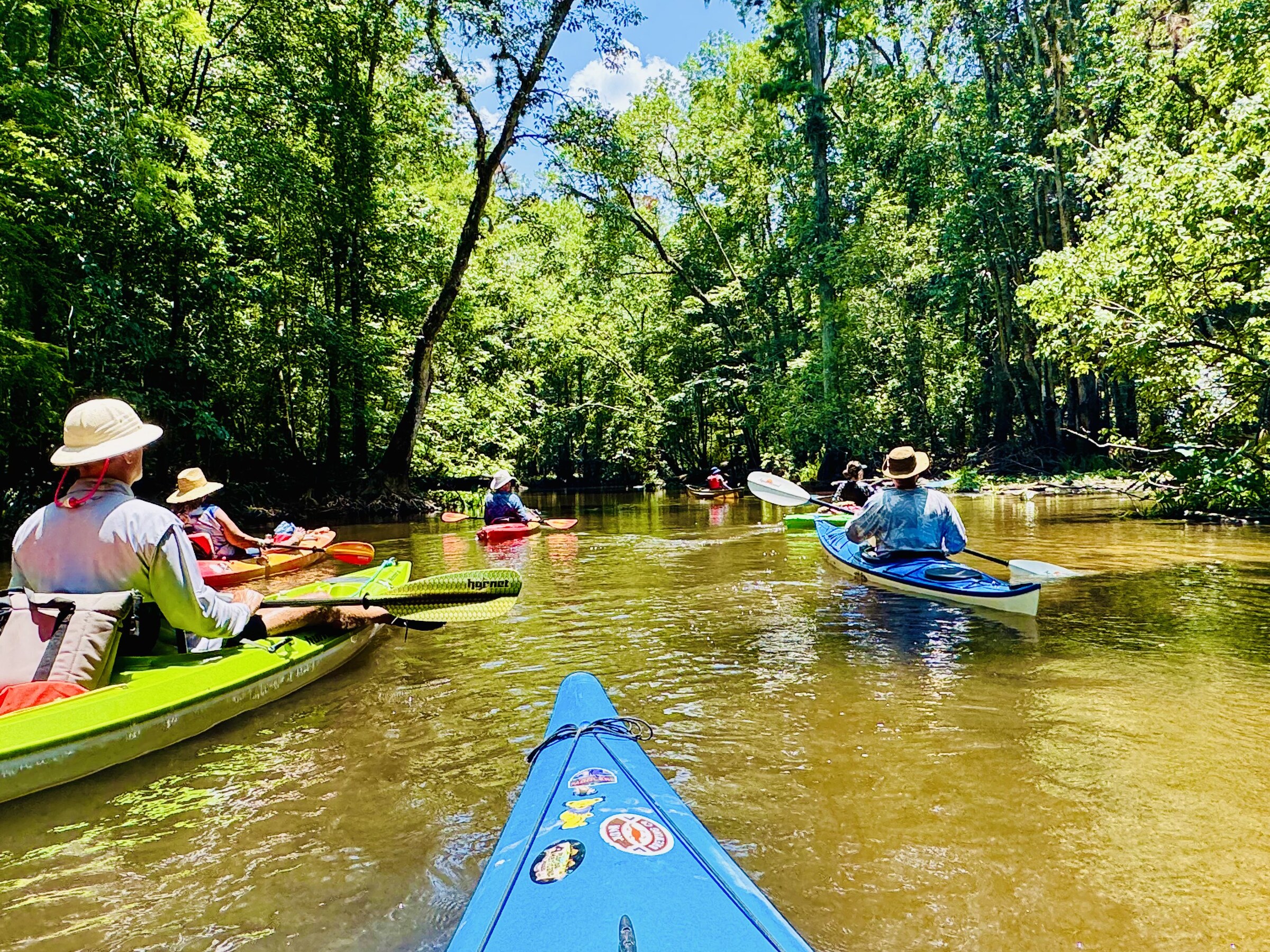
In the upper reaches near Hillsborough River State Park, the river is wide, deep and slow. Farther downstream, as it enters the Seventeen Runs section, its character changes dramatically. The channel narrows considerably—sometimes to only about 10 feet wide—and the current moves much faster than it does upstream. The later photographs from this paddle show that change clearly: shallow, swiftly moving water over a sandy and gravelly bottom, hemmed in by the floodplain forest.

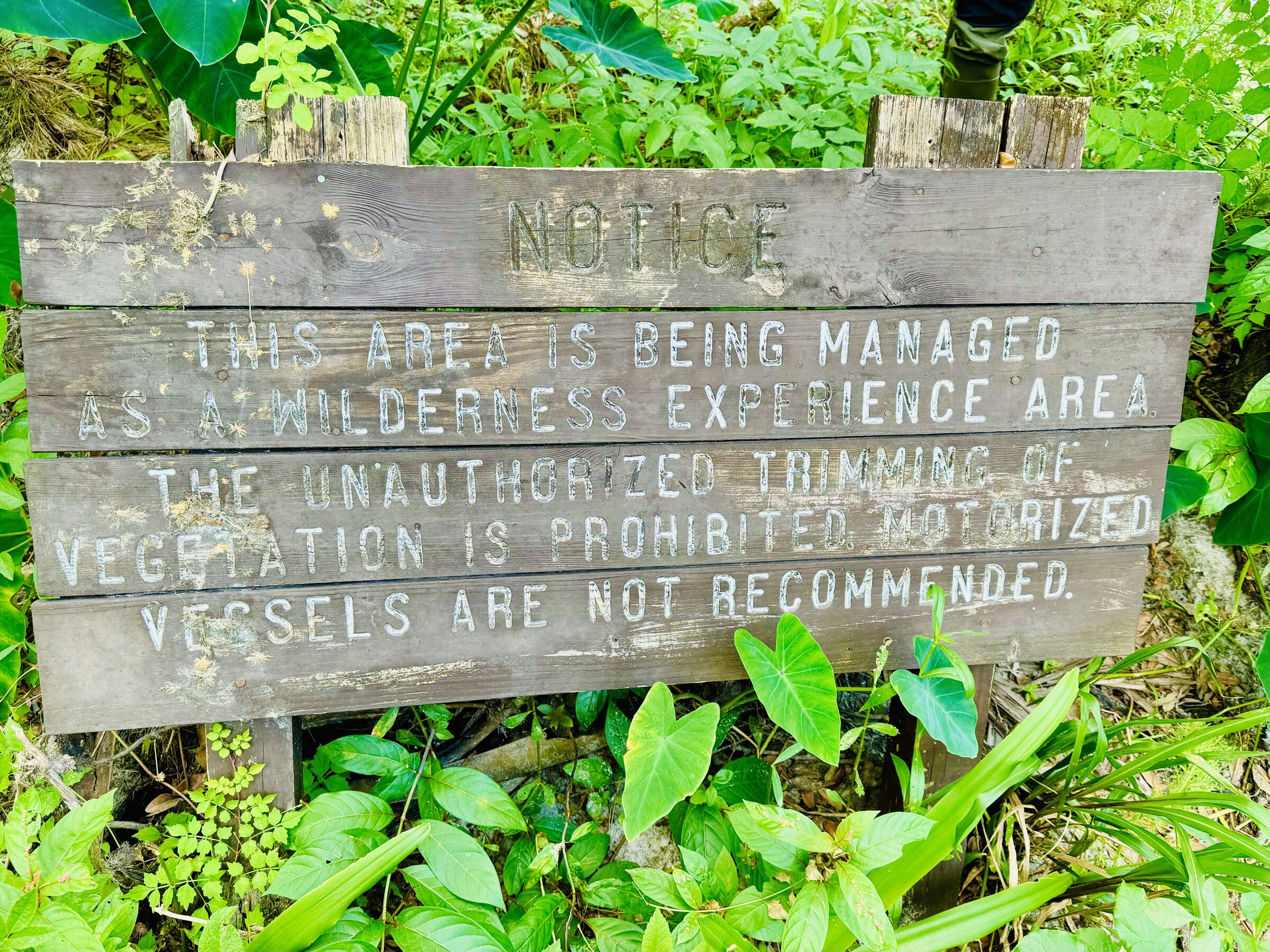
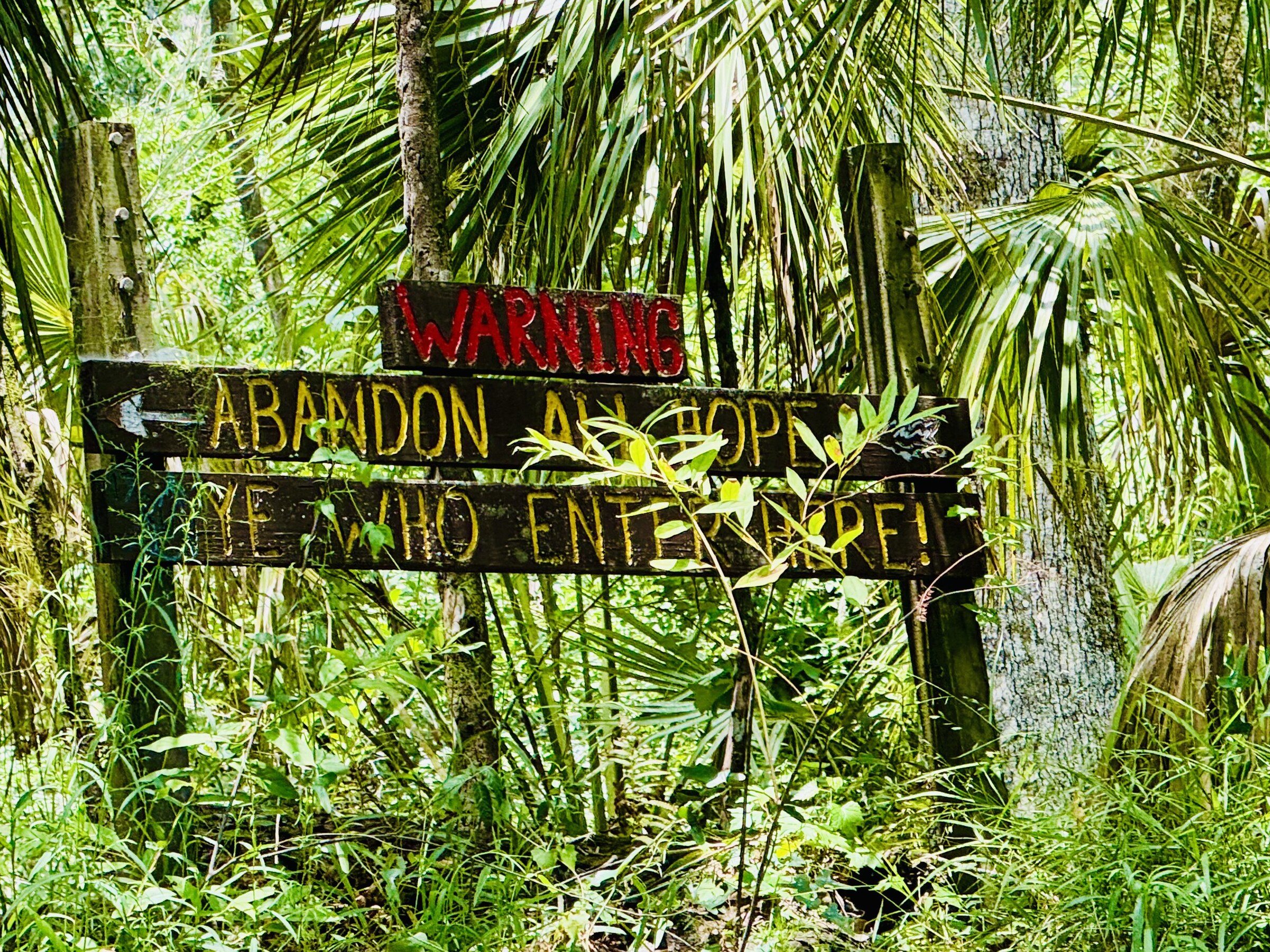
Beyond the broad river, navigation became more interesting. The route slipped into a maze of side channels where the current, the most open water and the group ahead offered the best clues. Old signs along the banks added to the feeling of entering a place set apart from everyday Florida.

May is normally the final part of the dry season, just before the summer rains begin, so the Hillsborough River is often near its lowest level. That was especially evident on May 21, 2025. Later in the rainy season, higher water spreads far out into the surrounding floodplain, giving alligators, wading birds and other wildlife a much larger area in which to disperse.
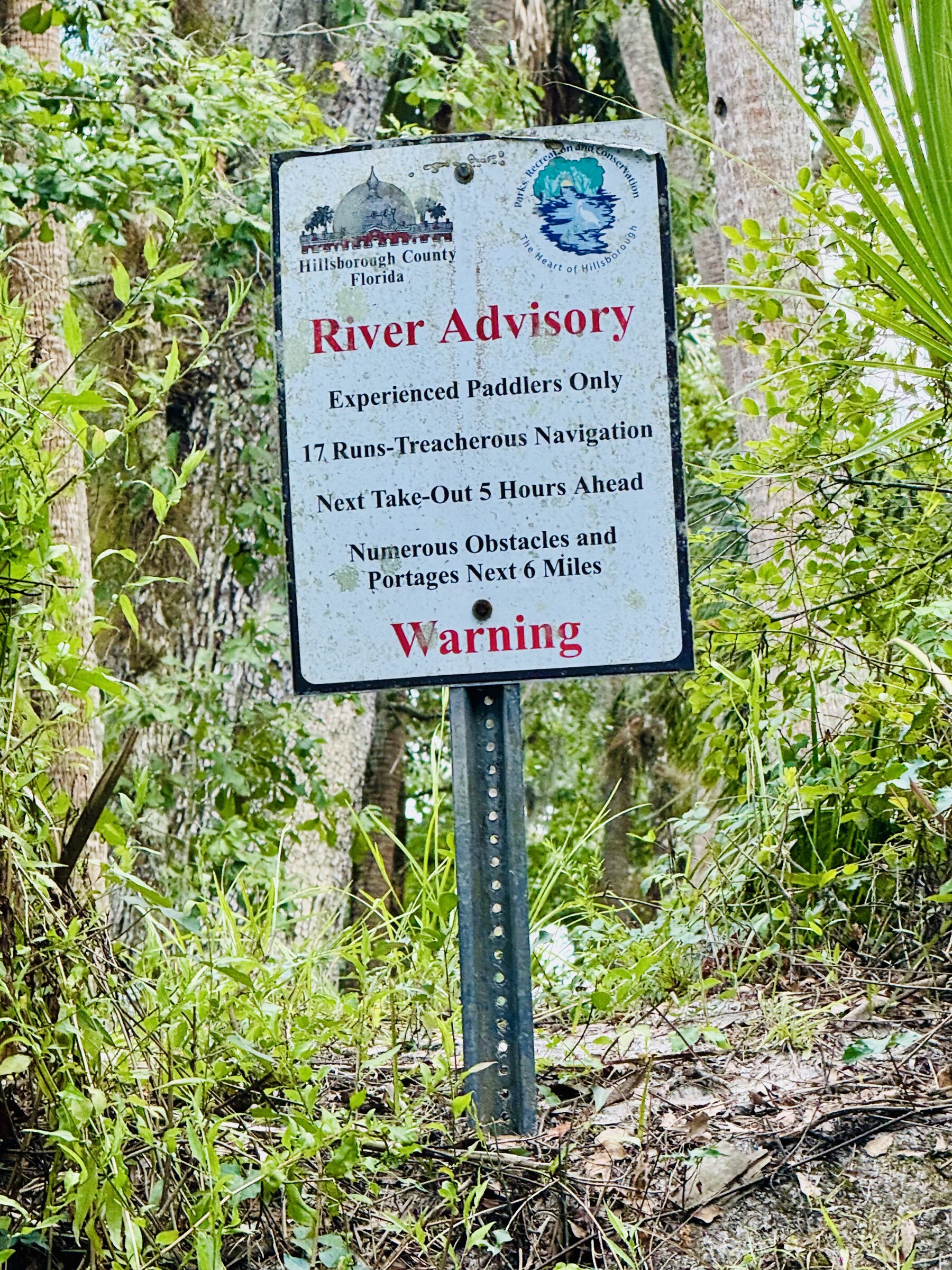
River advisory sign beside the wooded river
A river advisory at the edge of the floodplain.
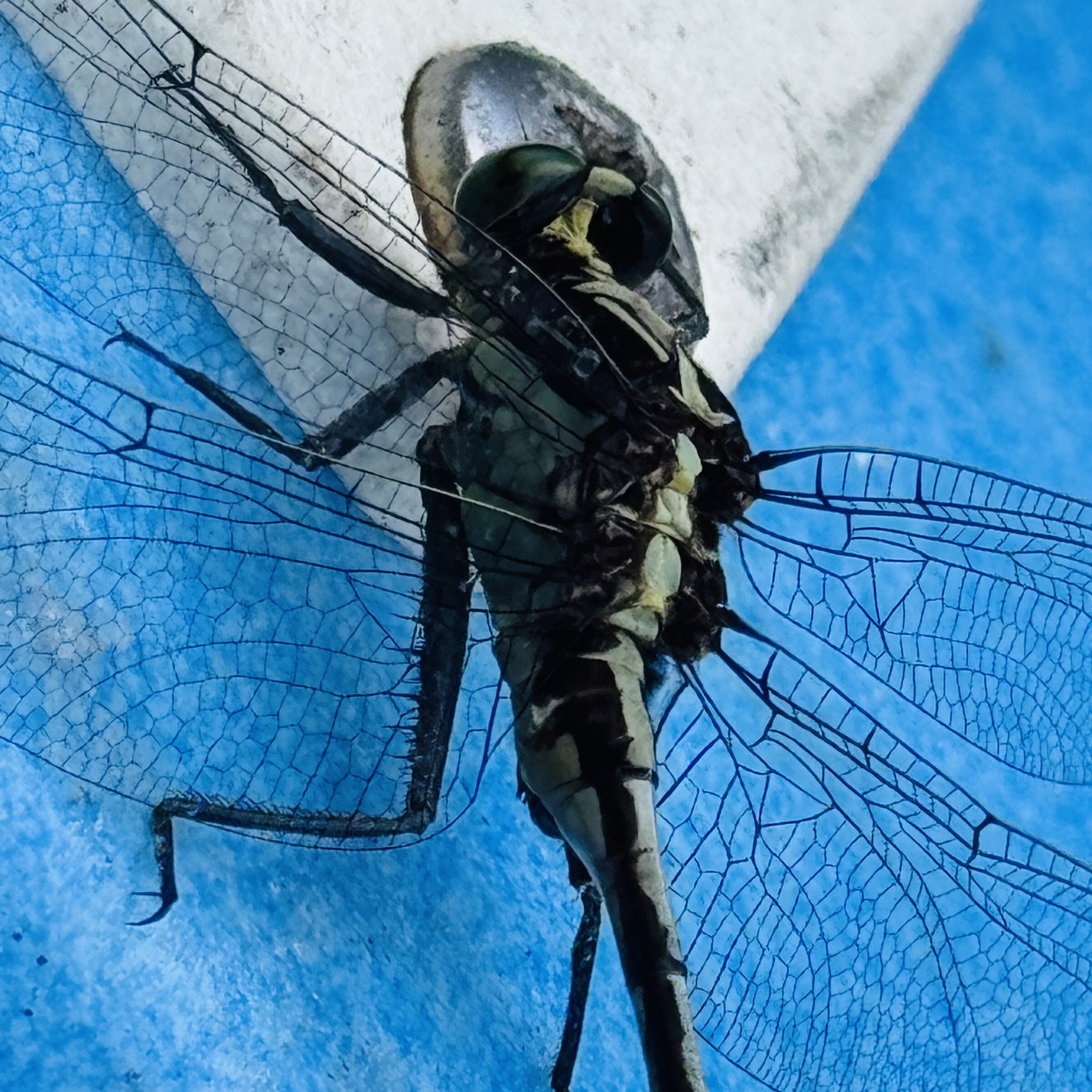
Close view of a dragonfly resting on a blue kayak
A dragonfly pauses on the deck for a close inspection.
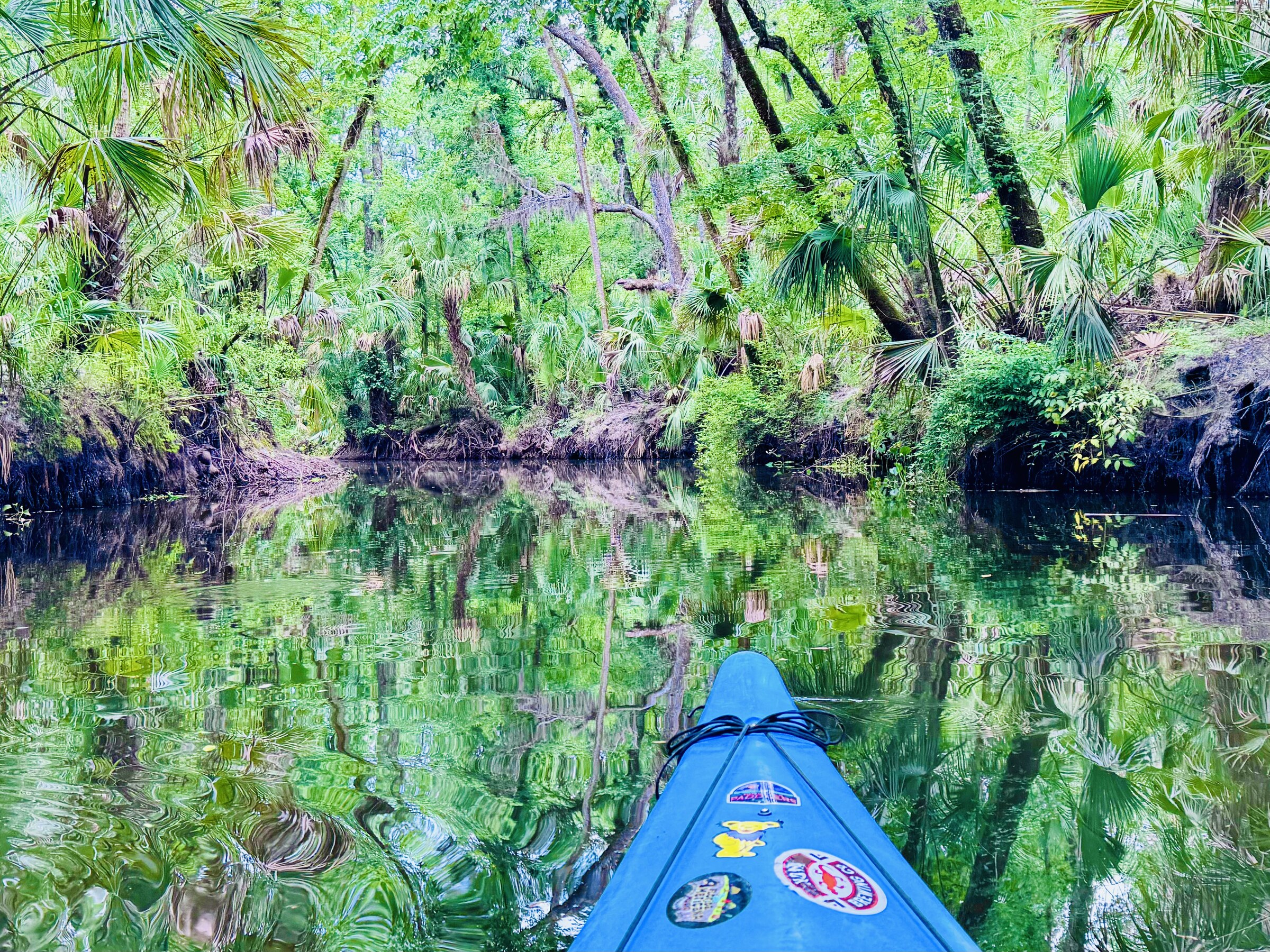
Blue kayak bow pointing into a narrow reflective forest channel
The bow points toward another quiet turn in the maze.
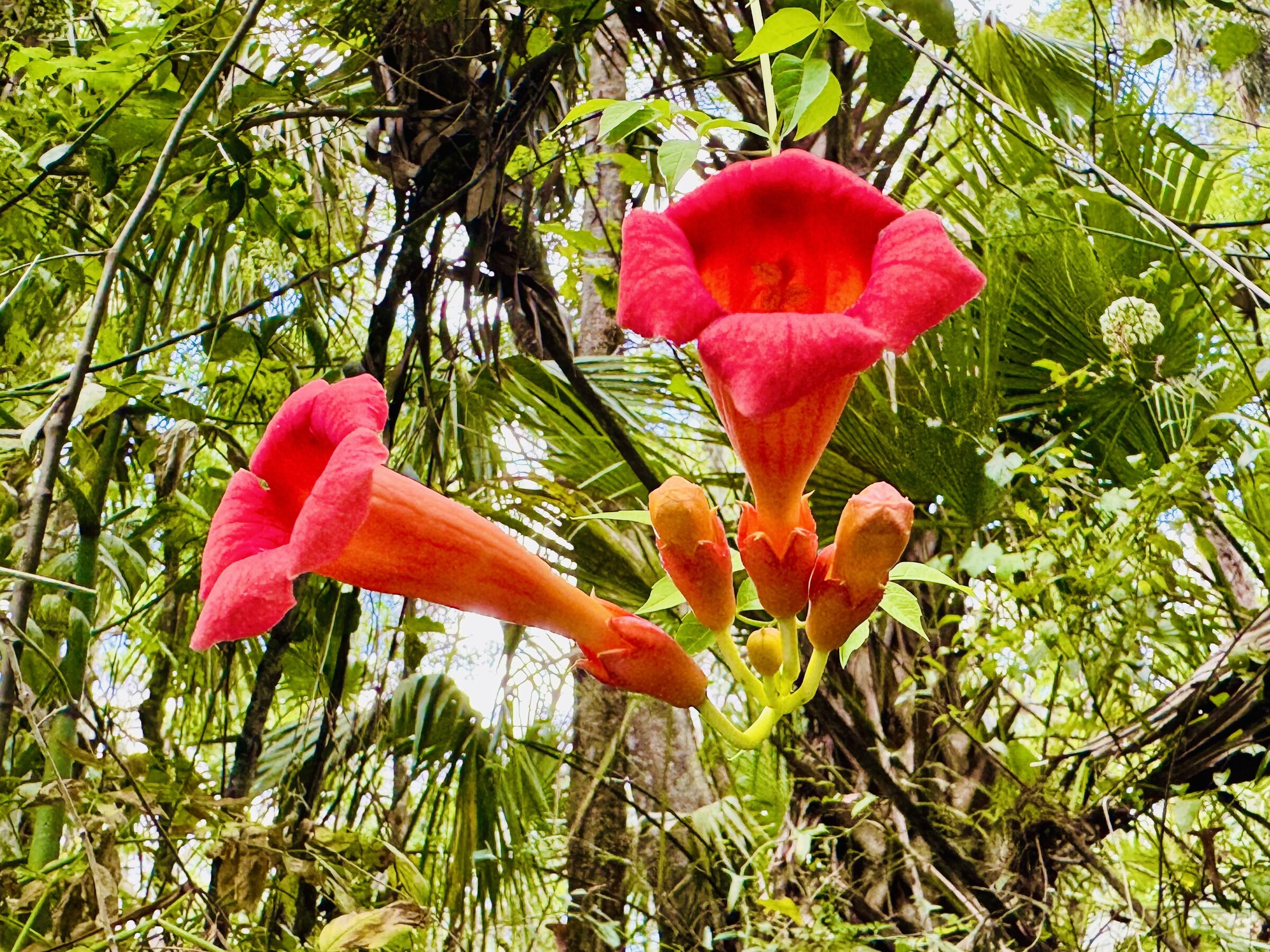
Bright red trumpet-shaped flowers among palm leaves
Brilliant red flowers add a flash of color to the riverbank.
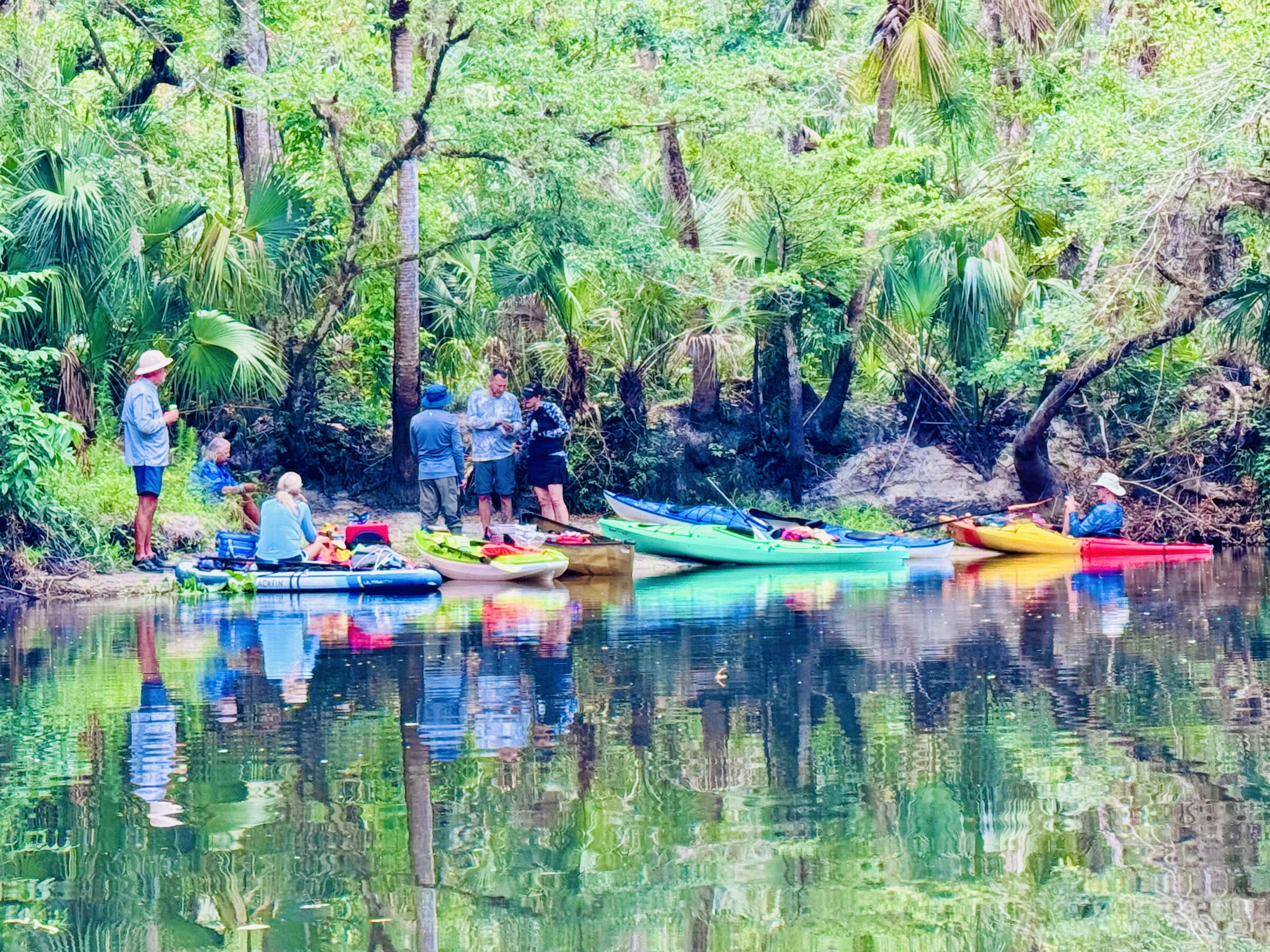
Group of kayakers reflected in still water beside a sandy bank
Colorful boats and forest reflected in a rare still pool.
Weathered sign marking a former scientific area
A weathered marker hints at the land’s earlier management history.
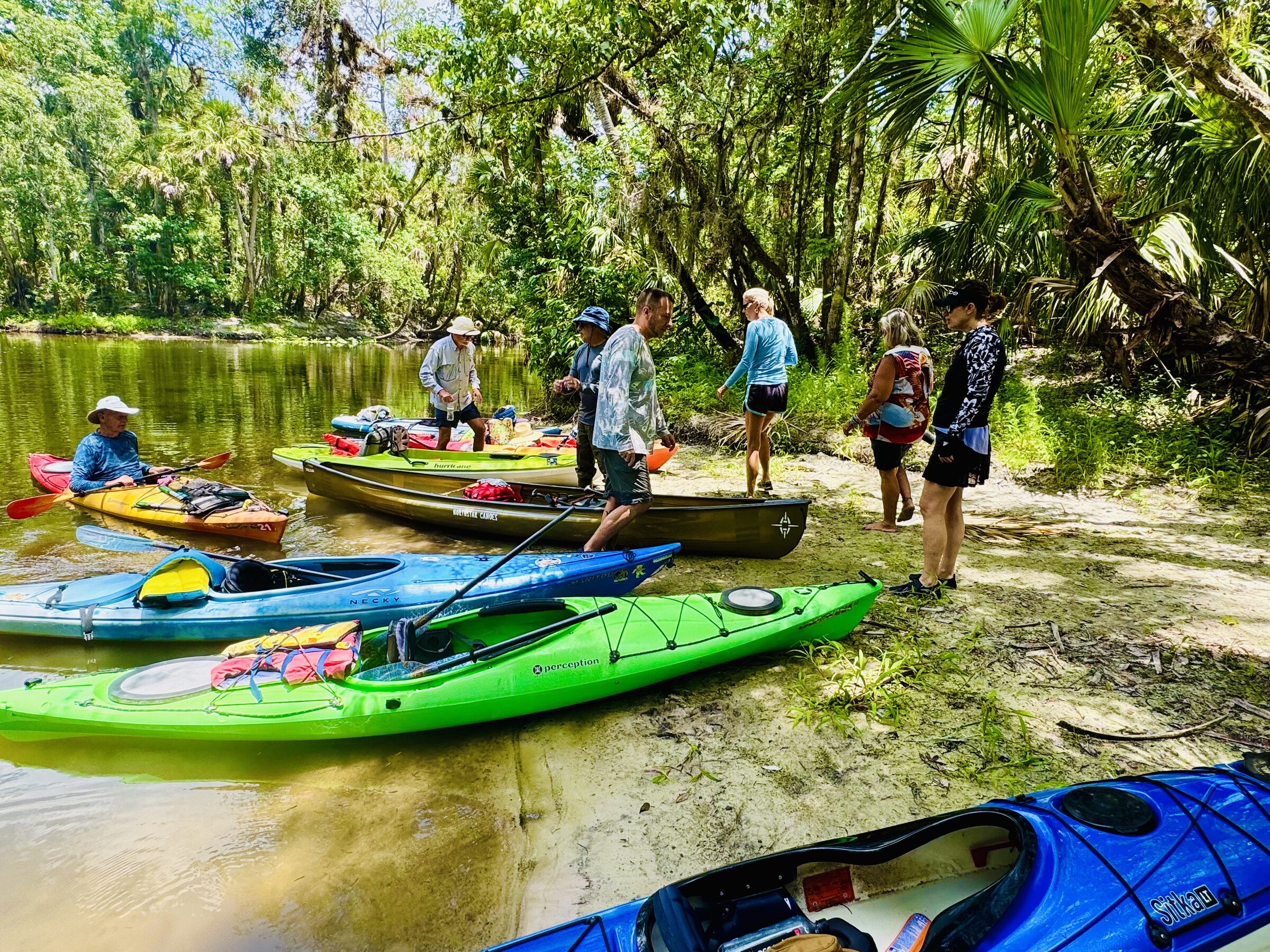
Kayaks pulled onto a small sandy rest stop
A small landing offers room to stretch and regroup.
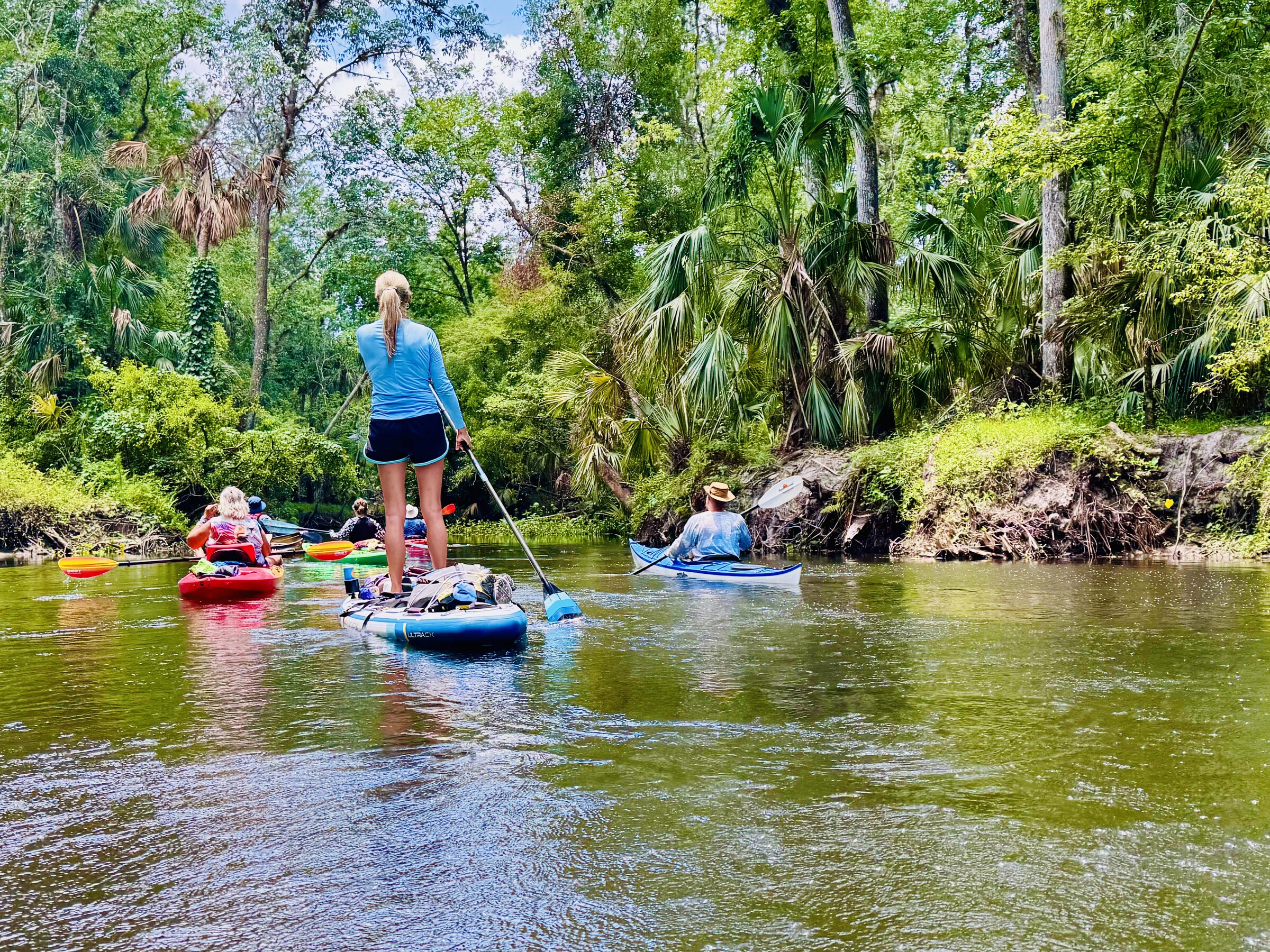
Standing paddler leading kayakers through a wooded reach
Back on the water and moving deeper into the runs.
Hand-painted abandoned property warning sign in the woods
An unusual hand-painted warning beside the river.
Group paddling through a shallow wooded channel
Shallow water slows the boats and keeps the group close.

Wild neighbors

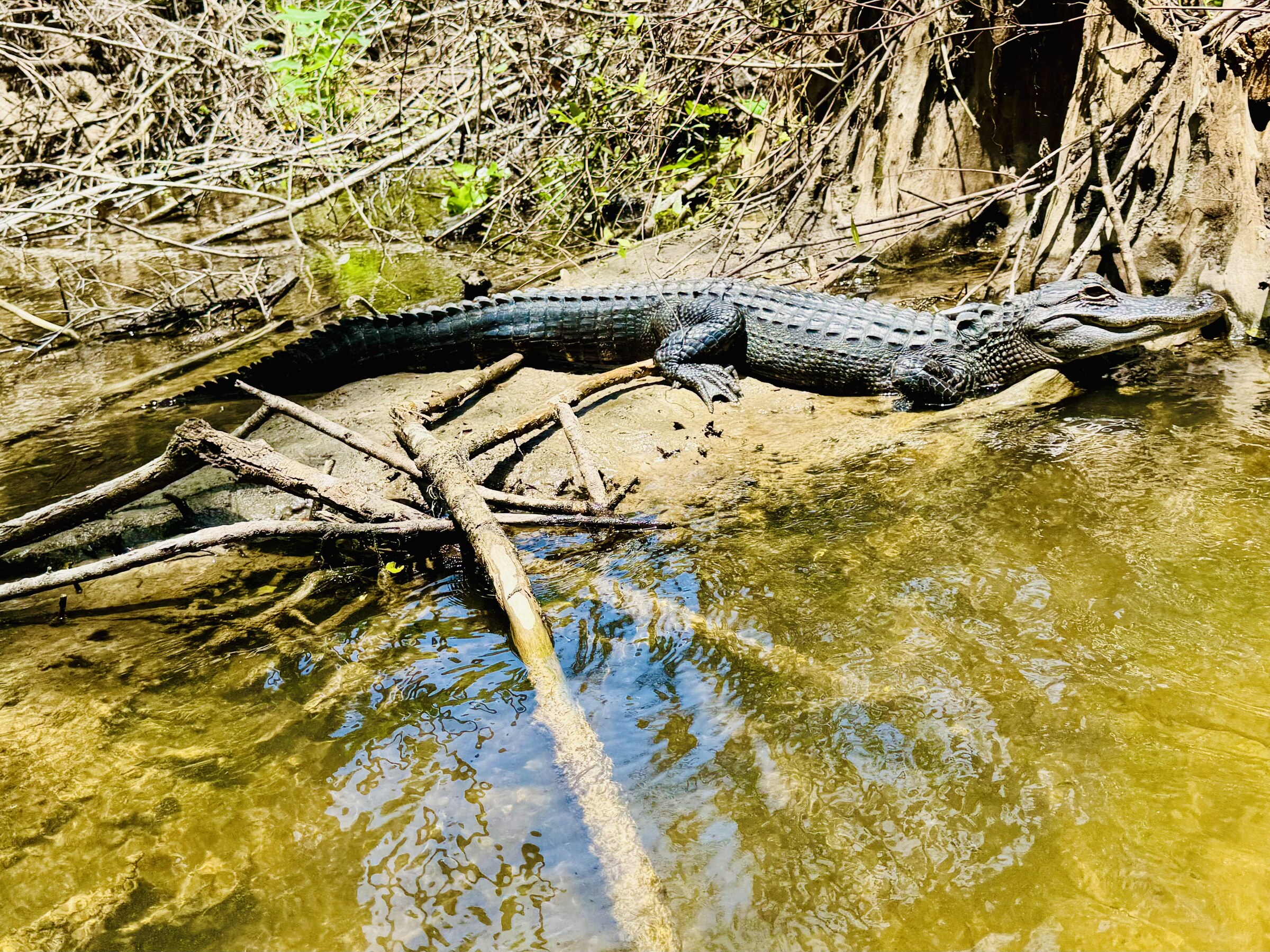
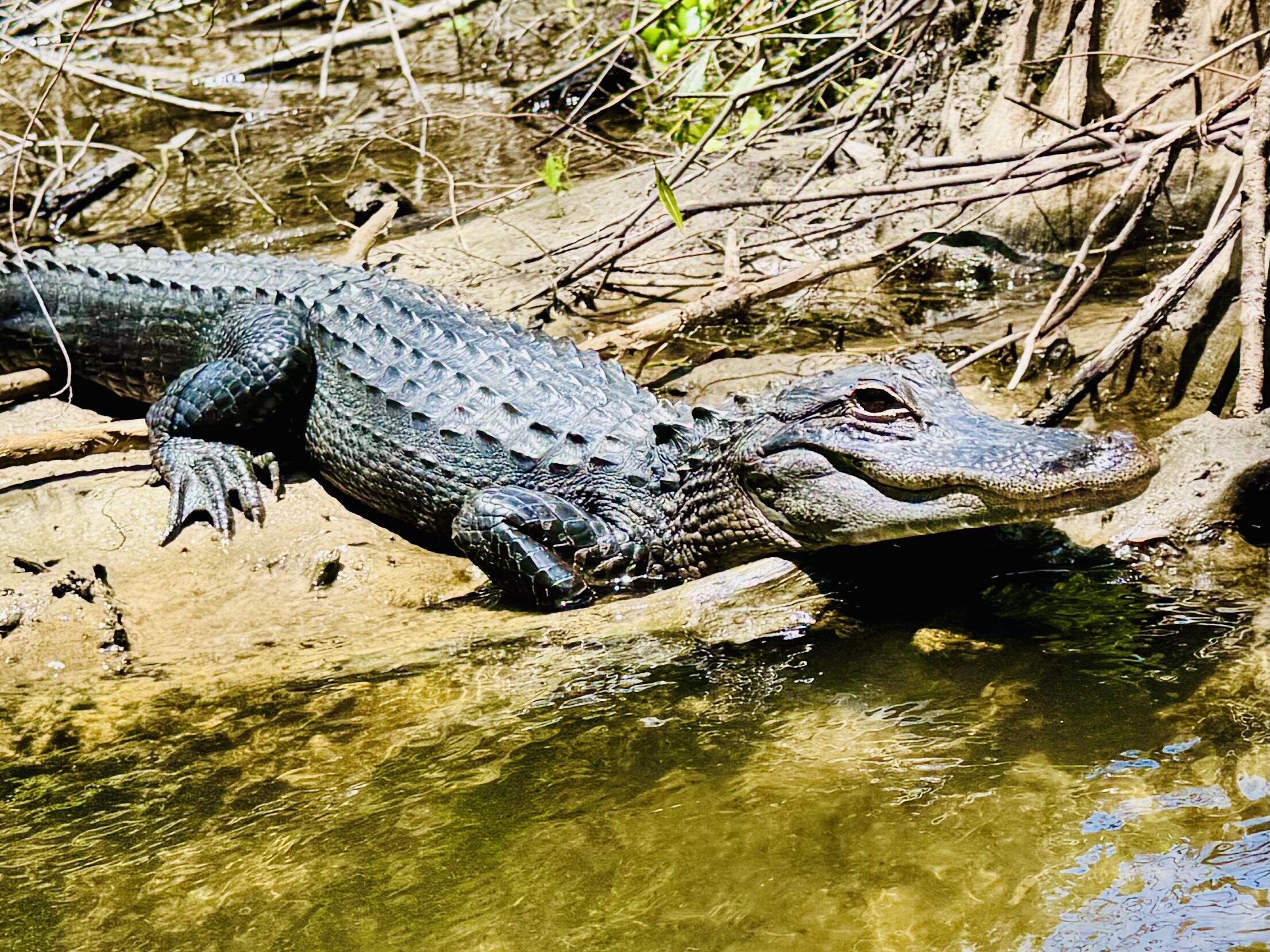
The floodplain was alive with small details, from insects and flowers to the unmistakable form of an alligator stretched along the bank. Many alligators can be seen along this course. I have photographed so many alligators over the years that I included only a couple of them in this set, but those two photographs should not suggest that they were the only ones present.

Most of the gators are usually seen along the deeper sections of the river, although at this time of year they can occur almost anywhere along the route. Extreme caution is warranted in the narrow runs. In places the channel is only about 10 feet wide, while some of the alligators are longer than 10 feet. A paddler coming around a sharp bend at a good clip could suddenly surprise a gator on the bank. If it jumps into the water, it may temporarily block nearly the entire channel while several paddlers are trying to stop and back away in the fast current. We stayed alert, gave every animal room and passed quietly without disturbing it.
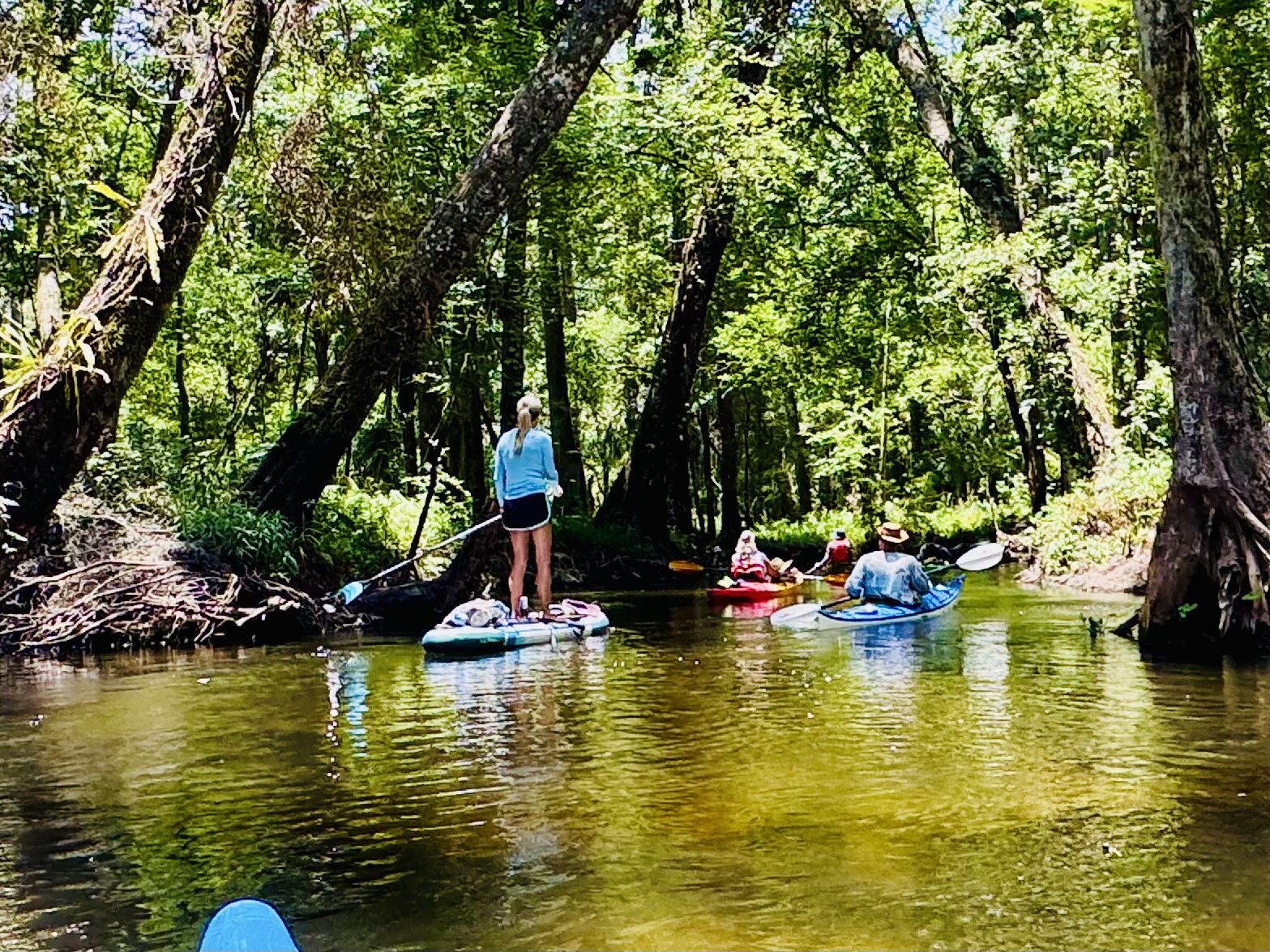
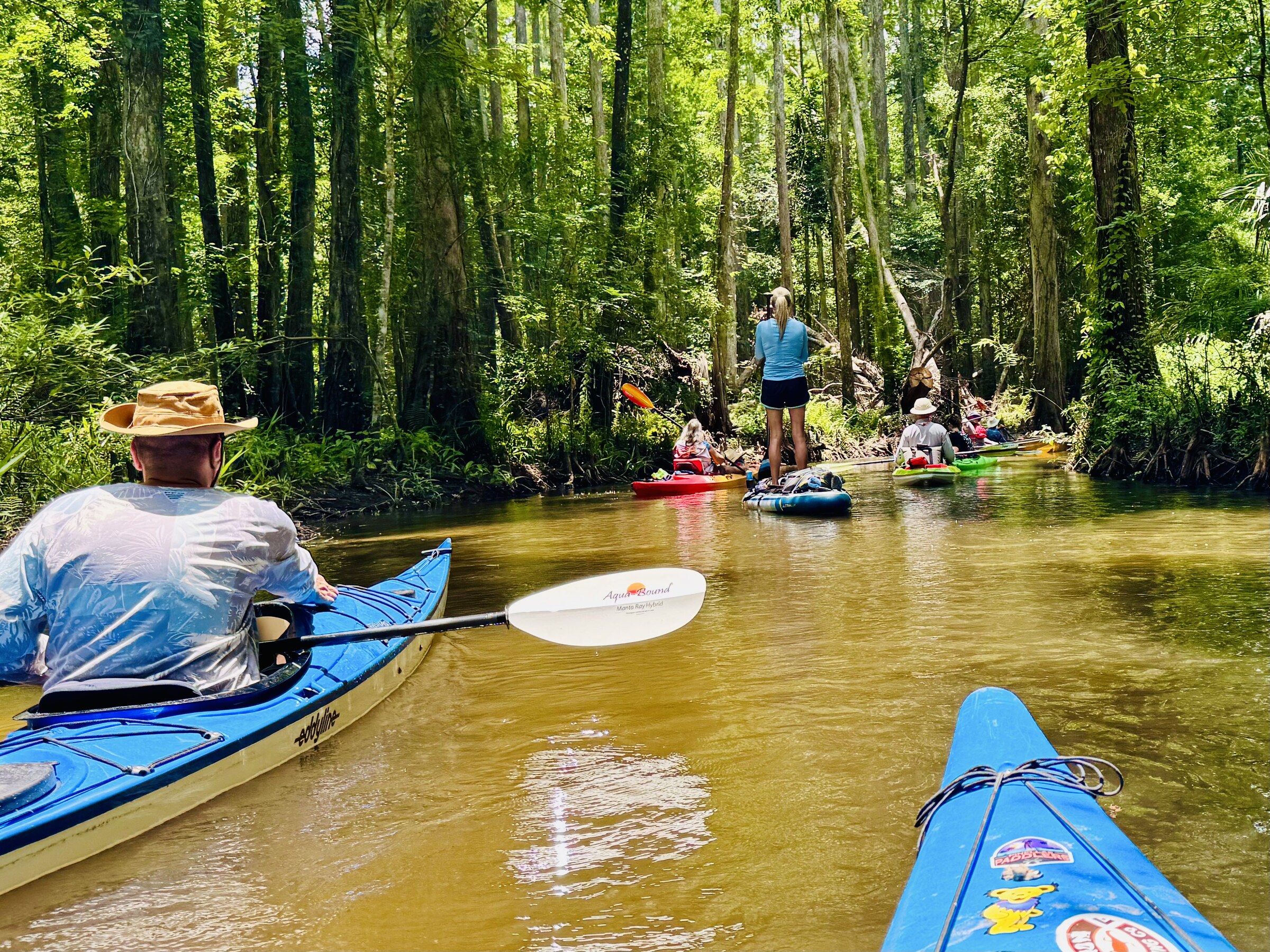
Paddlers carefully threading a tight shaded channel
Single-file travel through one of the tighter passages.
Large alligator resting on a sandy bank beside the river
A large alligator takes advantage of a sunny patch along the bank.
Alligator lying beside shallow water and fallen branches
One more look as we continue downstream and leave it undisturbed.
Quiet passage: Wildlife encounters are part of what makes this river special. We stayed in our boats, maintained space and moved past without crowding or feeding the alligator.

Following the winding water

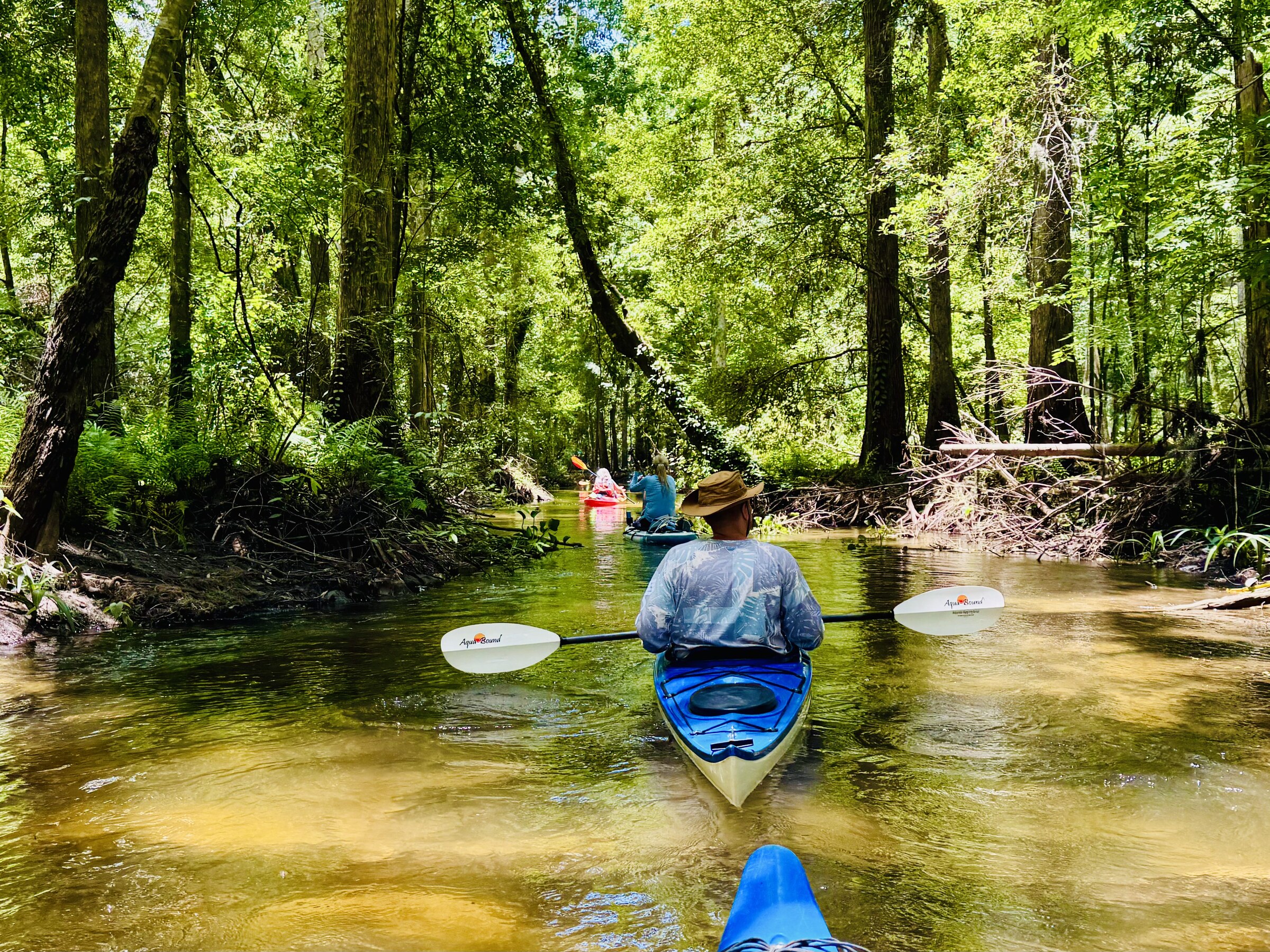
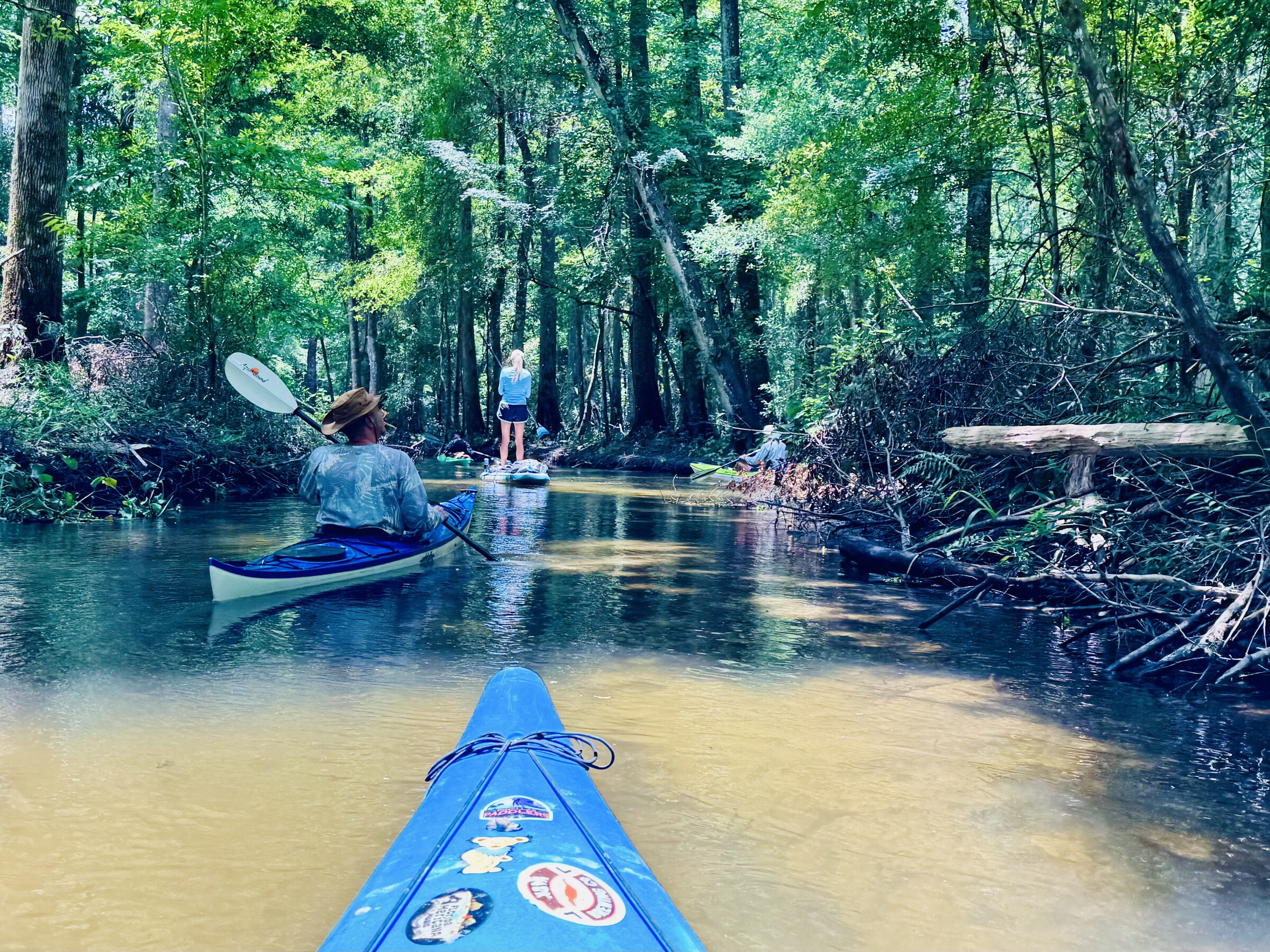
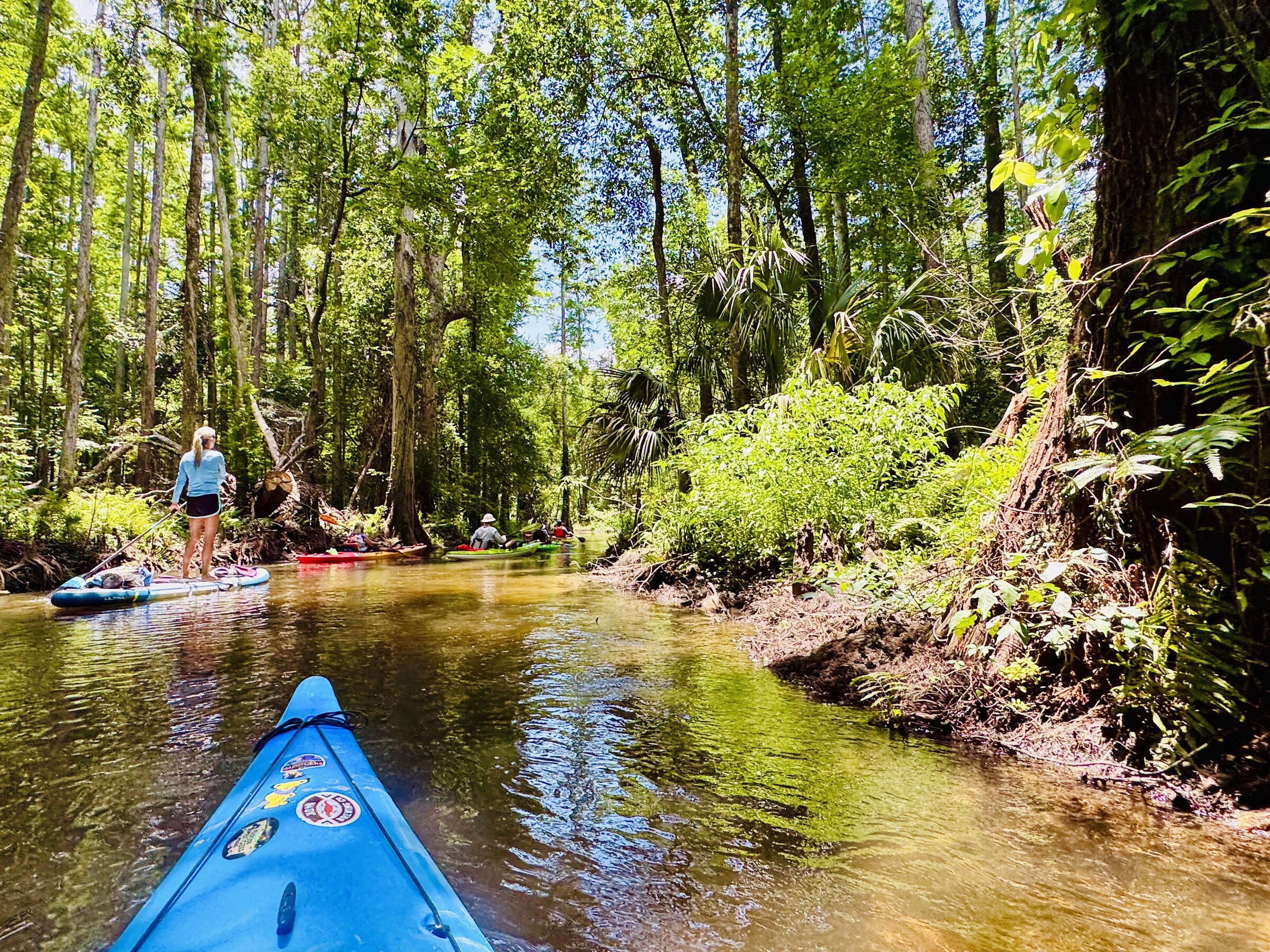
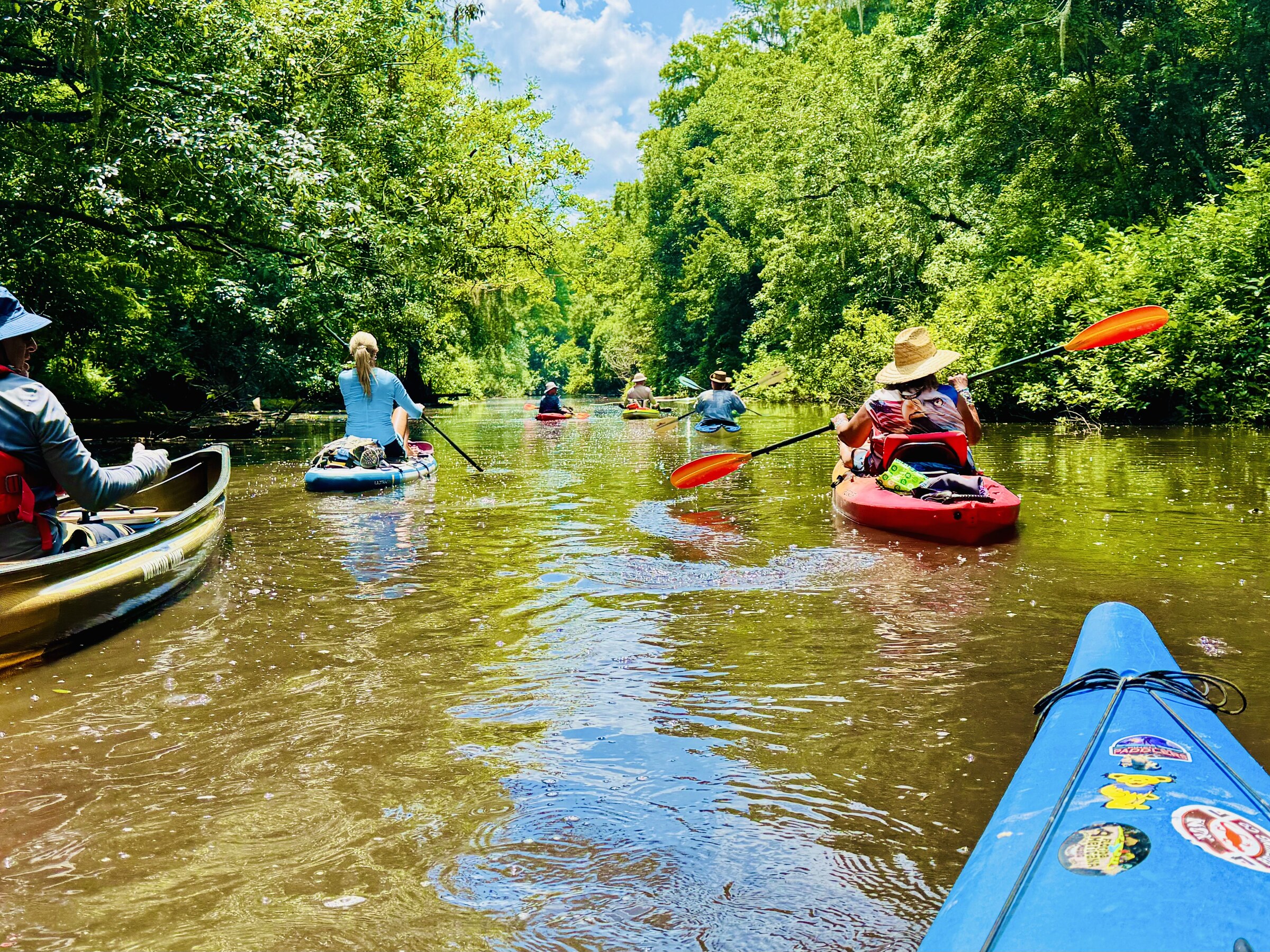
For long stretches the channel felt barely wider than the kayaks. The shallow sandy and gravelly bottom was visible beneath us, but the constricted channel accelerated the current. Sunlight filtered through the canopy, turning the water alternately green, gold and almost black. Every bend revealed another fallen tree, sandy patch or narrow slot to negotiate.
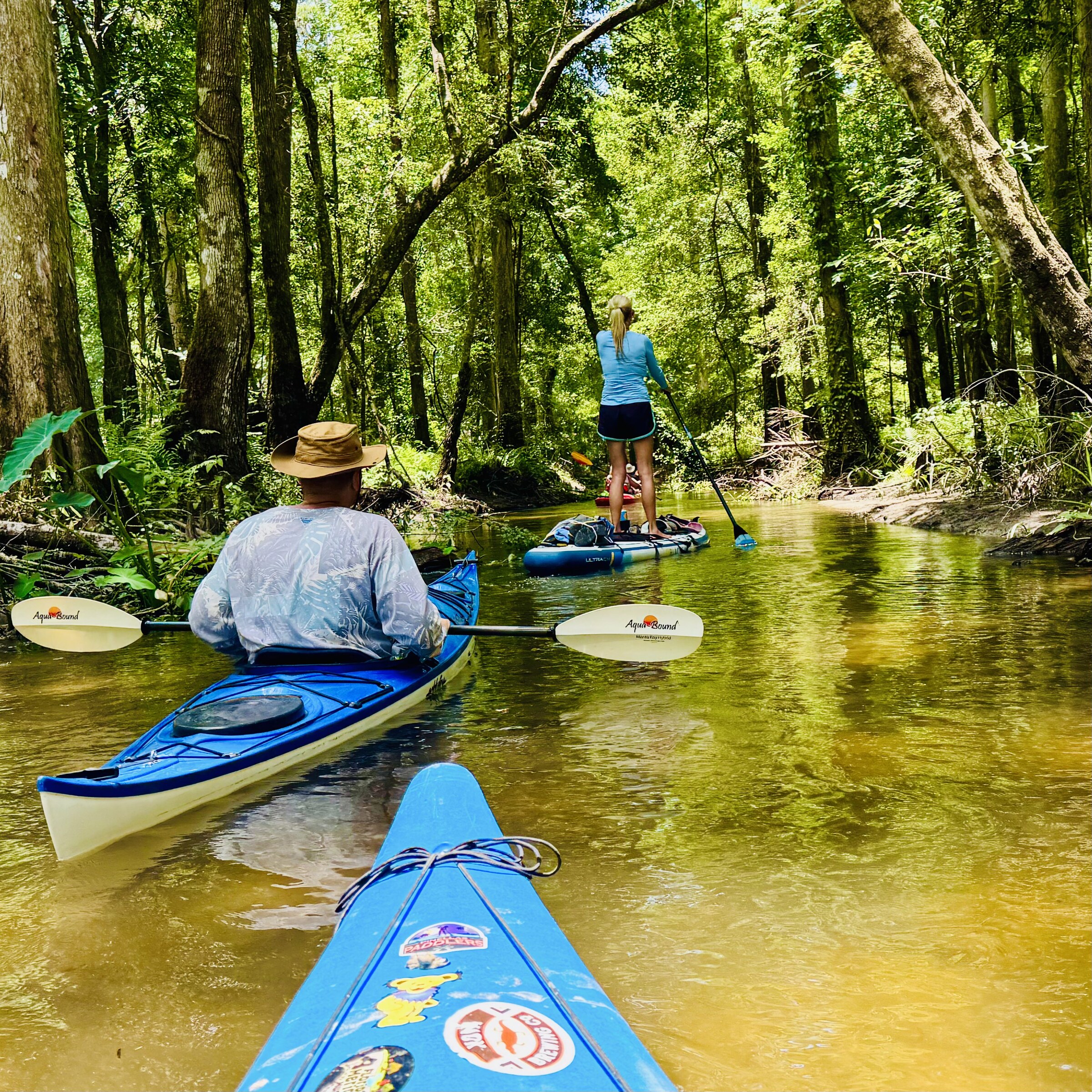
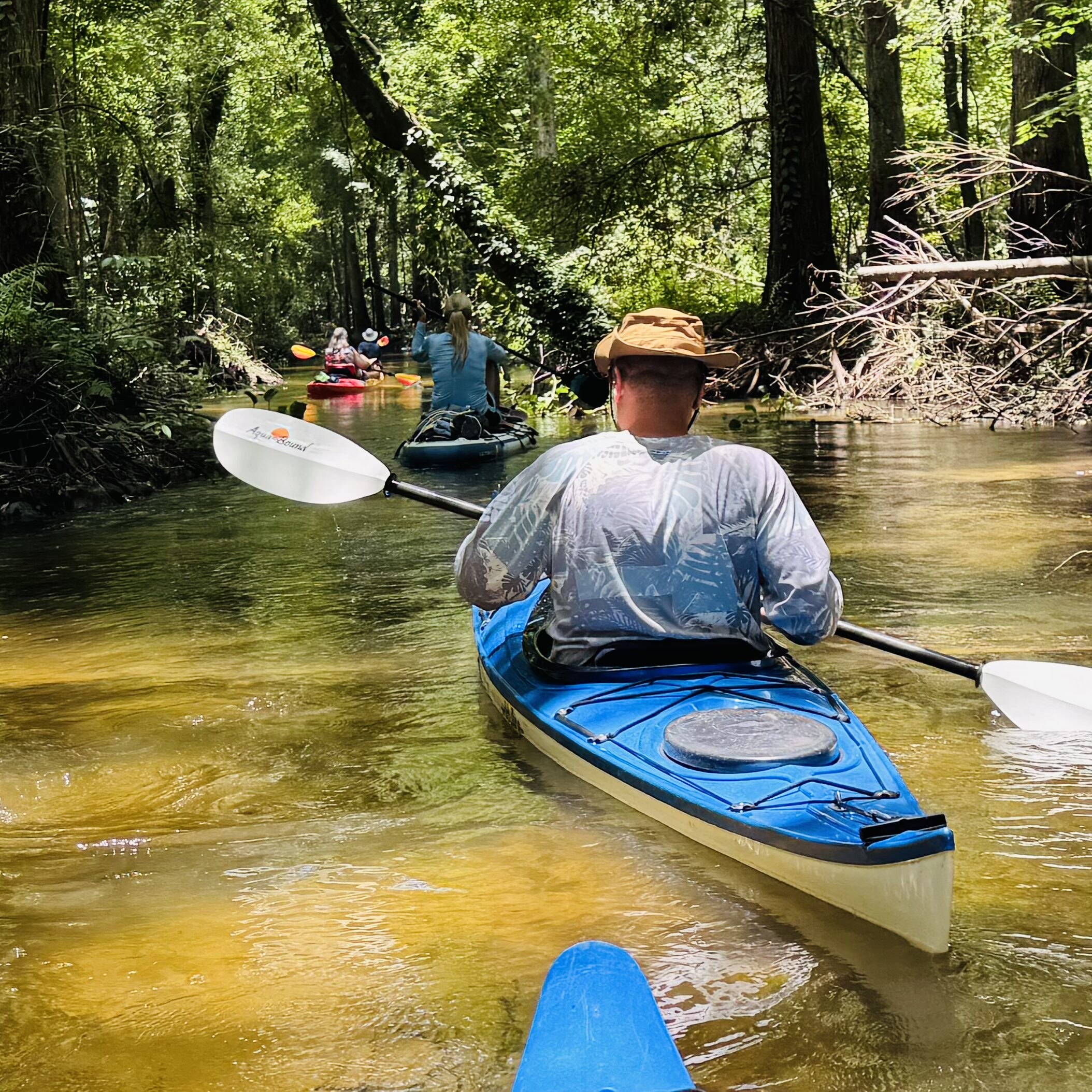
Kayakers following one another through a wooded channel
Following the clearest line through the trees.
Paddler in a narrow shallow current
The current shows the way through a constricted run.
Kayakers in a sunlit forest channel
A shaft of sunlight reaches the shallow water.
Kayaks disappearing into deep shade on Seventeen Runs
Deep shade and another bend—classic Seventeen Runs scenery.
Paddlers moving through a narrow forest channel
The group remains in sight as the run winds onward.
A winding narrow run through cypress forest
Cypress, reflections and the endlessly curving water trail.
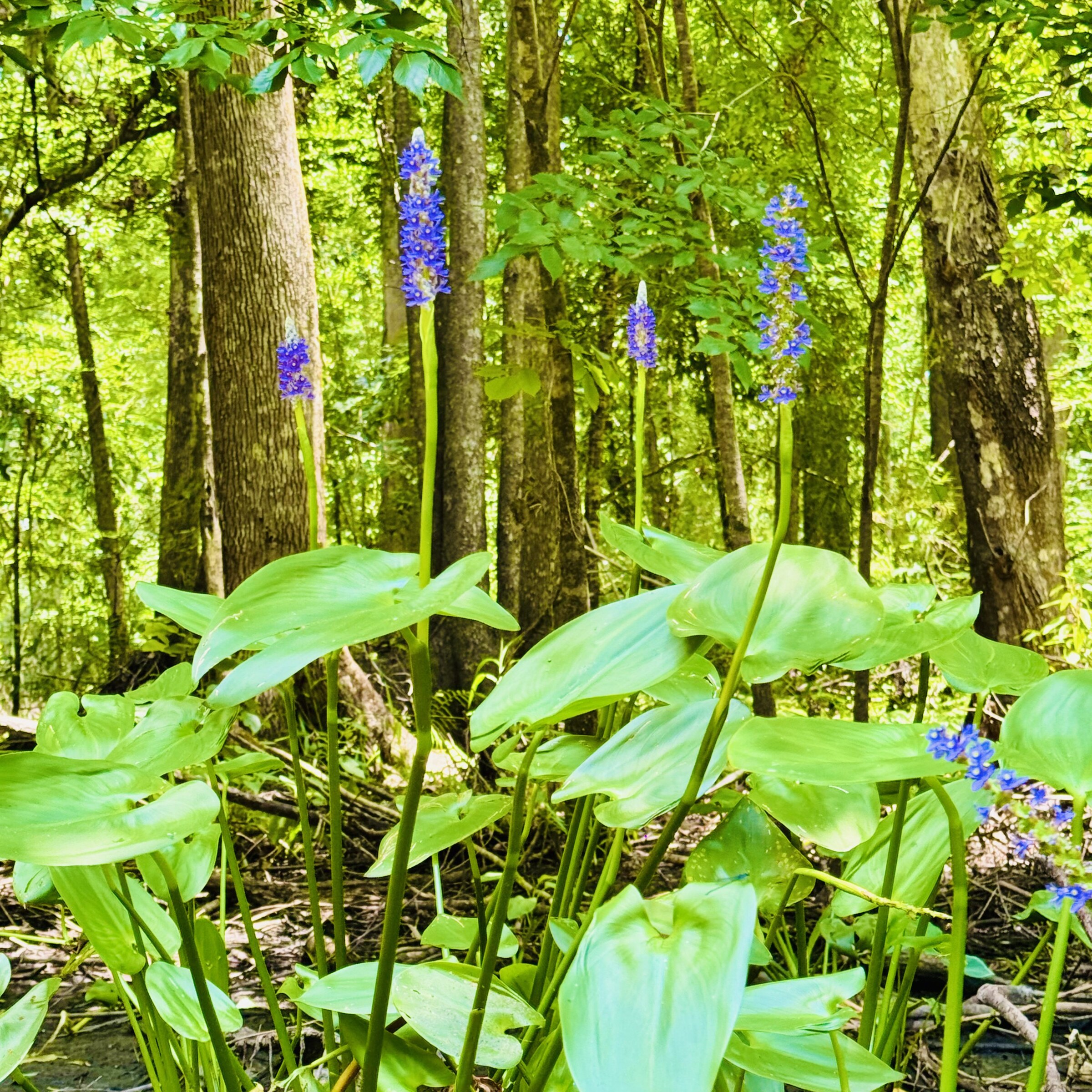
Purple wildflowers growing on the forest floor
Small purple blooms on the damp floodplain floor.
The group regrouping on a wider reach of river
The river widens enough for everyone to regroup.

Out of the maze

Once the channel broadened, there was time to float side by side, talk about the route and enjoy an easier final reach. The forest still enclosed the river, but the toughest navigation was behind us.
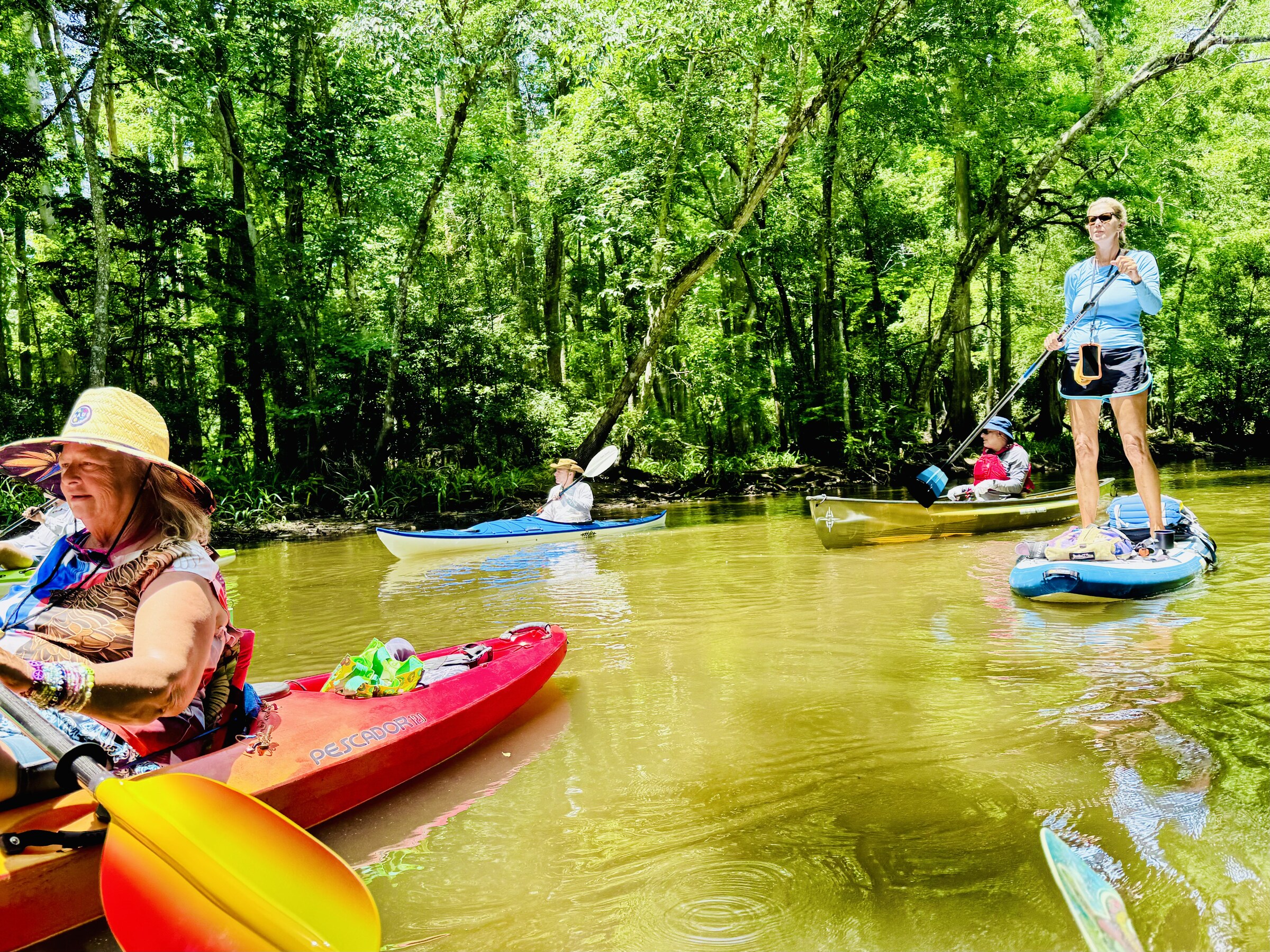
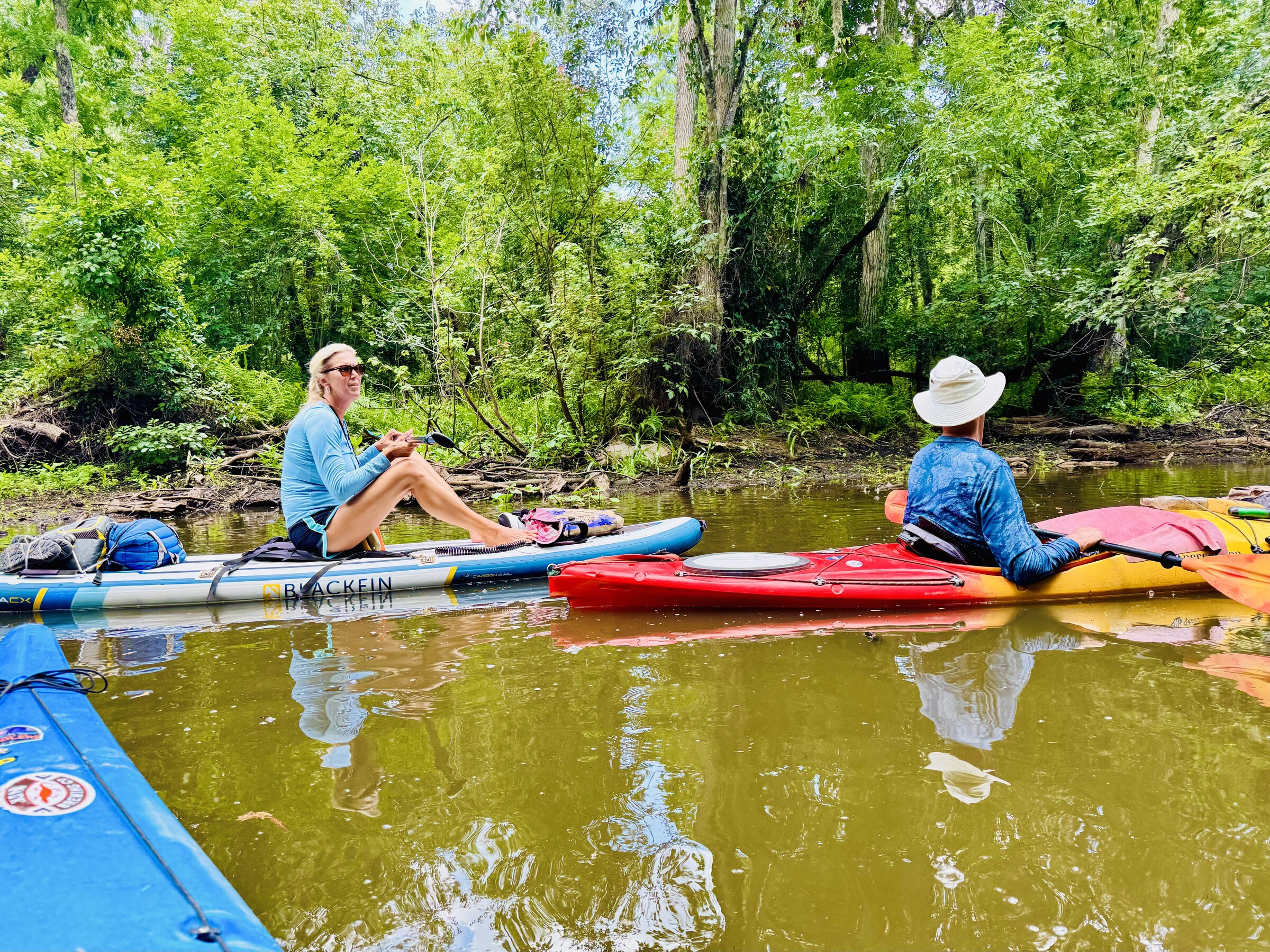
Friends talking from colorful kayaks
Stories and smiles once the channel opens.
Paddlers resting on calm river water
A quiet pause before the last miles.
Kayakers on a broad sunny reach near the end of the paddle
Bright sun returns on the final broad reach.
Paddlers carrying kayaks at the takeout after Seventeen Runs
Boats out of the water after a memorable day in the maze.

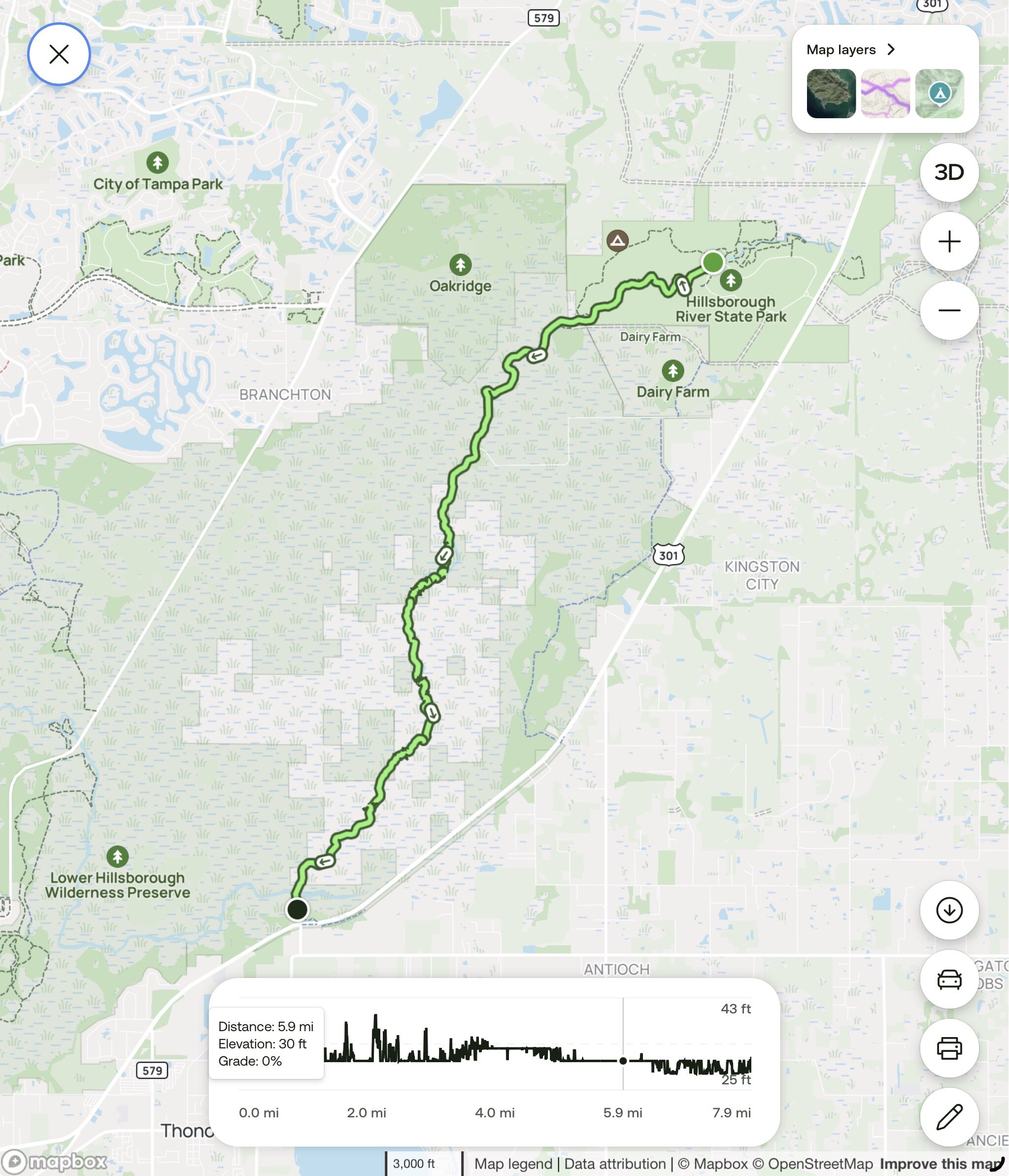
The route

Map of the 7.9-mile Seventeen Runs paddle route on the Hillsborough River
The recorded track covered approximately 7.9 miles through the Hillsborough River floodplain.

The map makes the contrast clear: a relatively direct river at either end and a tightly twisting middle section where the many turns give Seventeen Runs its distinctive character.

All photographs by Tim Driskell, except photographs of Tim, which were taken by other paddlers in the group.