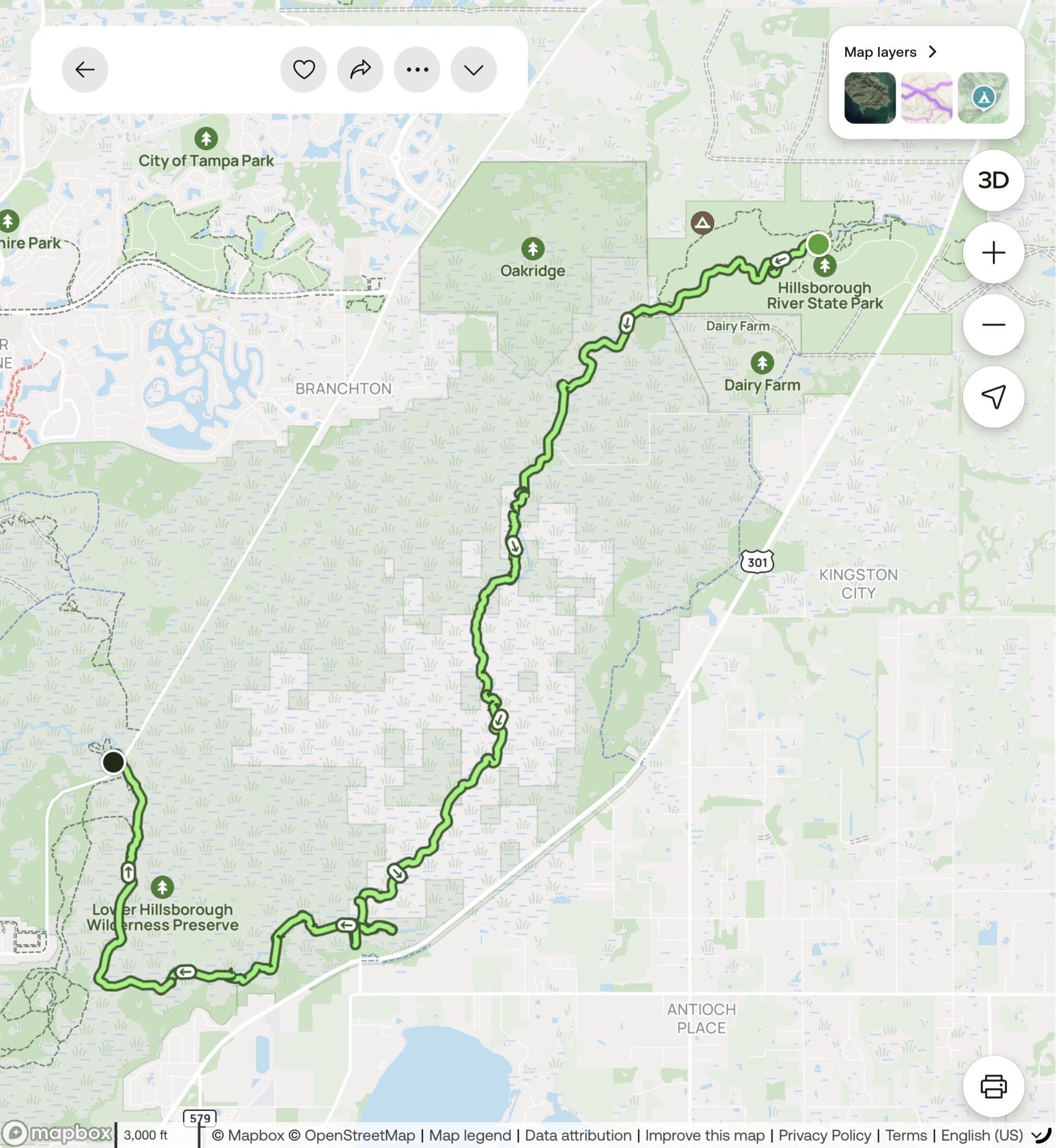
Only eight days after our April 21 paddle, we returned to Seventeen Runs for a much longer day. This time we continued all the way to Morris Bridge, covering approximately 17 miles of the Hillsborough River. It was a hot late-May-feeling day at the end of April: low water, narrow channels, plenty of blockages and a brief downpour that everyone welcomed.
A longer plan
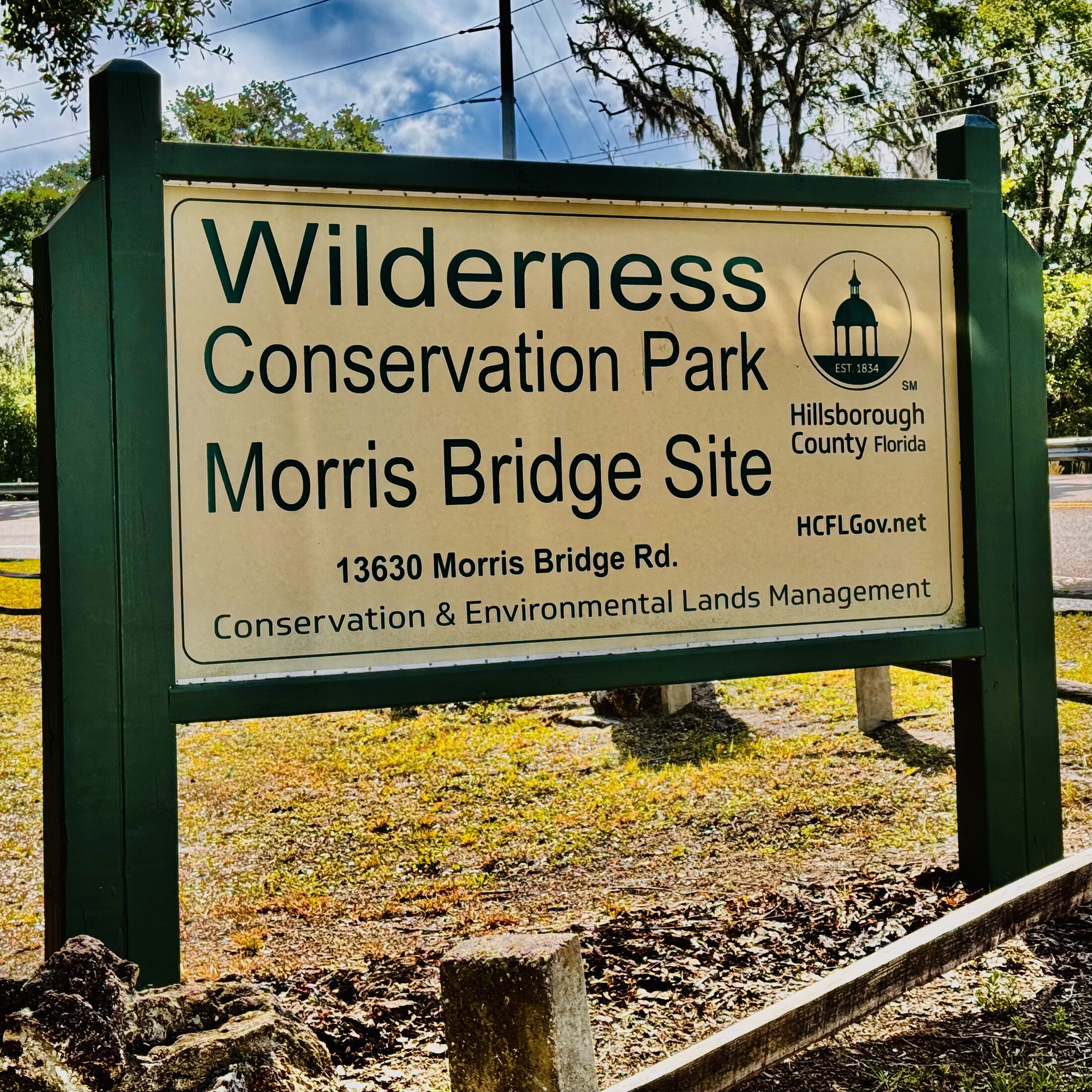
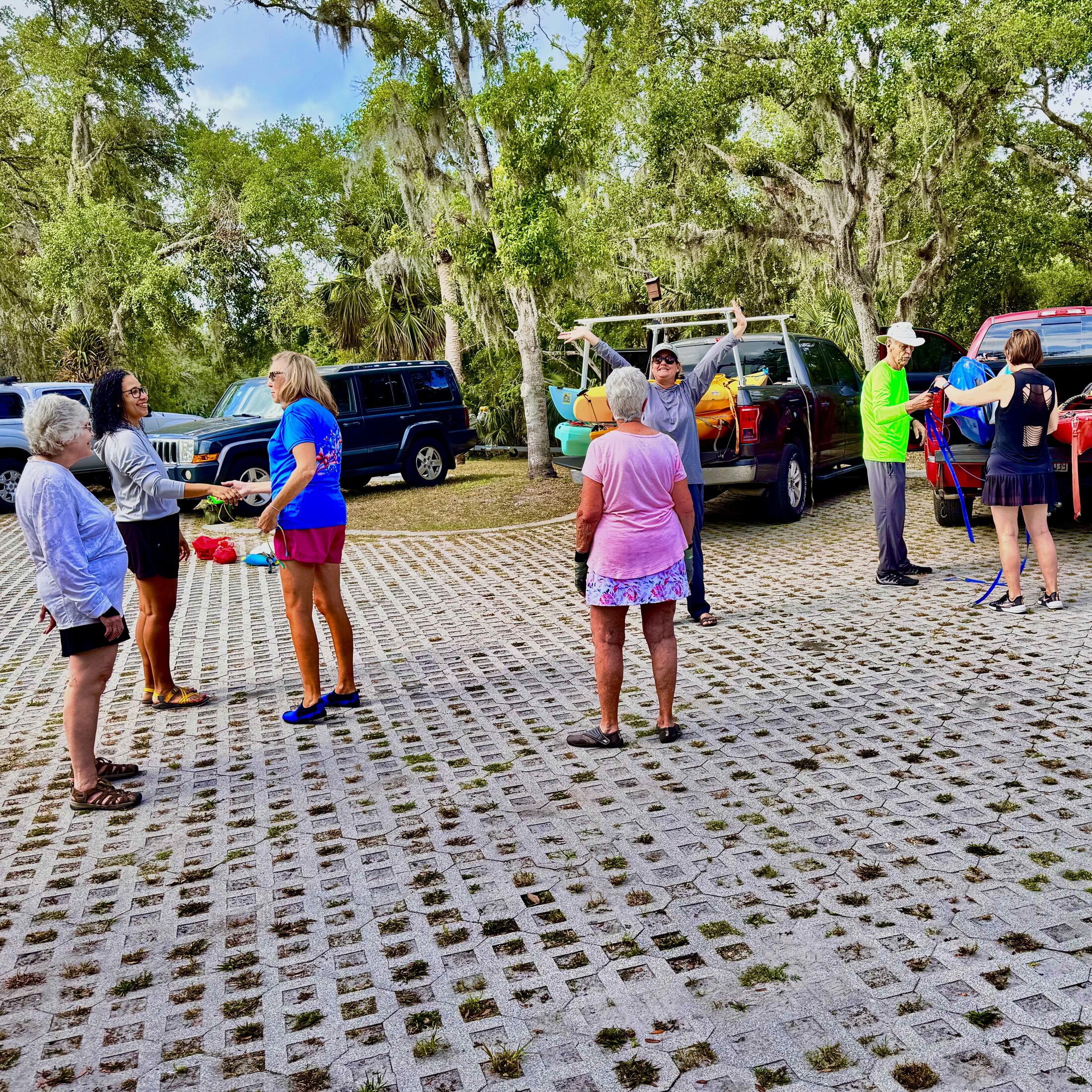
Morris Bridge Conservation Park was part of the shuttle plan for this longer one-way paddle. The boats and paddlers gathered early, knowing that reaching Morris Bridge would make this a full-day trip rather than the shorter outing we had completed eight days earlier.
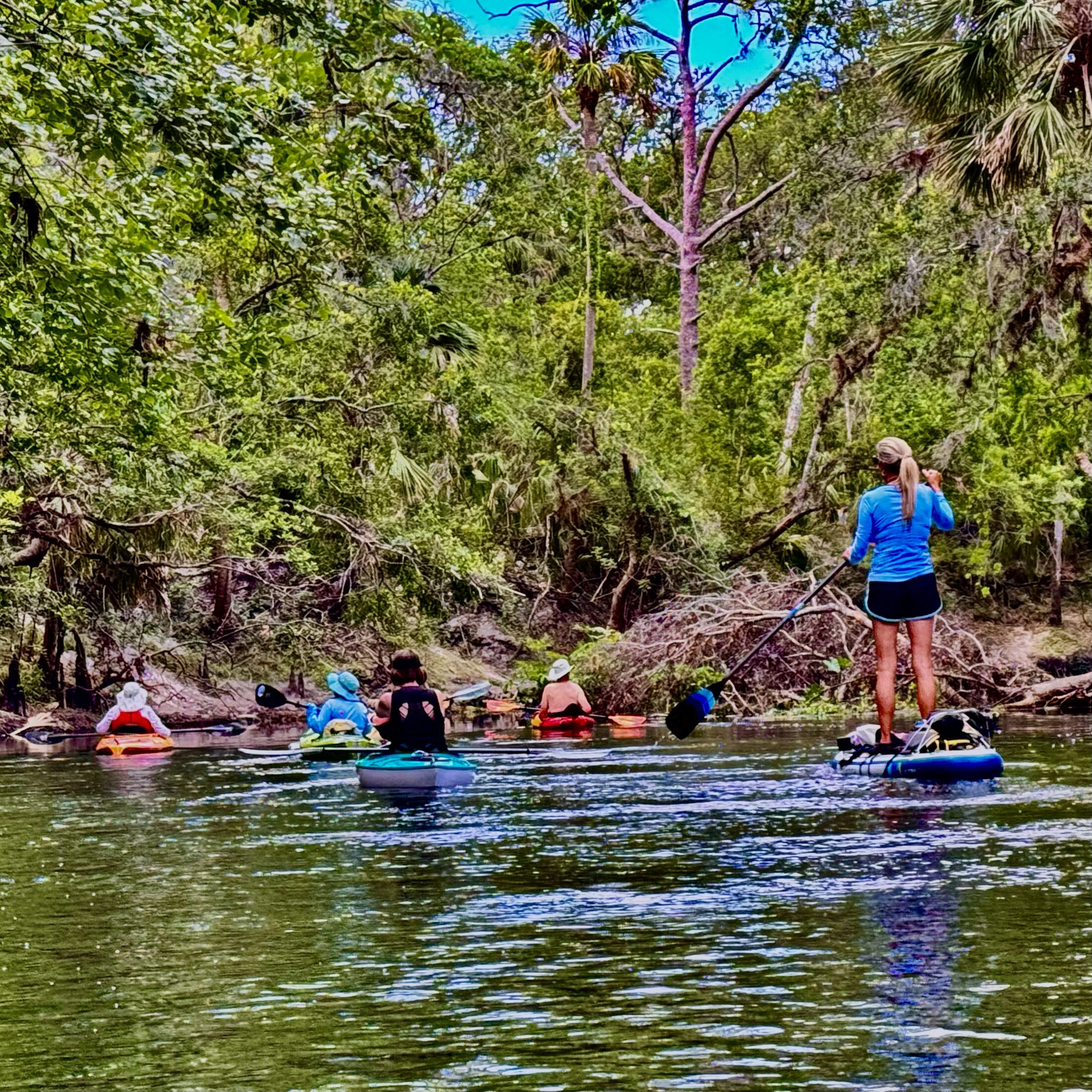
Once everyone was organized, the group entered the broad upper river. The water here was deeper and slower, with room to spread out beneath live oaks, palms and a bright blue sky.
Entering the runs
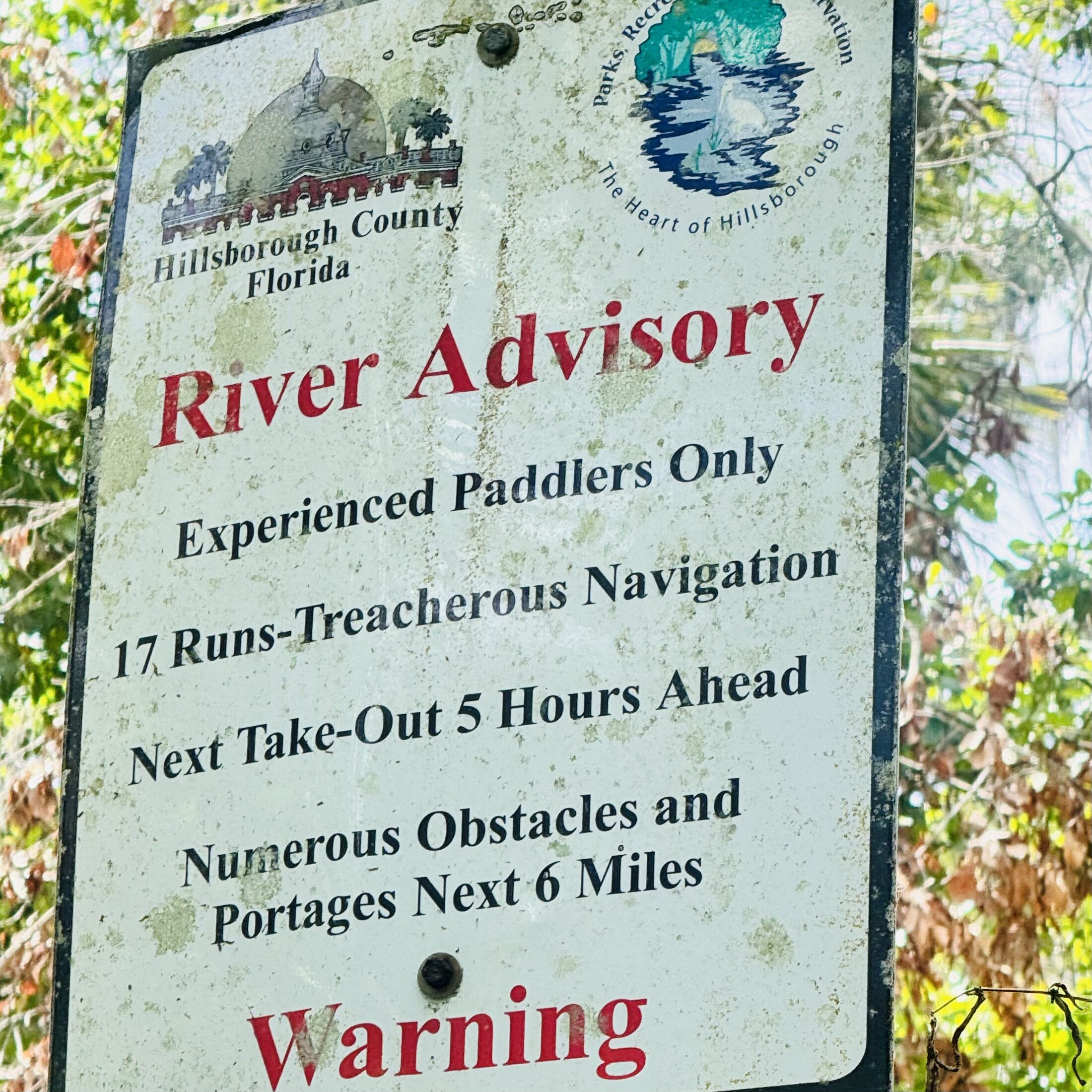
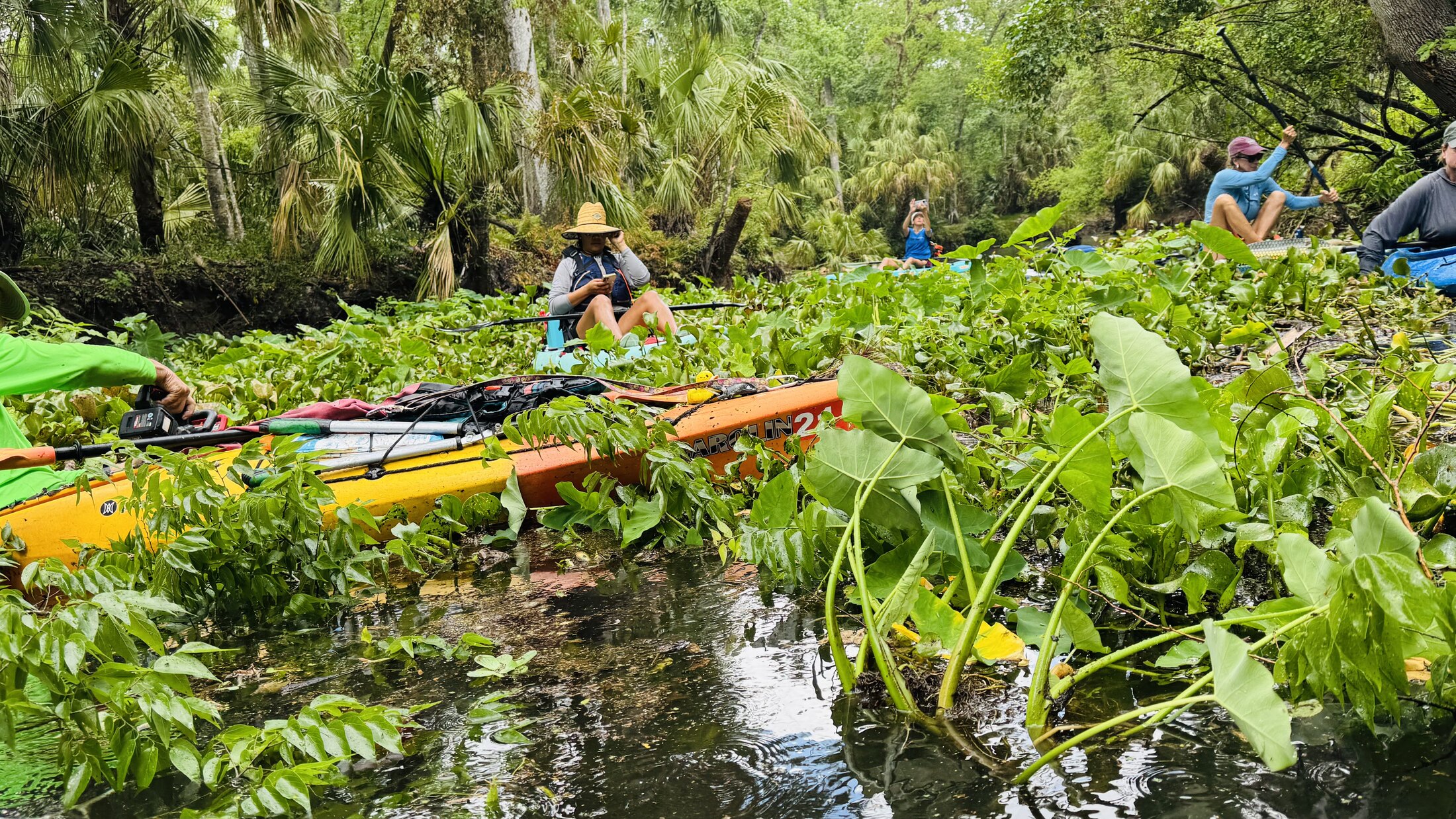
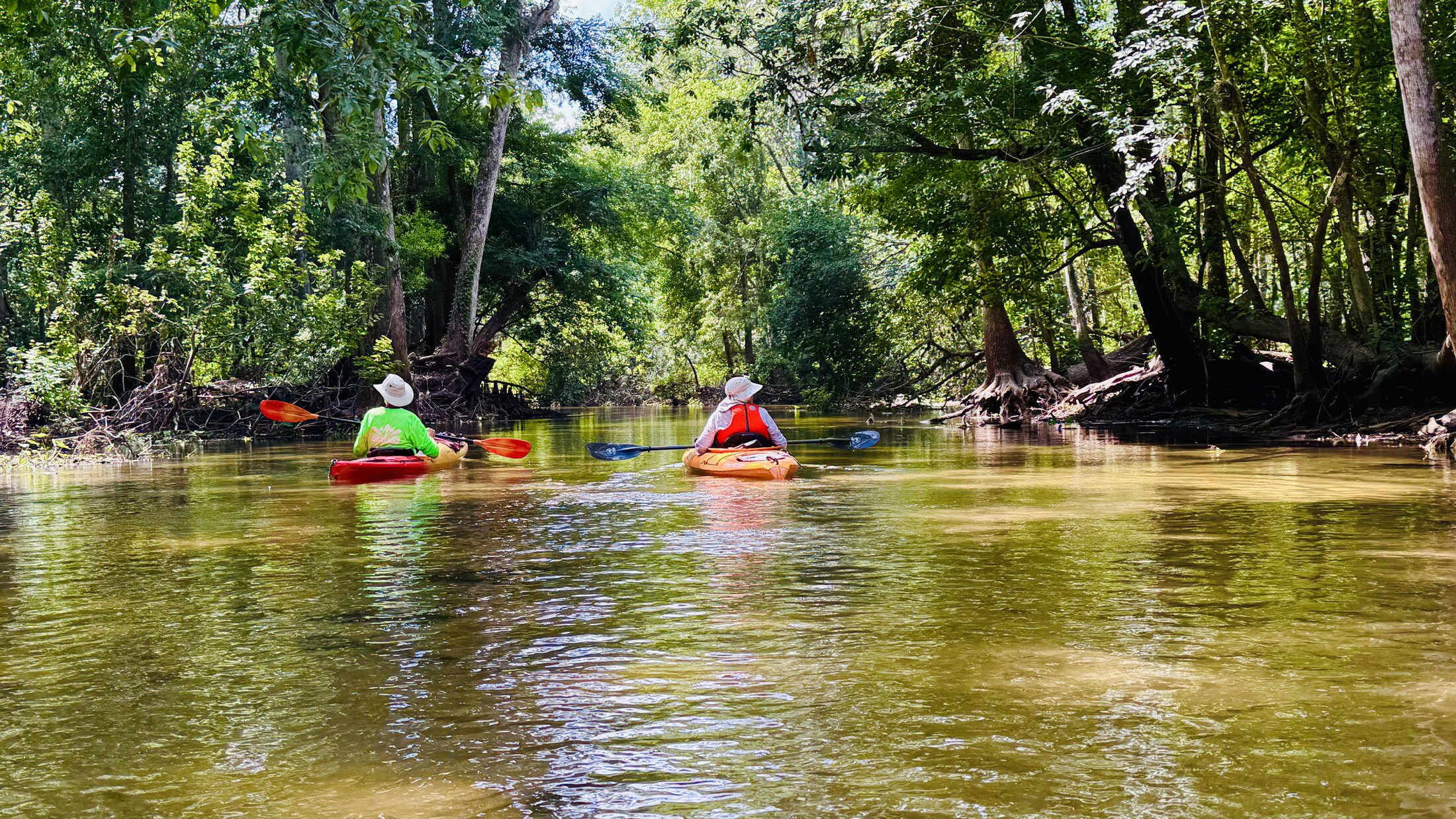
The river advisory signs were direct: Seventeen Runs is for experienced paddlers, with treacherous navigation, numerous obstacles and several portages possible. At low water, the current concentrates into narrow passages and every bend can conceal a new tree, tangle or mat of vegetation.
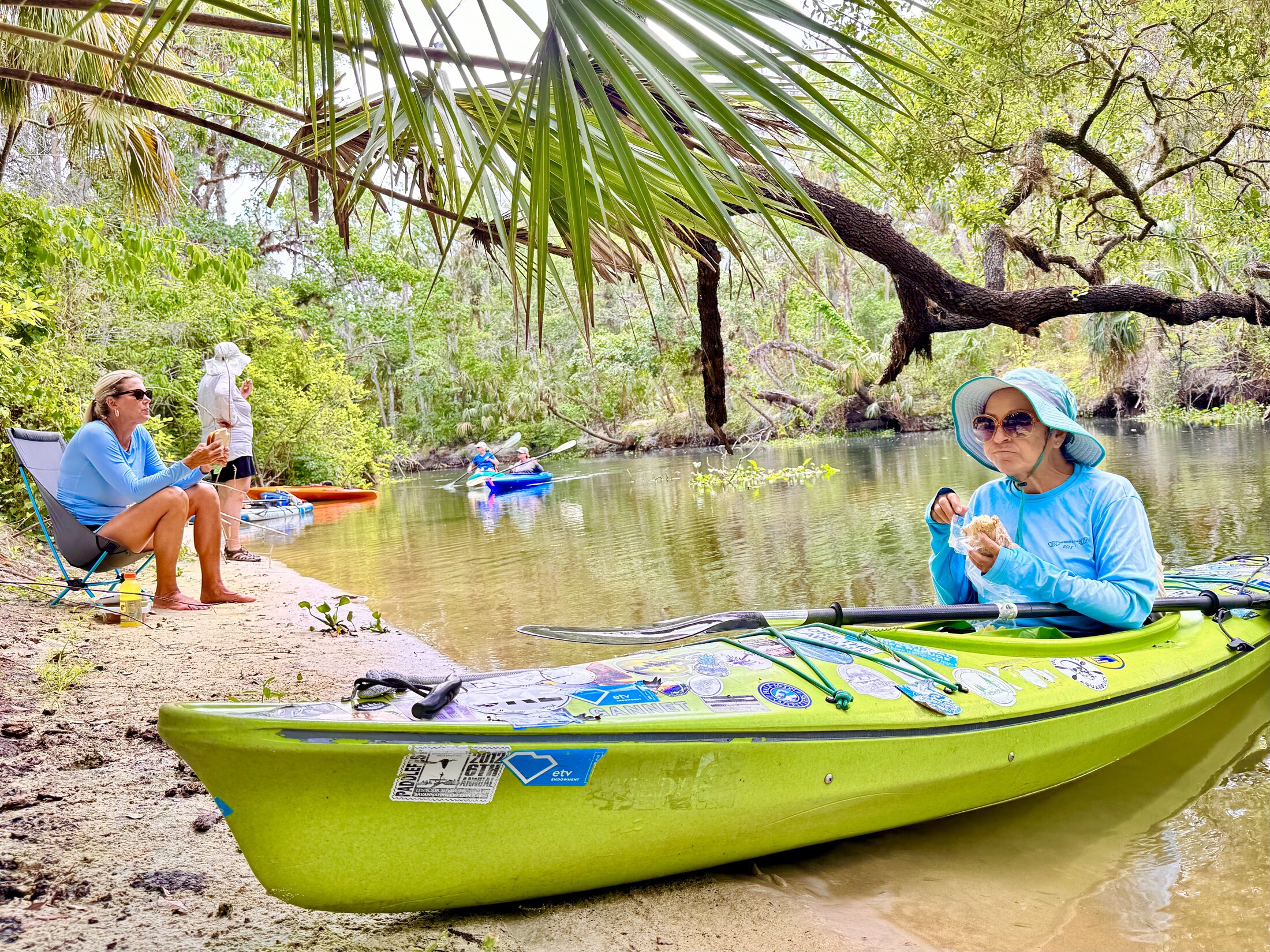
The shaded banks offered occasional places to stop, stretch and wait for the group to close up. With 17 miles to cover, pacing mattered. So did staying together before committing to each narrow passage.
Ten minutes of welcome rain
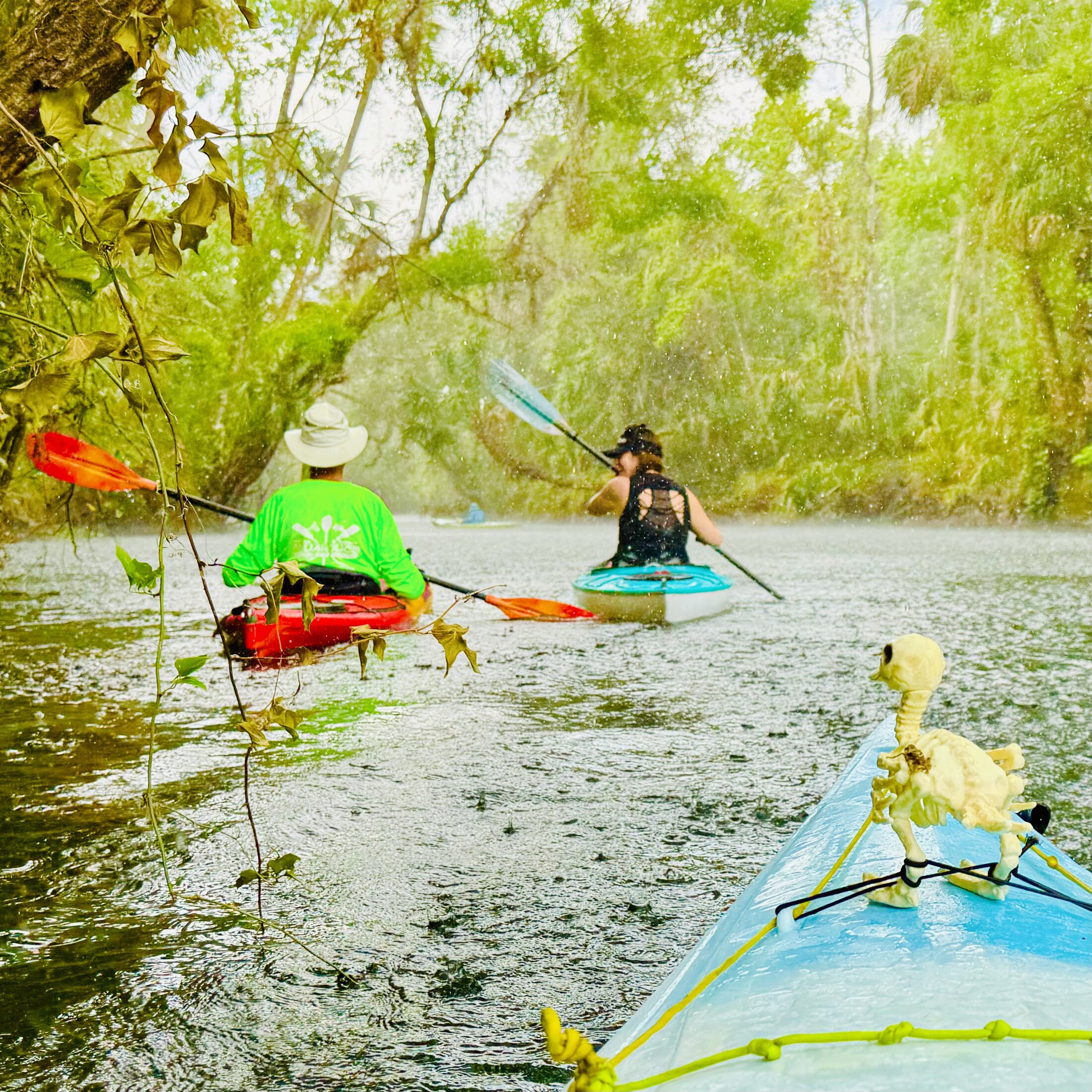
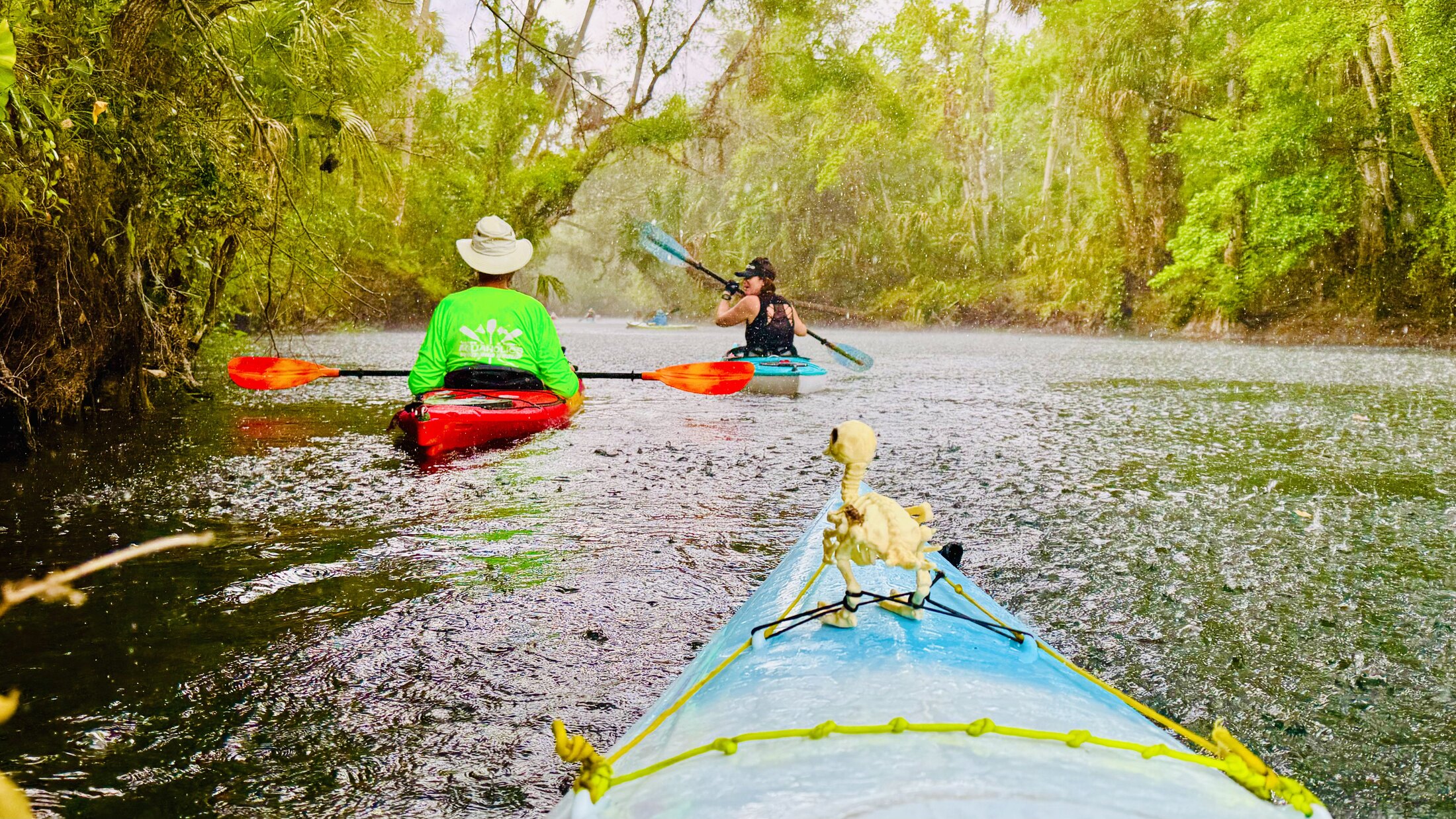
As the heat built, the sky finally delivered a heavy downpour. It lasted only about ten minutes, but everyone appreciated the cooling rain on such a hot day. The river surface boiled with raindrops, colors softened and the forest briefly took on an entirely different mood.
There was no reason to wait it out. We simply kept moving, enjoying the cooler air until the downpour passed and the bright green forest returned.
Gary clears the way
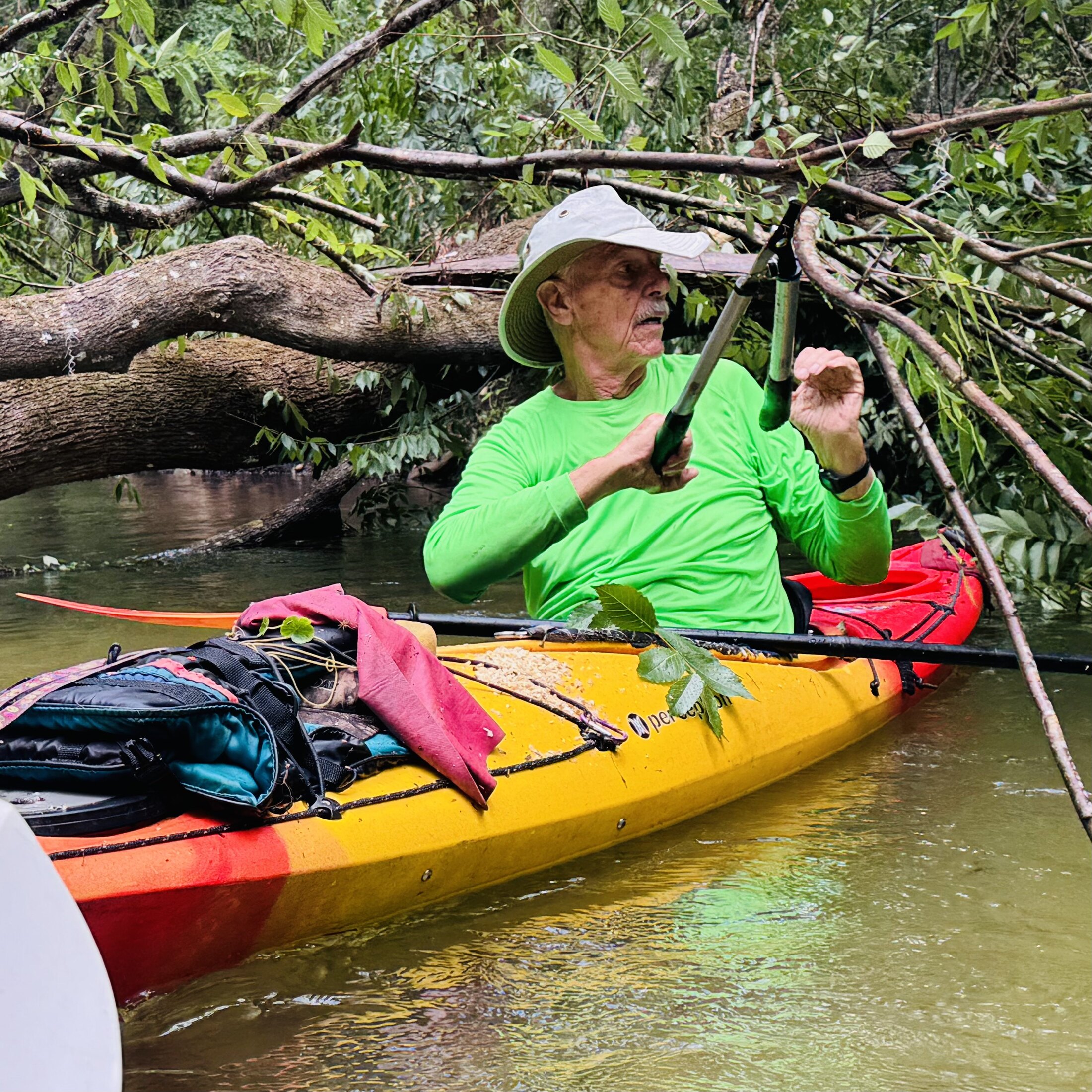
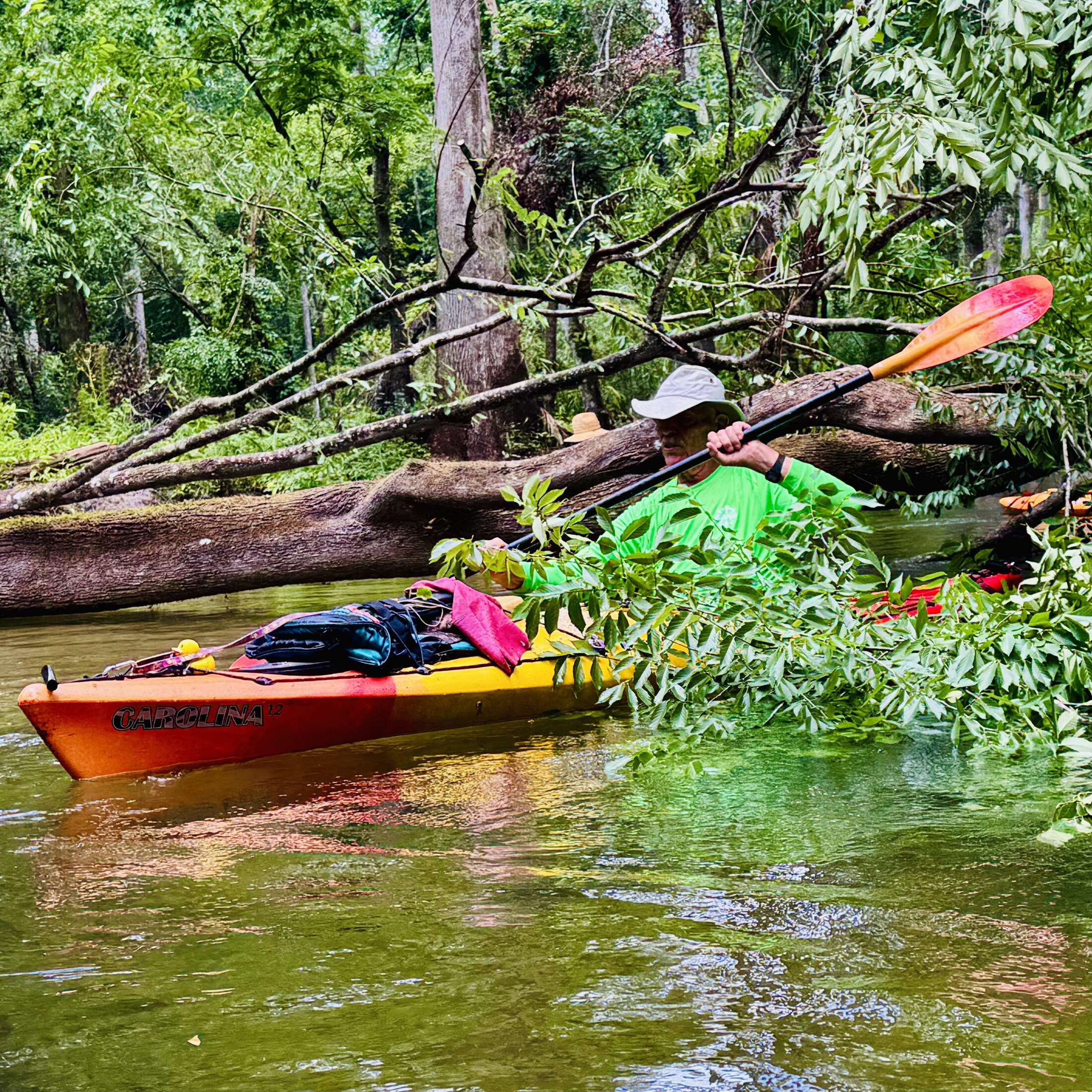
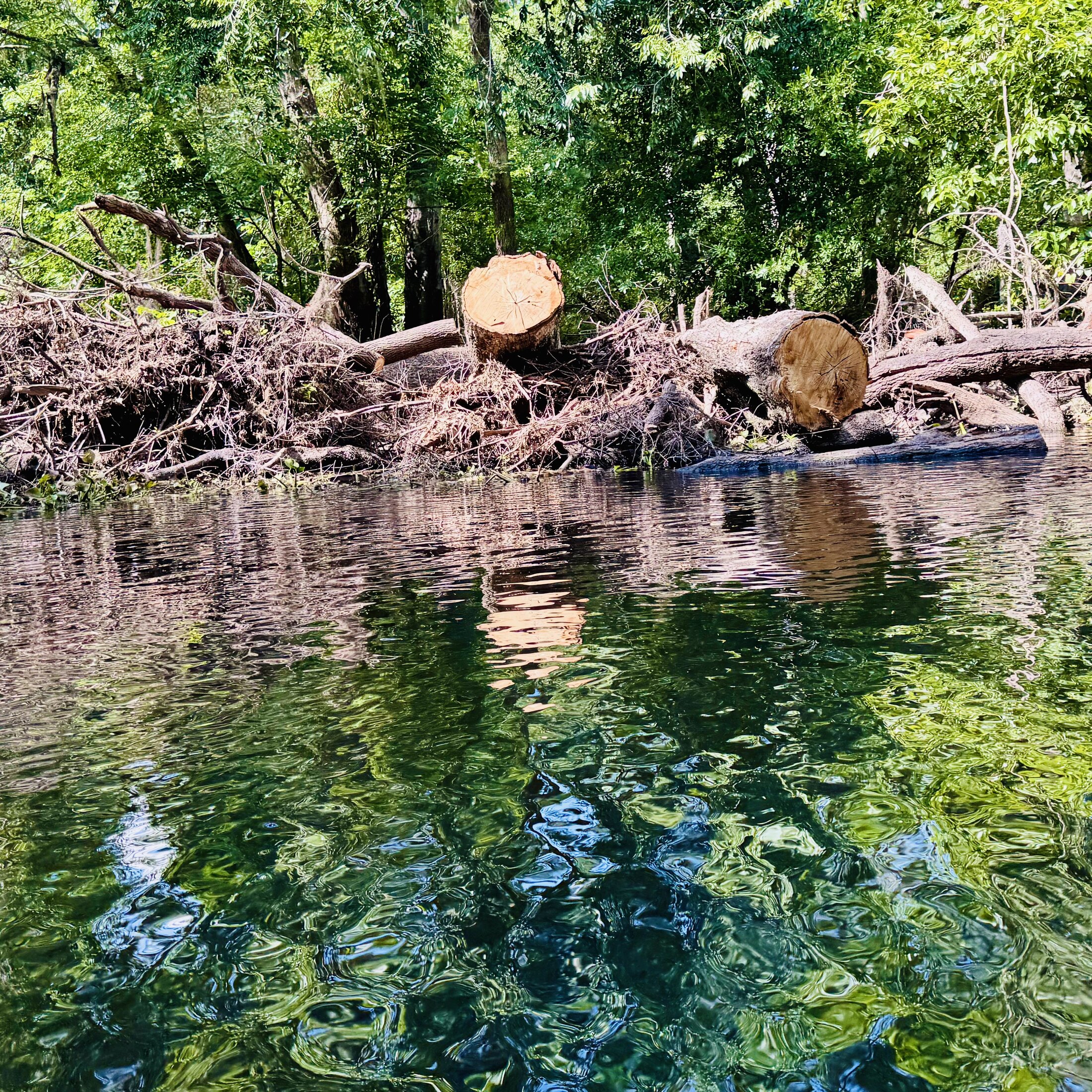
Low water and recent storms had left the runs crowded with branches, downed trees and thick mats of vegetation. Gary brought his chainsaw and loppers, as he usually does, so the group could work through blockages and leave the route a little more passable for those who followed.
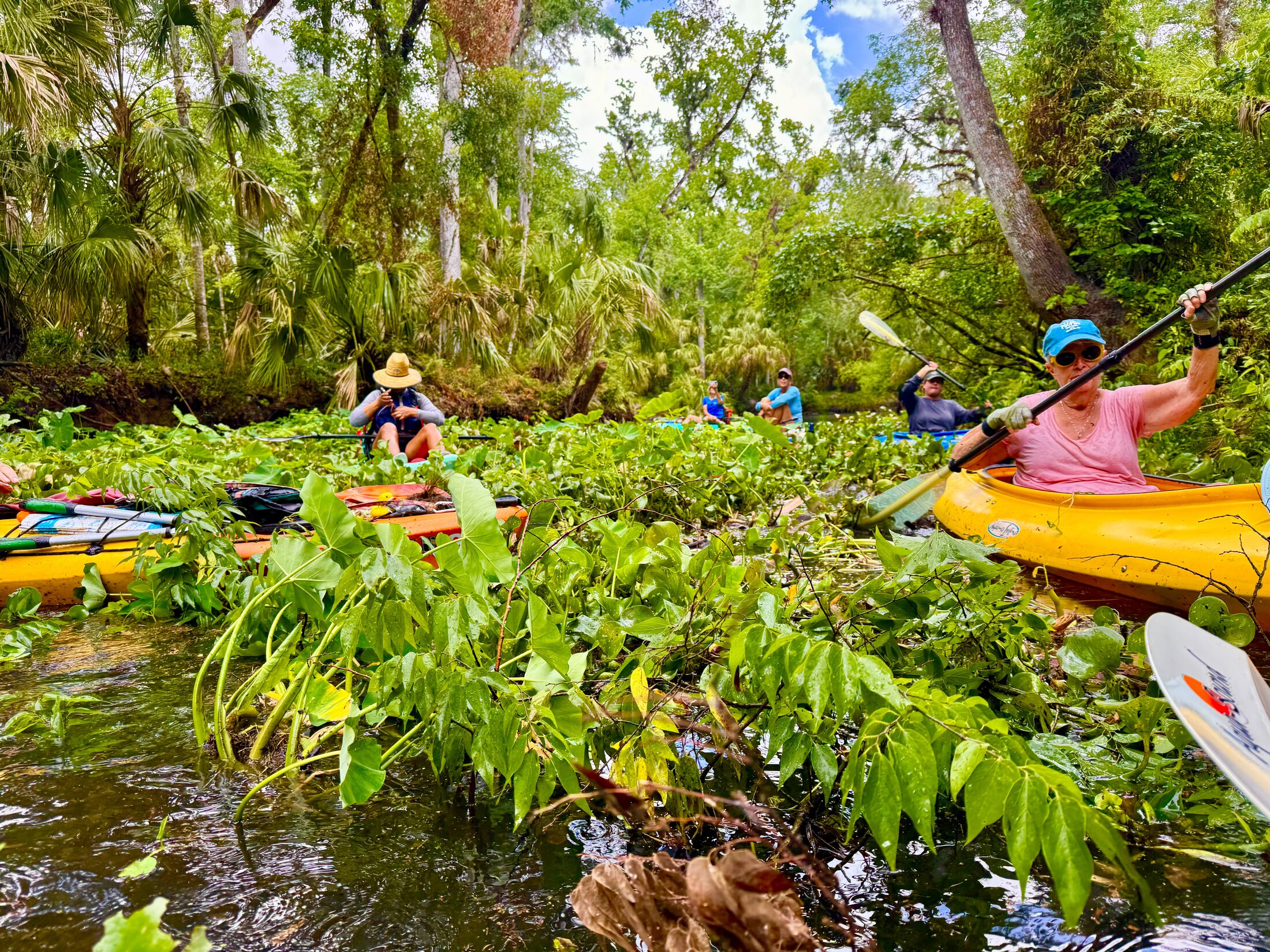
Clearing river blockages is slow, physical work. Boats must wait in current while someone trims branches, cuts a safe opening or decides that a portage is the better option. Gary’s preparation and willingness to do the work made a real difference.
Wildlife and the long finish
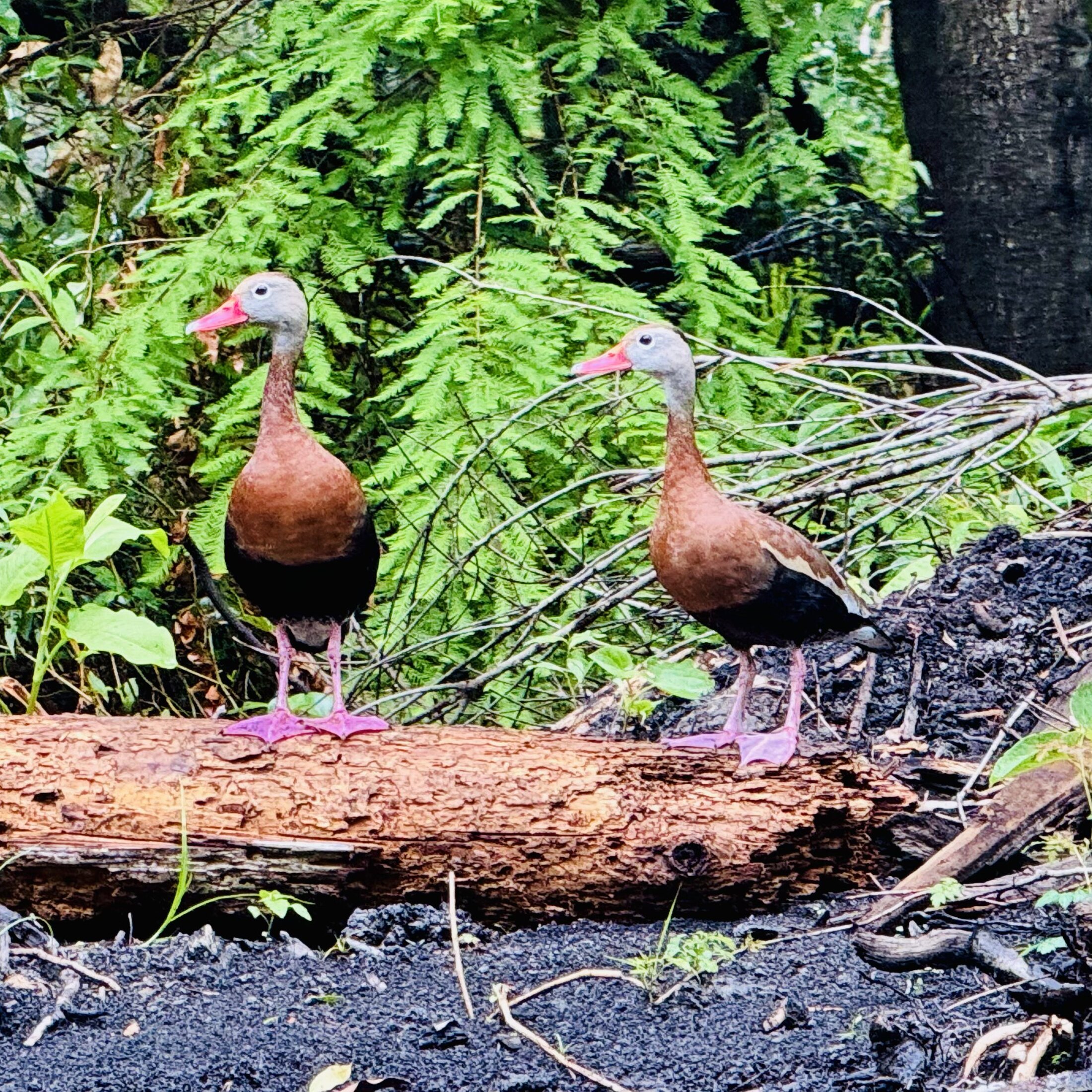
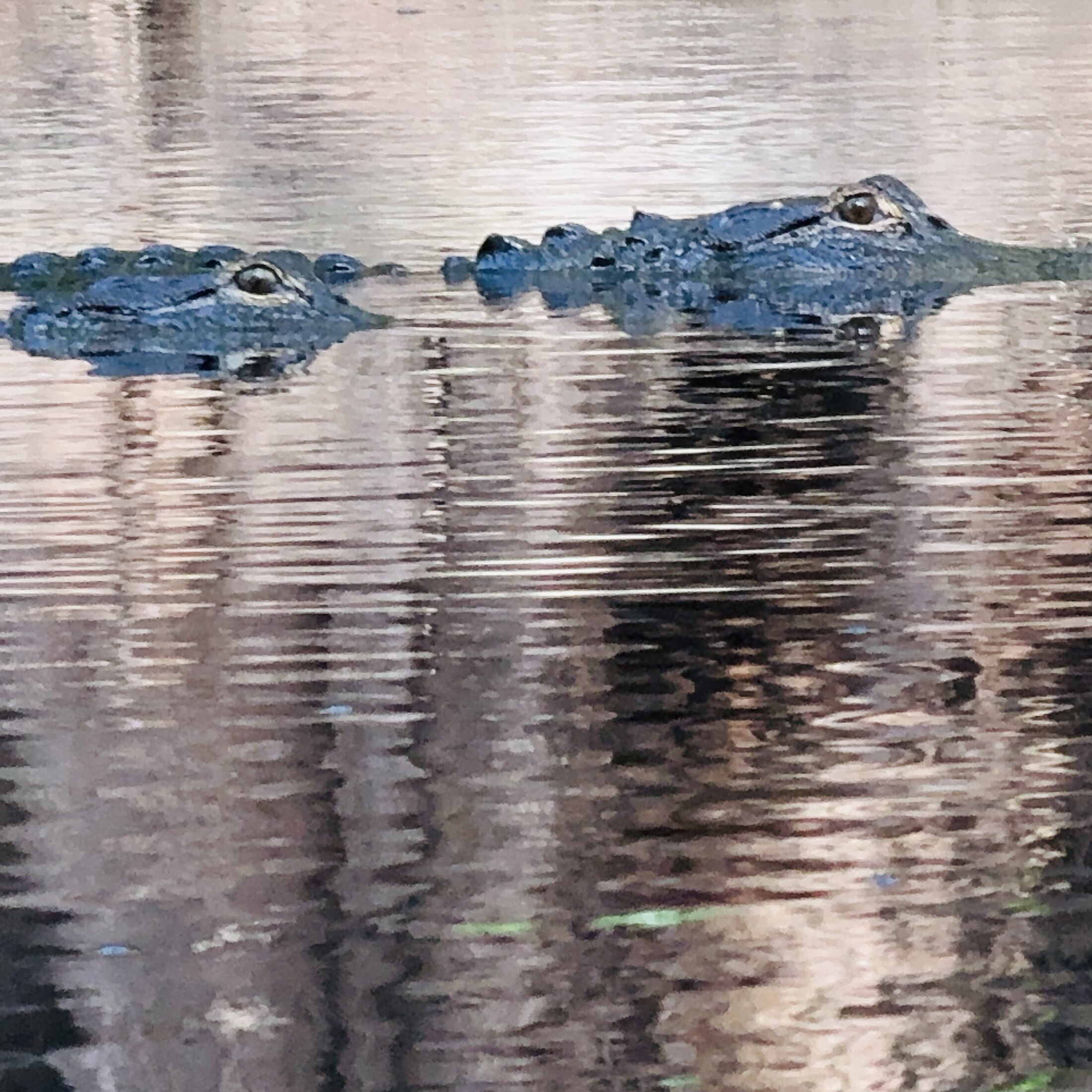
Beyond the hardest blockages, the river gradually widened. Whistling ducks watched from a log, a limpkin worked the muddy edge and an alligator floated almost invisibly at the surface. Those quiet encounters helped mark the miles toward Morris Bridge.
After hours in the confined runs, the broader water felt expansive. The pace could finally become steadier, although the distance already traveled was beginning to show.
We also passed clear evidence of the day’s work: fresh cuts where a blockage had been opened. Eventually the cypress reflections, wider channel and familiar Morris Bridge landscape announced the end of a demanding but satisfying 17-mile day.
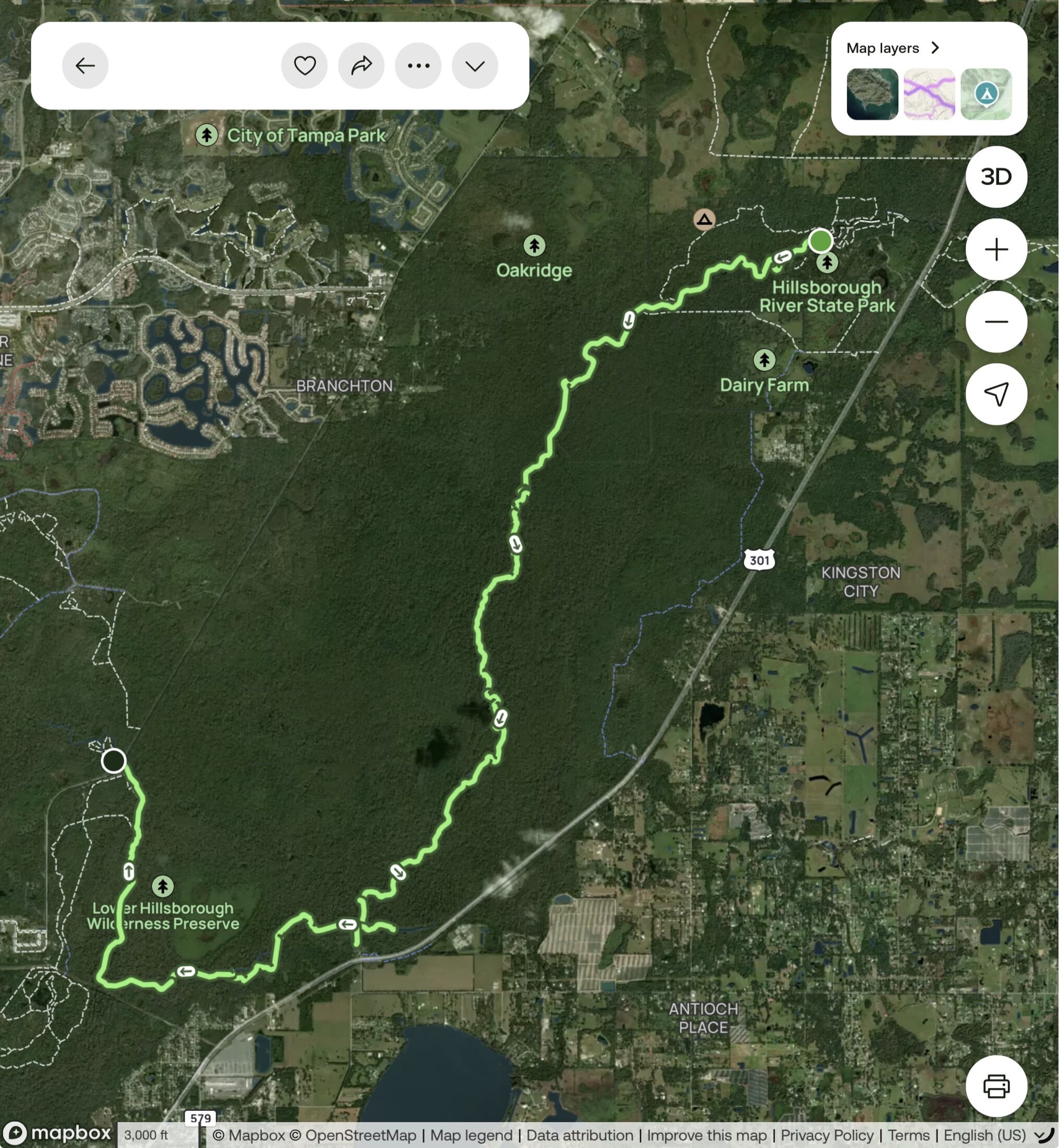
The complete 17-mile route
The recorded track shows how much farther this trip continued beyond the heart of Seventeen Runs, all the way to Morris Bridge.
All photographs by Tim Driskell, except photographs of Tim, which were taken by other paddlers in the group.