Cape Cod has always been one of my favorite places in New England. To really experience the Cape, I have always felt that you need to travel beyond the elbow and continue north into the Outer Cape—Wellfleet, Truro and Provincetown. That is the Cape I know best and the one I have returned to year after year.
I have stayed on Cape Cod almost every year, often for a full week at a time. Many of those trips were with Bernie and the boys. We would rent a house somewhere on the Cape, settle in for the week, and spend nearly every day exploring beaches, ponds, harbors and towns.
What I loved most was that there was never any reason to hurry. The Cape rewarded slow travel: an early swim, a long bike ride, a kayak launched with the tide, a seafood stop, another beach, and then a sunset somewhere near Provincetown.
The Cape Cod National Seashore
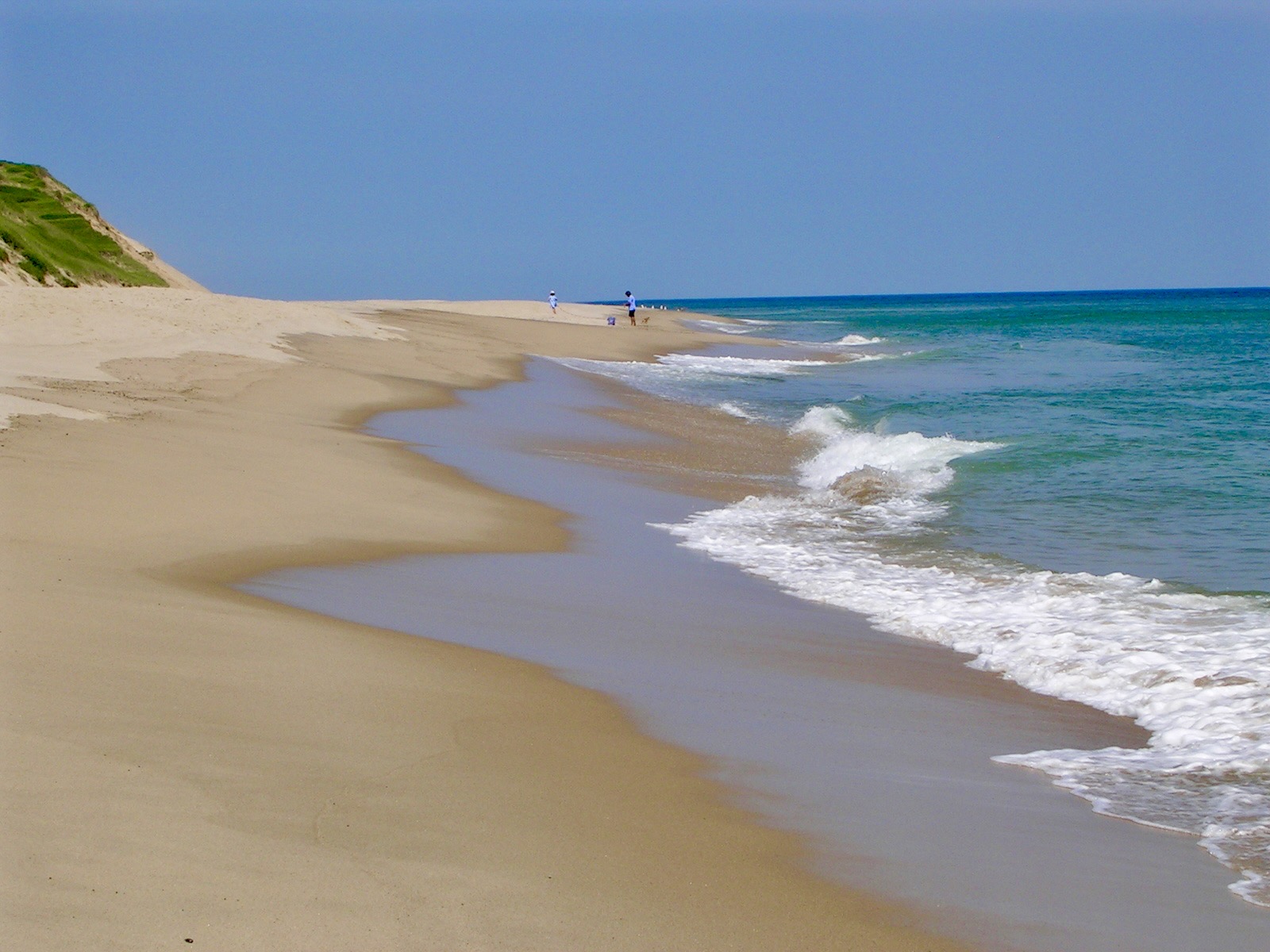
If you want to experience a real Cape Cod beach, head to the Cape Cod National Seashore. There are roughly eight or ten remarkable ocean beaches spread along the Outer Cape, and each one has its own character. Some of my favorites have always included Race Point, Coast Guard Beach, Nauset Beach and Ballston Beach.
These beaches are not landscaped resort beaches. They are wild, open and exposed to the full power of the Atlantic. The dunes, seals, shifting sandbars, cold water and long stretches of undeveloped shoreline are what make them so special.
Ballston Beach was one of the places I returned to for years. A long walk from the Truro hostel led to a traditionally clothing-optional stretch where volleyball games were often underway. I spent many summer days there over the years. I also spent far too much time in the sun, and today I am paying for it with the skin cancers and sun damage that came later. The memories are still wonderful, but I am much more careful now.
The Cape was never about checking attractions off a list. It was about staying long enough to let the day unfold.
Kayaking Cape Cod
Kayaking is one of my favorite ways to experience Cape Cod. There are countless places to launch, and the combination of protected harbors, tidal rivers, open bay, islands and ocean beaches creates an endless variety of trips.
Pamet Harbor
Pamet Harbor in Truro is one of my favorite paddling areas. It is a real working harbor filled with fishing boats, docks and activity. Early in the morning, boats are loading gear and heading out. Later in the afternoon, they return with their catch while gulls and other birds gather for scraps. It is always scenic and full of life.
At lower tides, Pamet Harbor becomes a completely different place. Long tidal flats open up and make it possible to walk and explore far out from shore. It is also a beautiful place to watch the sunset when the tide is out, as long as you keep track of the water and begin heading back before the returning tide overtakes the flats.
Riding the Pamet River Tide
From the center of Truro, near Jams, it is possible to launch at high tide and follow the Pamet River all the way toward the Atlantic. With the outgoing tide behind you, the seven- or eight-mile trip is almost effortless. Most of the work is simply steering while the current carries the kayak through the river and out toward beautiful sandbar islands.
Once outside, there is time to pull onto the sandbars, swim, play in the waves and enjoy the sun. When the tide turns, you launch again and let the incoming current carry you the same seven or eight miles back toward the car.
Provincetown Harbor
Kayaking around Provincetown is just as memorable. We rarely stayed in the area without spending at least one day paddling Provincetown Harbor. The boats, wharves, shoreline, shops and constant activity make it one of the most interesting urban harbors to explore from the water.
The Truro Hostel
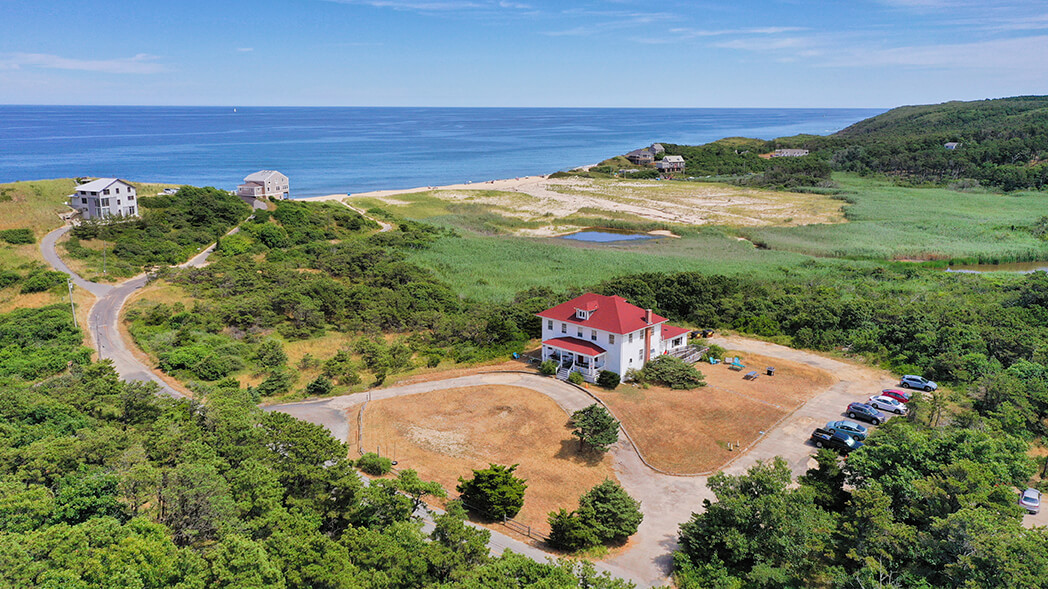
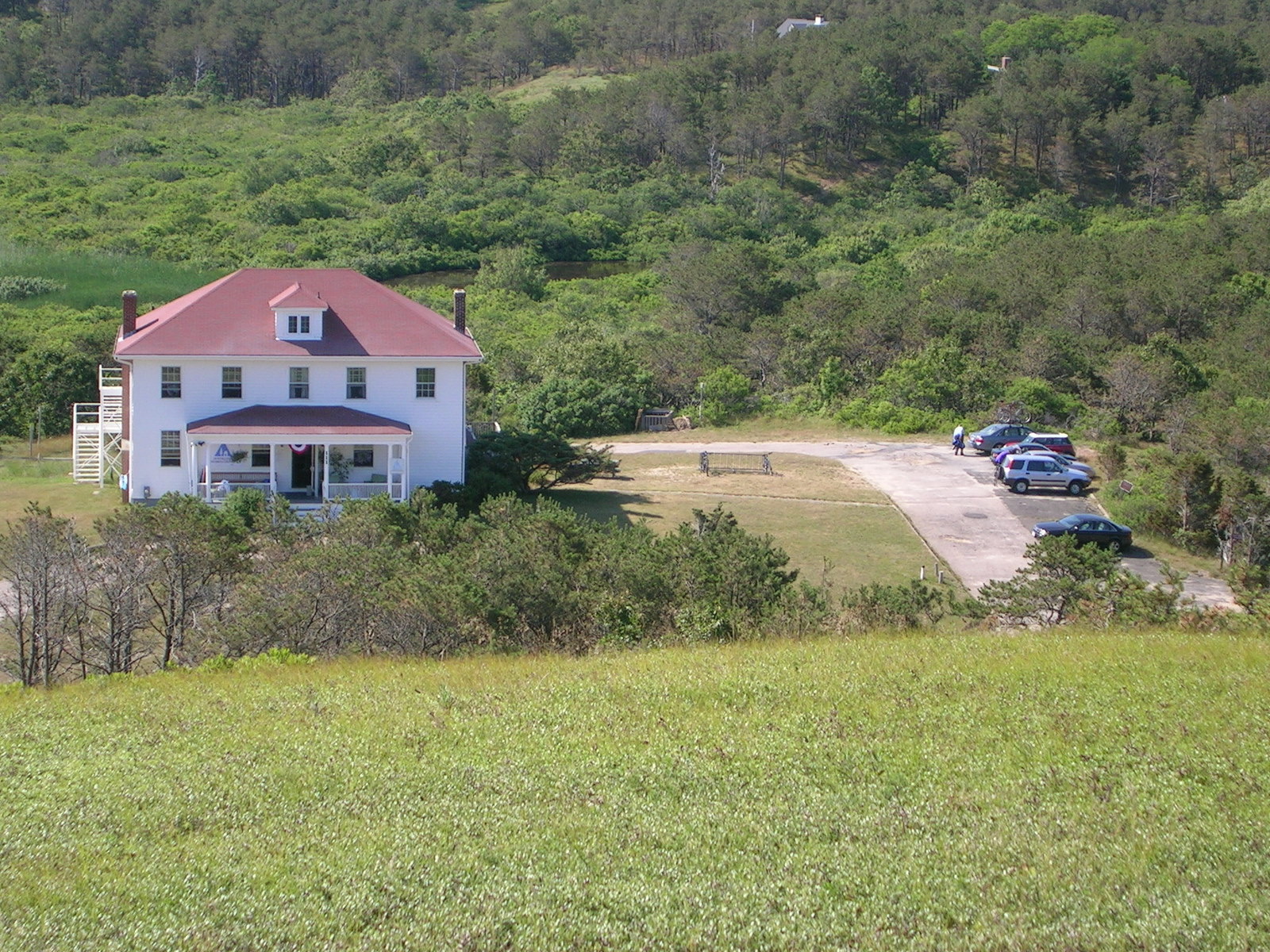
The Truro hostel deserves its own section because it was never merely a place to sleep. It was one of the best hostels I ever stayed in, anywhere, and it became a destination in its own right. The building is an old Coast Guard life-saving station set among the dunes and within walking distance of one of Cape Cod’s finest beaches.
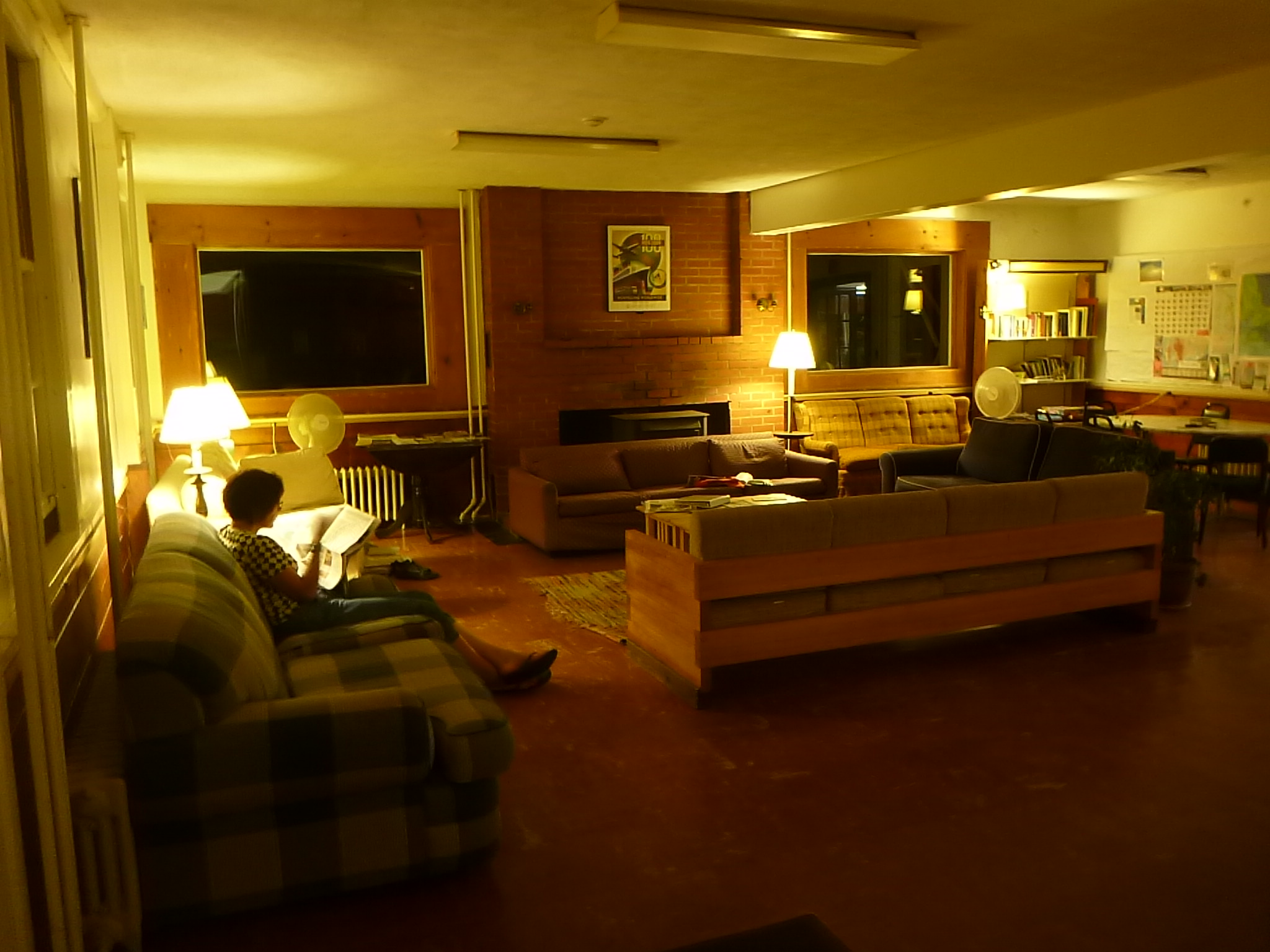
I stayed there dozens of times, nearly every summer for about twenty years. The hostel had barracks, a huge kitchen, a large living room full of couches, a broad porch, plenty of outdoor space and a fire pit. It was friendly, inexpensive and filled with travelers from around the world who were eager to explore. I met many interesting people there and often ended up paddling, bicycling, hiking the dunes or spending the day at the beach with people I had only recently met.
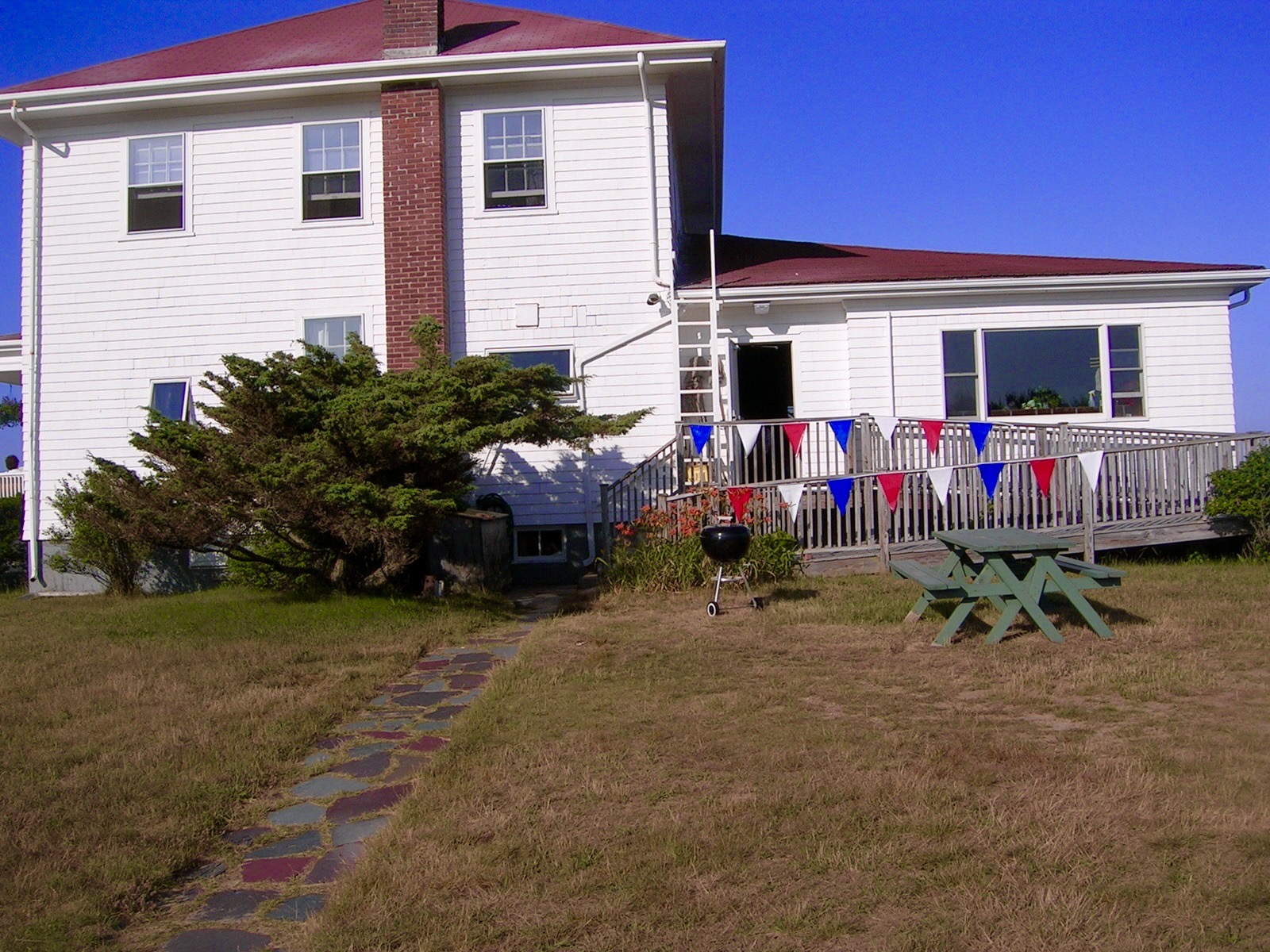
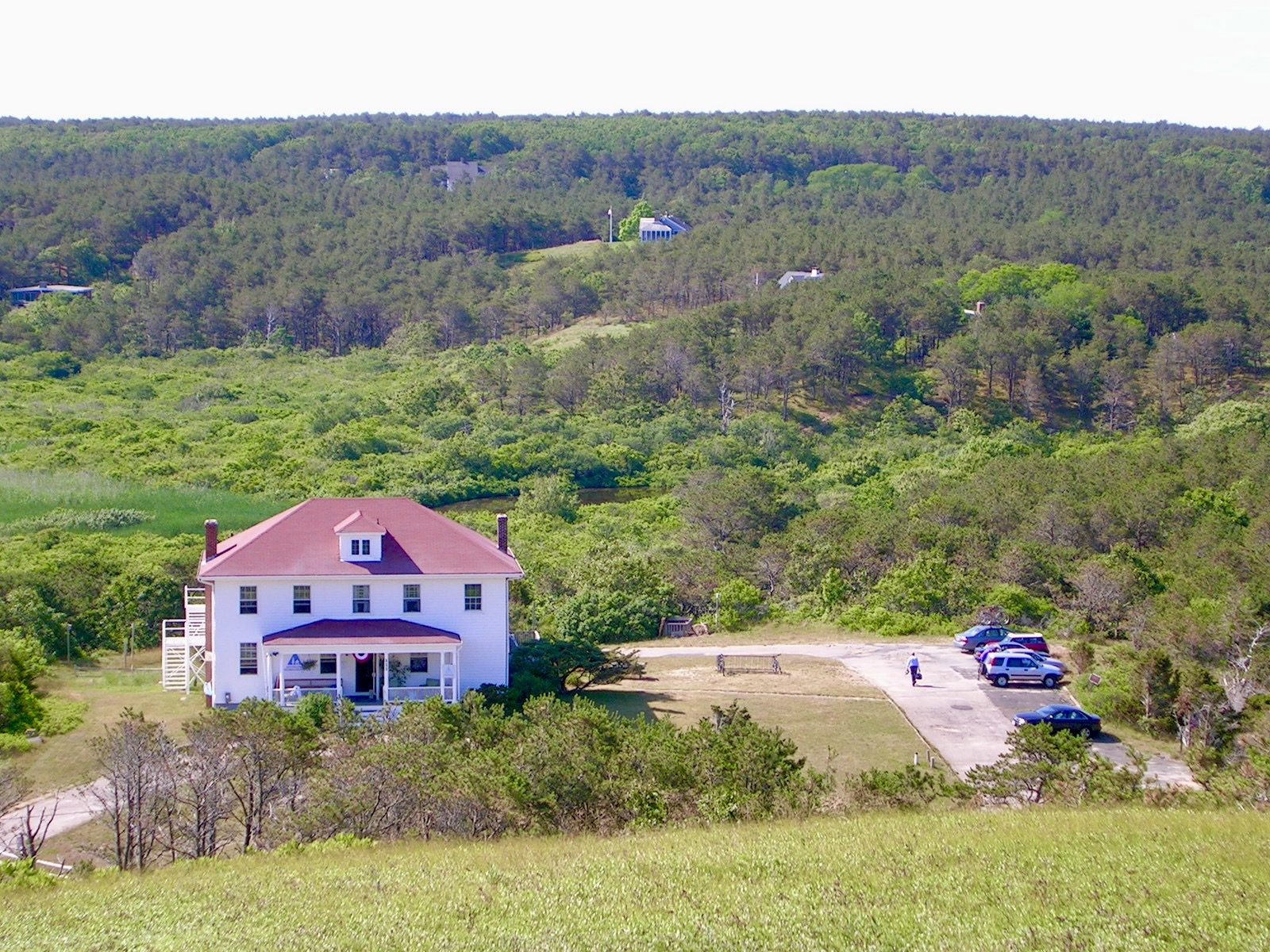
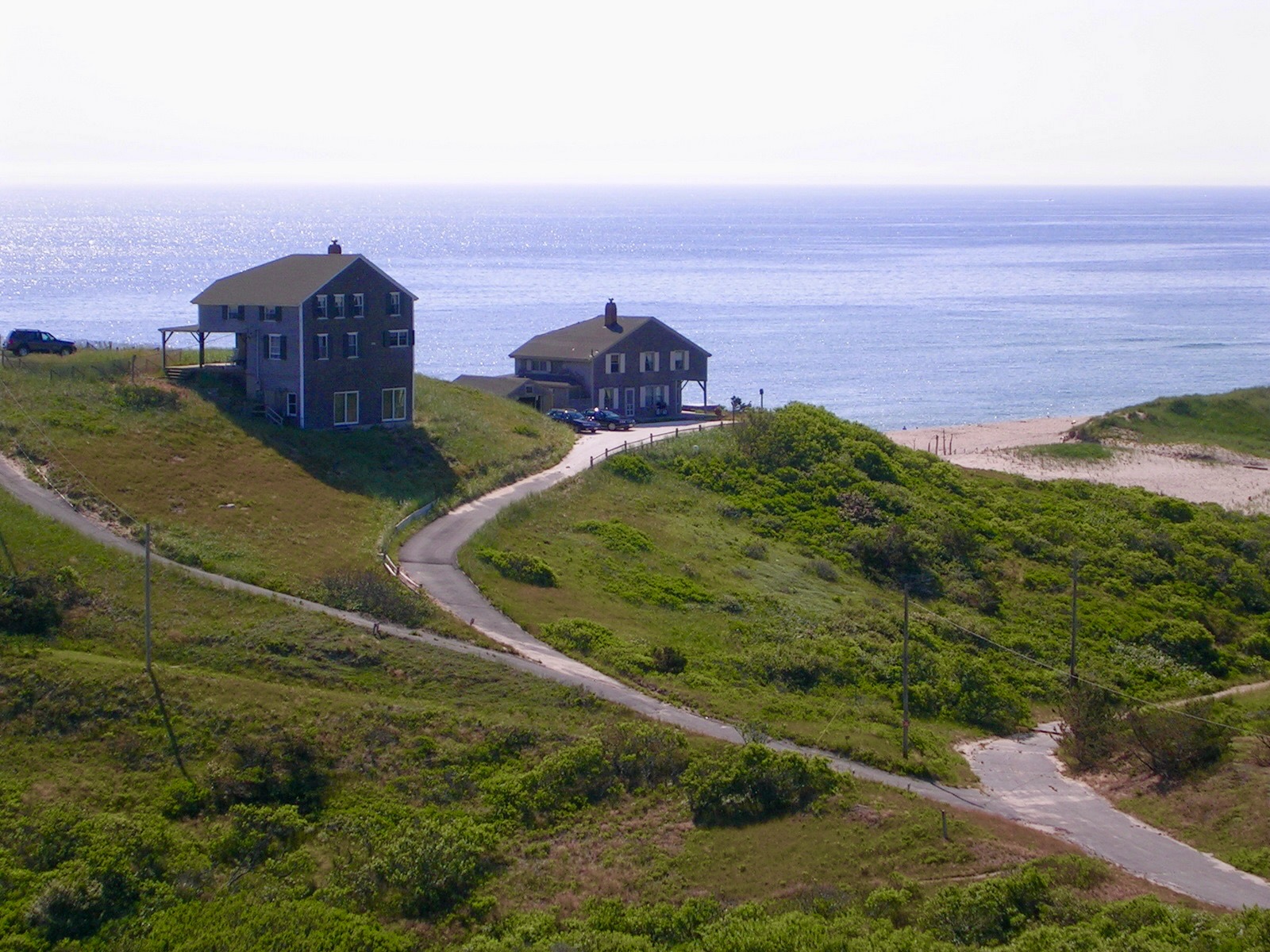
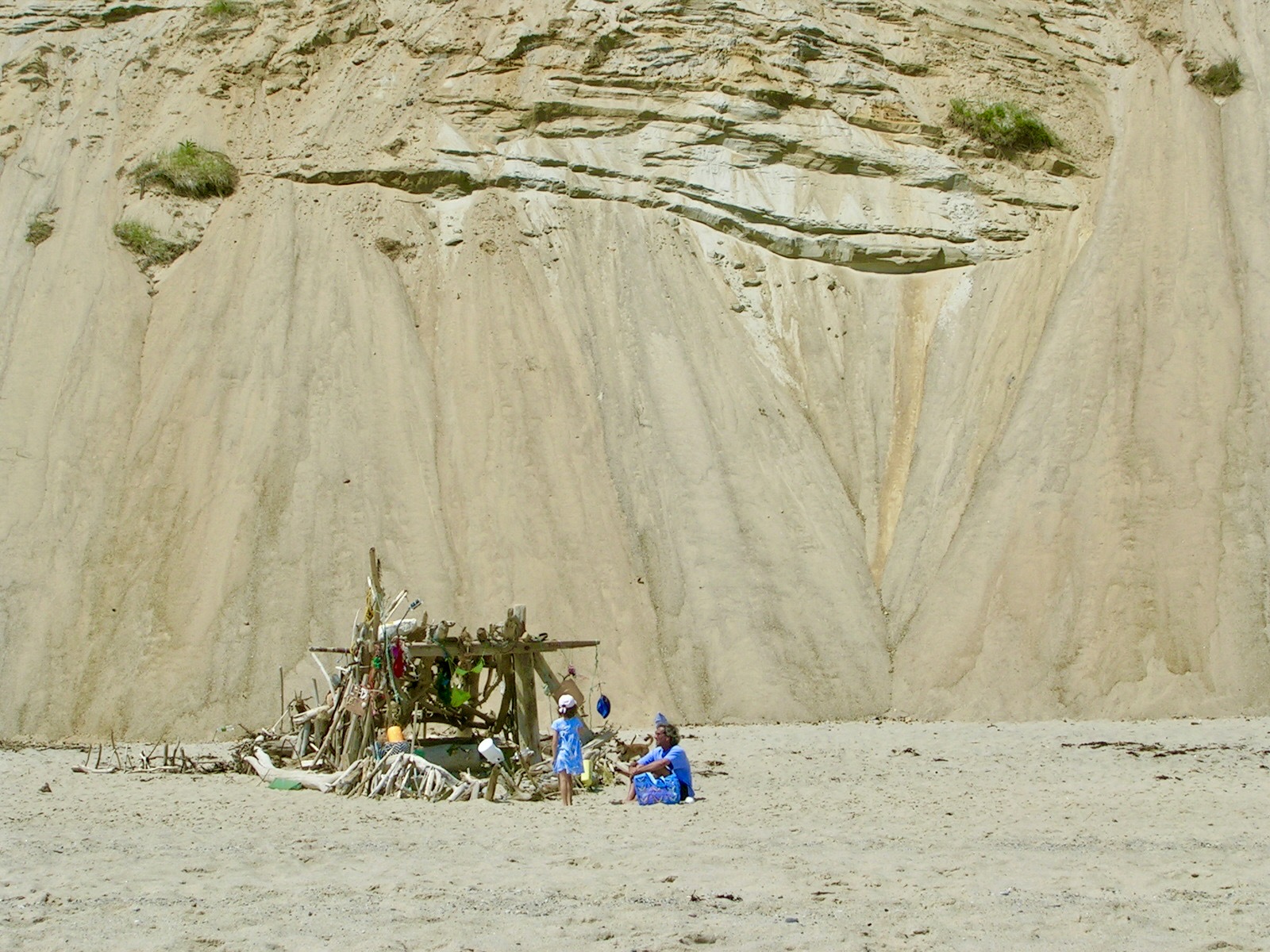
The Truro Hostel occupies one of the most spectacular settings of any hostel I have visited, surrounded by dunes and protected coastal landscape with Ballston Beach only a short walk away.The Truro hostel, decorated for summer, with the porch and outdoor gathering area where travelers spent so much time together.The comfortable common room was the social heart of the hostel. Evenings were often spent reading, sharing travel stories, comparing maps and planning the next day’s adventures.The hostel seen from the dunes, surrounded by the wild landscape of the Outer Cape.A closer view of the old life-saving station and its simple parking area.The old station buildings sit directly above the Atlantic, with the beach only a short walk away.Ballston Beach was close enough to reach on foot and became part of the rhythm of every stay—morning walks, long beach days, swimming and sunsets from the dunes.A handmade driftwood shelter beneath the sculpted dune cliffs along the beach.
The men’s dorm in the basement was pretty rough, but I only spent about eight hours there. The rest of the time was upstairs, outside, or exploring the Cape. The women’s dorms were upstairs, with better beds and big picture windows overlooking the ocean.
The location made the hostel an ideal base for everything I loved about the Outer Cape. I could walk to Ballston Beach, climb the dunes for sunset, bicycle the back roads, launch a kayak in Pamet Harbor or the Pamet River, and spend an evening wandering Provincetown before returning to the hostel.
For me, the Truro hostel was one of those rare places where the lodging became part of the adventure. The old building, the shared kitchen and common room, the people I met, the wind in the dunes and the nearby Atlantic all became inseparable from my memories of Cape Cod. It remains one of my favorite hostels anywhere.
Family Vacation Week on Cape Cod — July 2003
One of my favorite Cape Cod memories was a family vacation week in July 2003. Sharlotte rented a house for the week and invited everyone to come out and stay together. The regular group included Sharlotte, Tim, Bob, Thea and Jenny, with Jodi occasionally joining us.
It was the kind of week that made Cape Cod feel less like a destination and more like a shared family home. We spent our days at the beach, around the harbor and exploring the Cape, then returned to the rented house to relax together. With young children along, the pace was easy and spontaneous—sand, swimming, shells, ice cream and whatever seemed enjoyable that day.
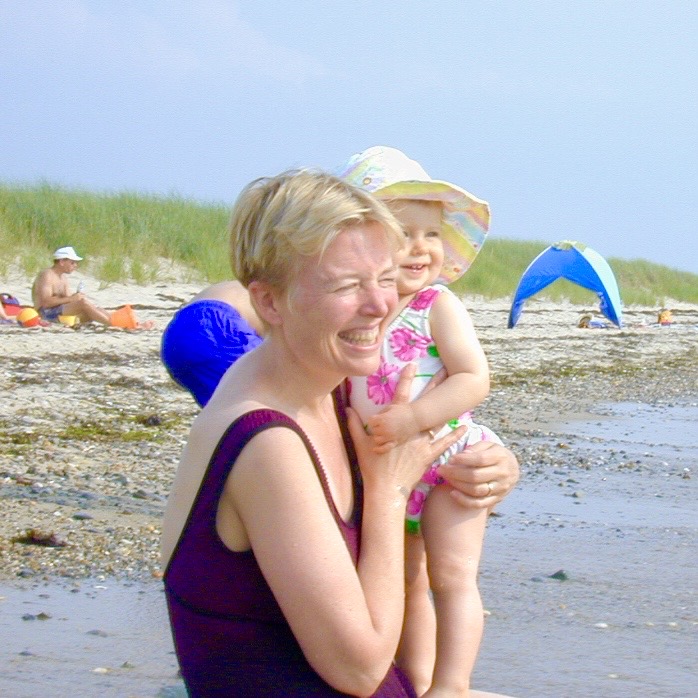
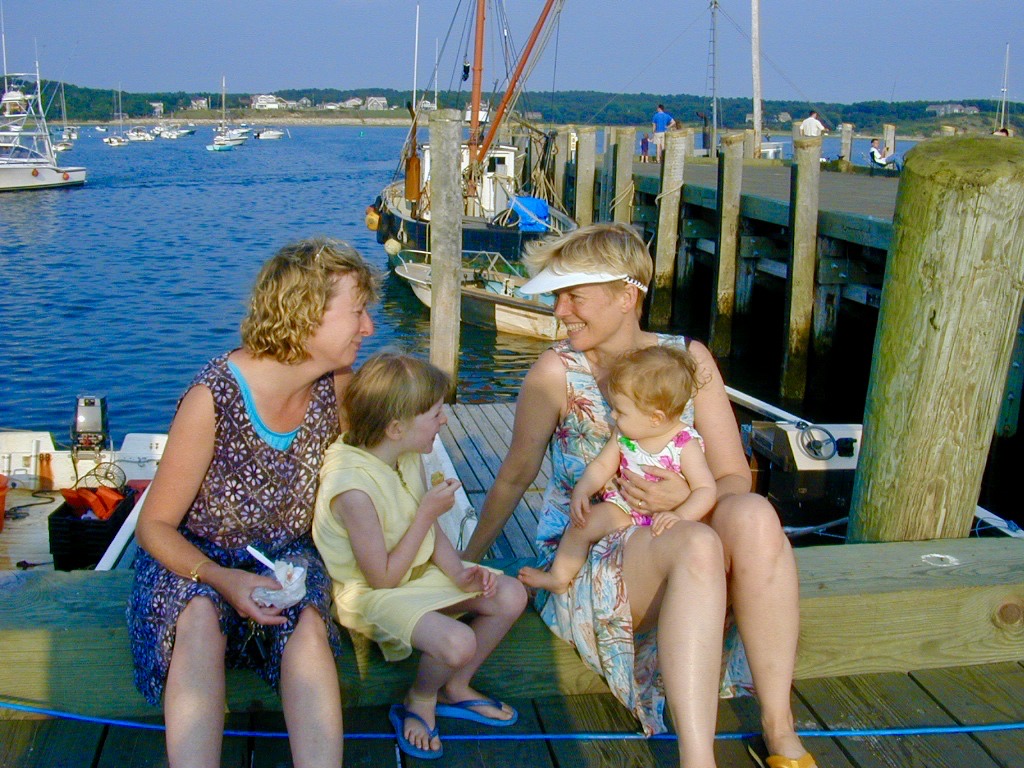
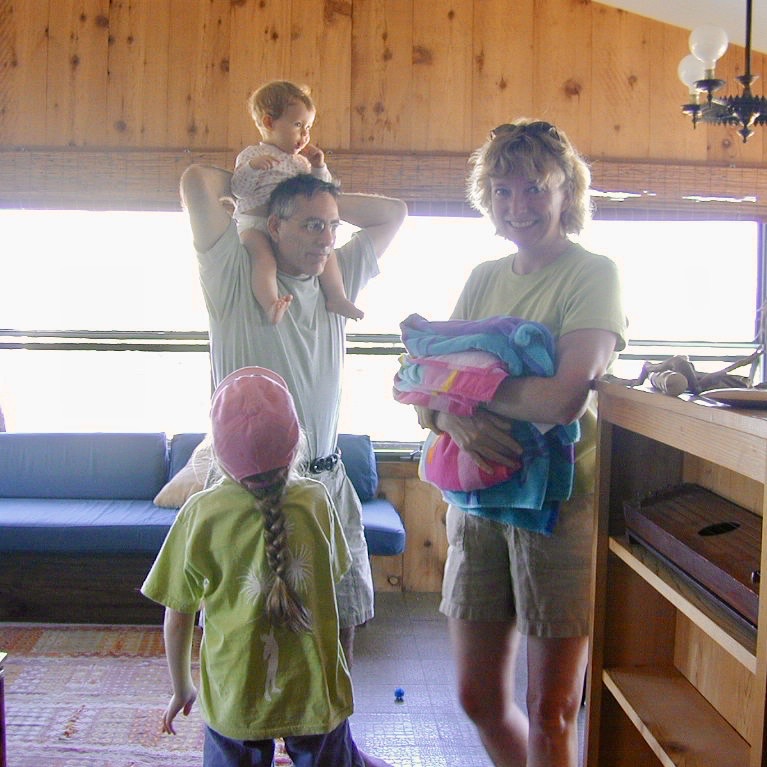
A joyful beach moment during our July 2003 family week on Cape Cod.A relaxed family beach day—the kind of simple summer afternoon around which the entire week revolved.Tim and Jenny examining a shell beside the harbor.Sharlotte, Thea, Jenny and the baby spending time together along the working harbor.Bob giving the baby a shoulder ride inside the house.A quiet family moment back at the rented house after a day of exploring.Tim, Bob and the children crowded together for one of the week’s playful photographs.Getting towels and children organized inside the house before heading out for another Cape Cod day.
What stays with me most is not any single attraction. It is the feeling of everyone living under one roof for a week, watching the children enjoy the beach and harbor, sharing meals and creating the ordinary little moments that later become the strongest memories.
That July 2003 week became part of a larger family tradition. Cape Cod was a place where we could slow down, spend uninterrupted time together and let each day take its own course.
Other Hostels of Cape Cod and the Islands
Hostels have always been an important part of how I traveled. They made long trips affordable, placed me close to the places I wanted to explore, and introduced me to people who often became companions for the day or the week.
Hyannis Hostel
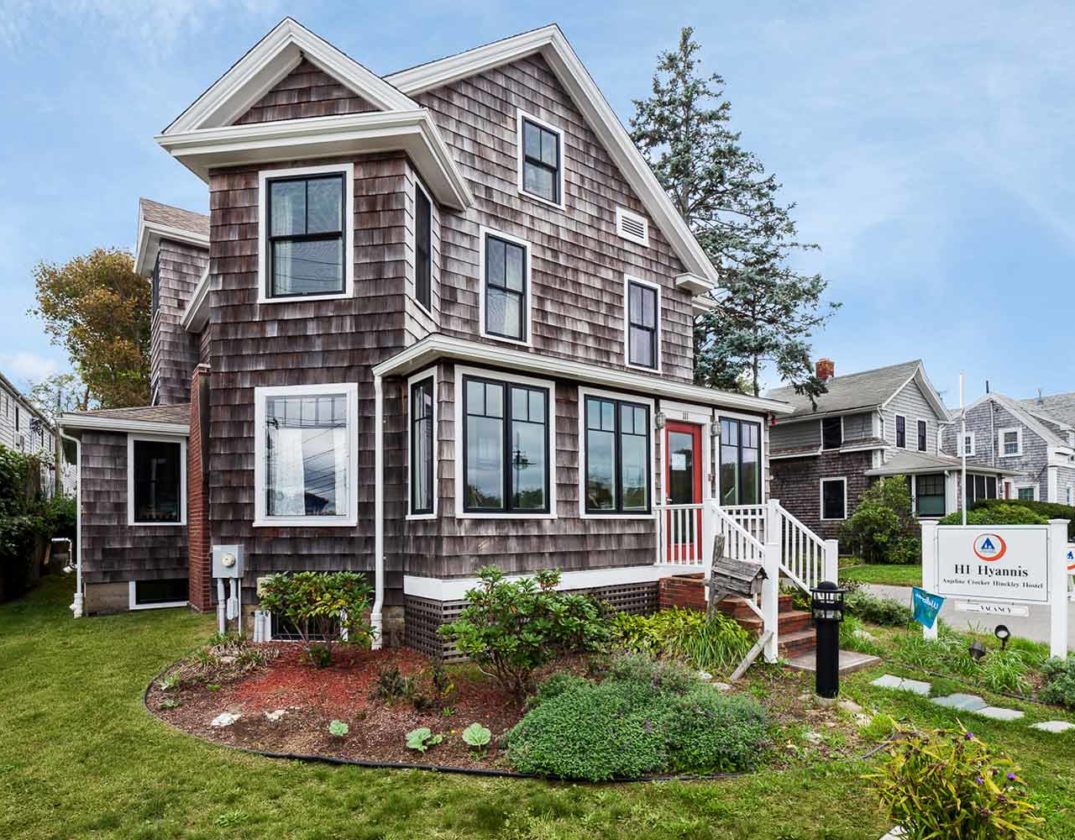
The Hyannis hostel, housed in a traditional Cape Cod building almost directly across from the island ferry terminal.
The Hyannis hostel is especially useful because it sits almost directly across from the ferry terminal. Someone planning time on Martha’s Vineyard can stay there, wake up in the morning and roll a bicycle onto one of the early ferries.
Martha’s Vineyard Hostel
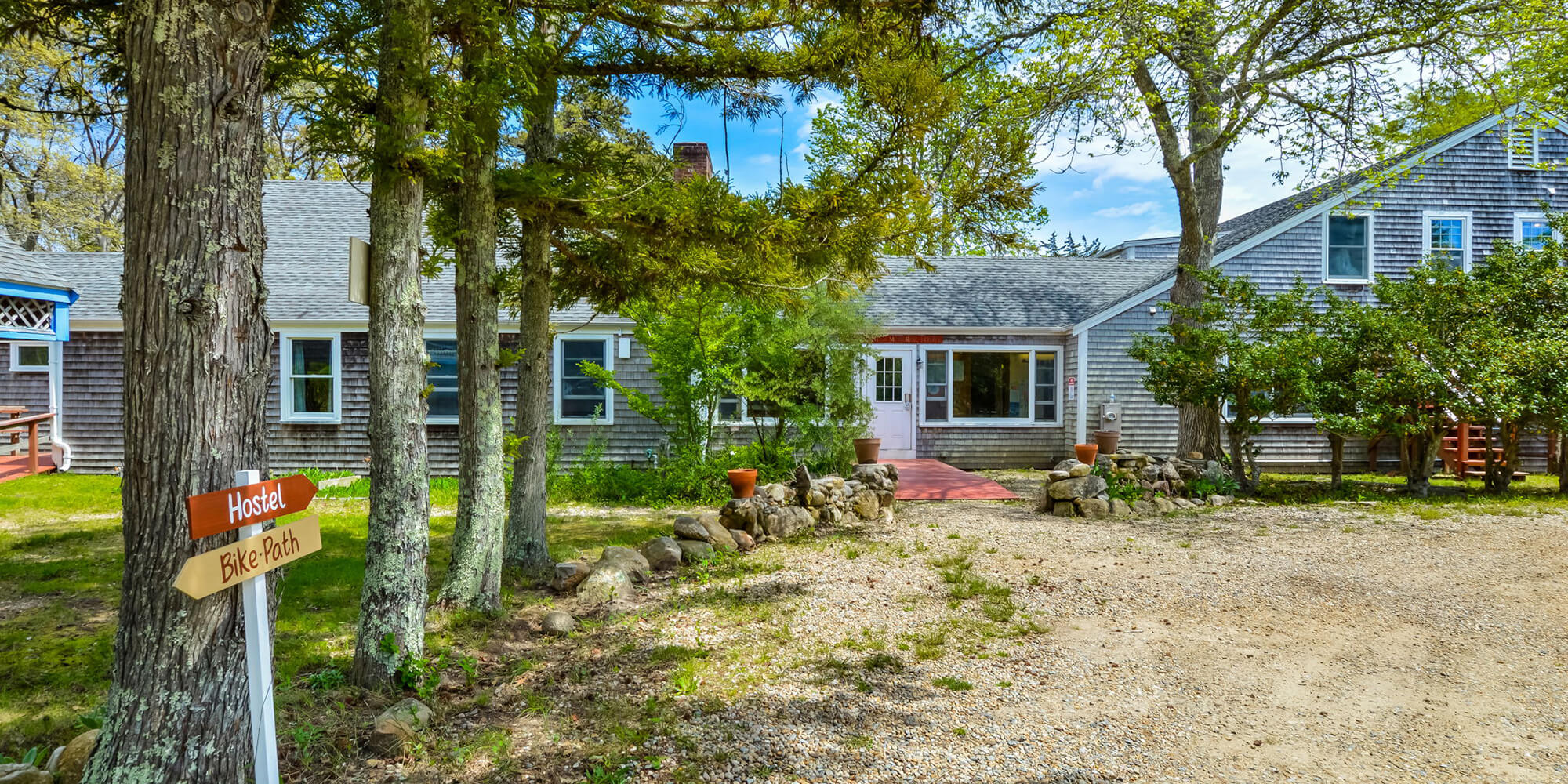
The Martha’s Vineyard hostel in its quiet wooded setting, with the island bike path passing directly beside it.
The Martha’s Vineyard hostel is only a short bicycle ride from the ferry and sits directly on the bike path. It had a large cafeteria-style dining area where everyone could eat, talk and compare plans, and it was common to see dozens of bicycles outside.
Nantucket Hostel
The Nantucket hostel was another memorable place, also associated with an old life-saving station and located near the beach. Nantucket is well suited to arriving by ferry with a bicycle and a pair of saddlebags.
Hostels were never just cheap lodging. They were part of the trip itself. They introduced me to interesting people, kept me outdoors, and made it possible to spend several days truly experiencing a place instead of rushing through it.
Bicycling, Swimming and Stopping Whenever I Felt Like It
The Cape Cod Rail Trail is one of the best ways to spend a day. Biking has always been excellent on the Cape, Martha’s Vineyard and Nantucket, and the bicycle lets you move slowly enough to notice places that disappear when you travel by car.
A first-class Cape Cod day for me combined a long ride with numerous stops for swimming in kettle ponds, a visit to the seashore, and at least one ice cream stand along the way. Sometimes seafood was added too.
The kettle ponds scattered across the Cape are some of my favorite warm-water swimming holes in New England. They break up a ride perfectly and turn a long day of bicycling into a series of swims, rests and unexpected discoveries.
White Village Cottages: A Cape Cod Tradition
For several years, Cindy and I stayed at White Village in North Truro near Provincetown. We first discovered the little beachfront cottages in 2011, only a few weeks after we met, and returned for the next three or four summers.
We often rented for an entire week and invited family to join us in neighboring cottages. The simple cottages were close together and right beside the water, making it easy for everyone to move between cottages, gather outdoors, launch kayaks and spend long days at the beach.
Days were spent at beaches and on the water, while evenings were spent wandering Provincetown. White Village became more than a place to stay—it became part of our Cape Cod summer tradition.
The distinctive beachfront cottages of White Village in North Truro.A family beach day during our July 2003 Cape Cod vacation week.
A Different Kind of Luxury
Some people go on vacation primarily for the hotel. But that was never what drew me to Cape Cod. I wanted to know where I was. I wanted to feel the wind, smell the ocean, ride the bike paths, paddle the harbors, swim in kettle ponds and spend the day on the beaches.
For me, the greatest luxury was always being close enough to the place that the room became almost irrelevant.