One hundred days across the United States and Canada—climbing, camping, hiking, fishing, hot springs, friendship, and life on the open road.
(Every photograph is clickable for a full-size view.)
A hundred days built around mountains, friendship, and the open road
In the summer of 1992, Ricky and I turned an old customized van into a moving base camp and headed west with climbing gear, maps, sleeping bags, and only a rough idea of where the next weeks might take us. The trip became one of the defining adventures of my life.
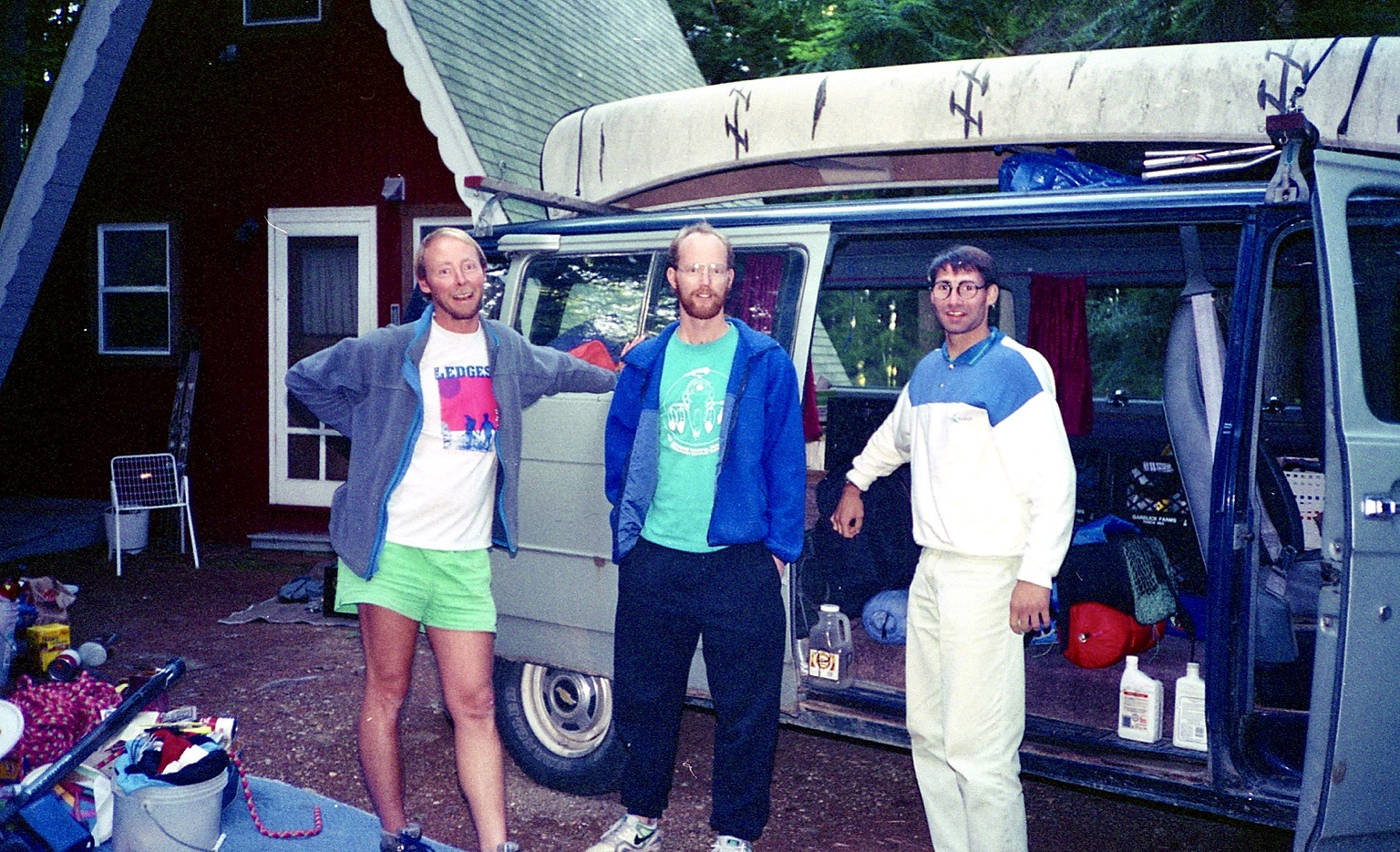
The final day after three months together: Ricky and me still friends, with the Italian traveler we had met at the hostel on our last night.
Ricky was getting tired of receiving my postcards from all over the country every summer, so he decided to take a road trip of his own. He bought an old van, customized it a bit, and asked if I wanted to come along. Being an opportunist, and being a consultant — read: bum — where I could set my own work schedule, he did not have to ask me twice.
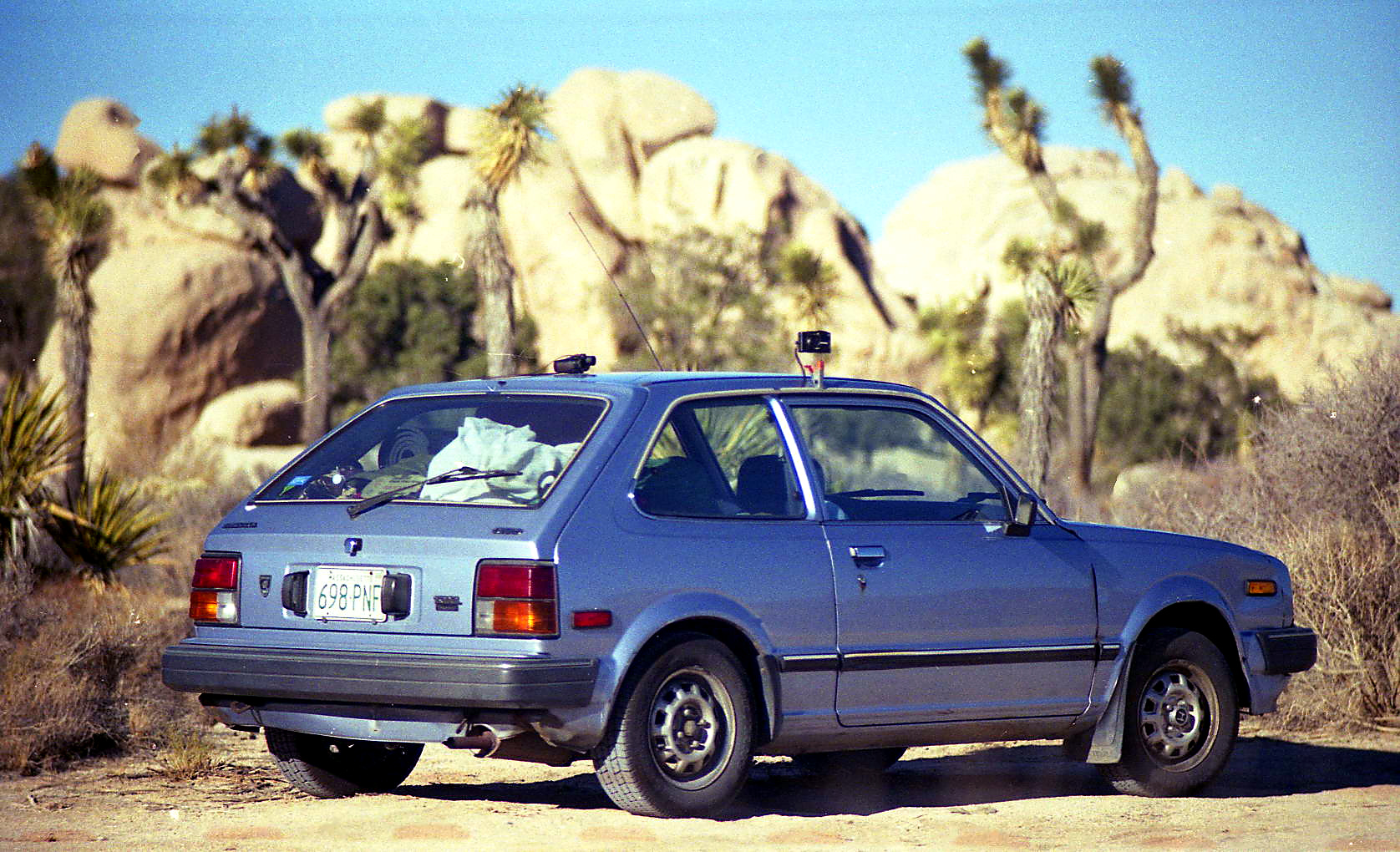
This was 2 years earlier, during my 5-month roadtrip throughout North America, where I had perfected the "camera on a clamp" selfie technique seen here! Much more room in Rick's van!
We were both big into mountaineering and rock climbing at the time, so that became the focus of the trip. We climbed for week after week around the United States and Canada: the Tetons, the Bugaboos, City of Rocks, Devil's Tower country, Mt Rushmore, Montana alpine lakes, and soaked in every hot spring we could possibly work into the route!
It was not just a climbing trip. It was a van-life education in weather, cheap food, long drives, friendship, patience, ridiculous stories, recovery days that were not very restful, and the strange magic of spending months with a map and no normal routine.
We were also in the kind of shape that only comes from years of mountain weekends and a summer built almost entirely around climbing and hiking. That mattered. It helped explain why we could climb for days in a row, carry heavy packs into high country, scramble around the Tetons, live out of a cramped van, and still wake up ready for the next route, trail, or hot spring.
Before the road trip — Ricky and me
The 1992 trip did not come out of nowhere. Ricky and I had already spent countless weekends climbing, hiking, and wandering around the mountains of New England. We were both deep into climbing then — rock climbing, ice climbing, long mountain days, and whatever else gave us an excuse to get outside and test ourselves a little.
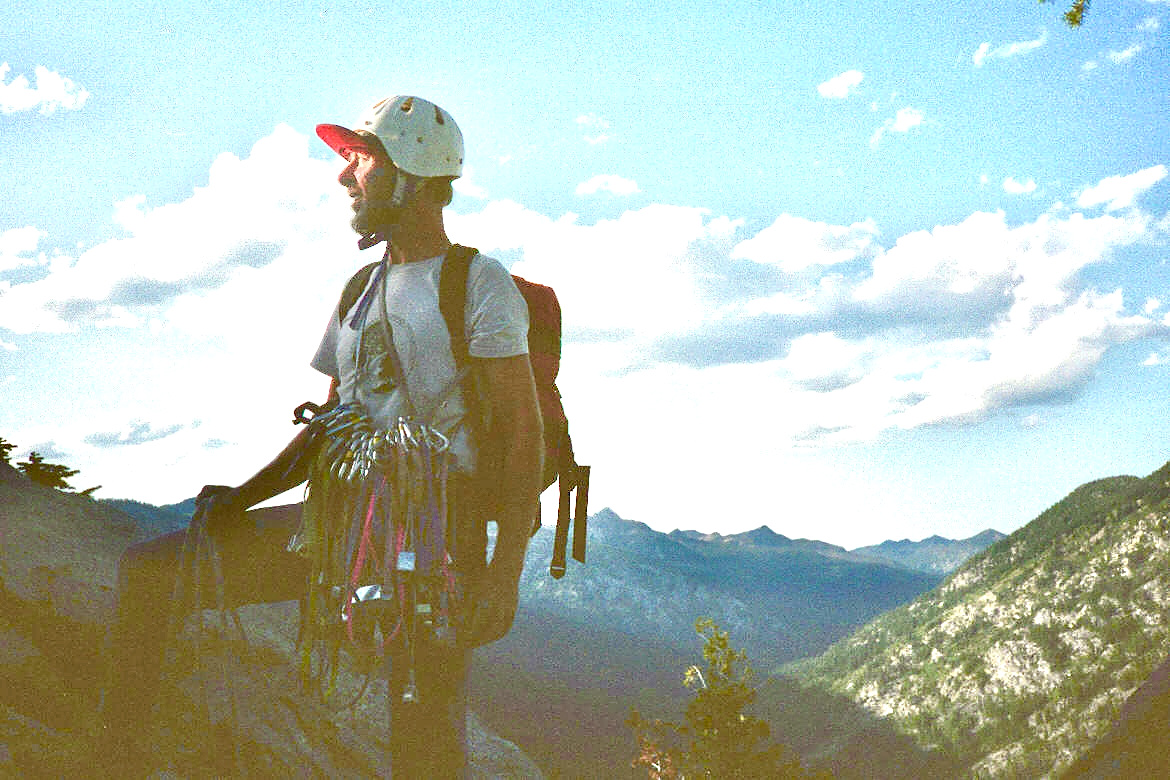
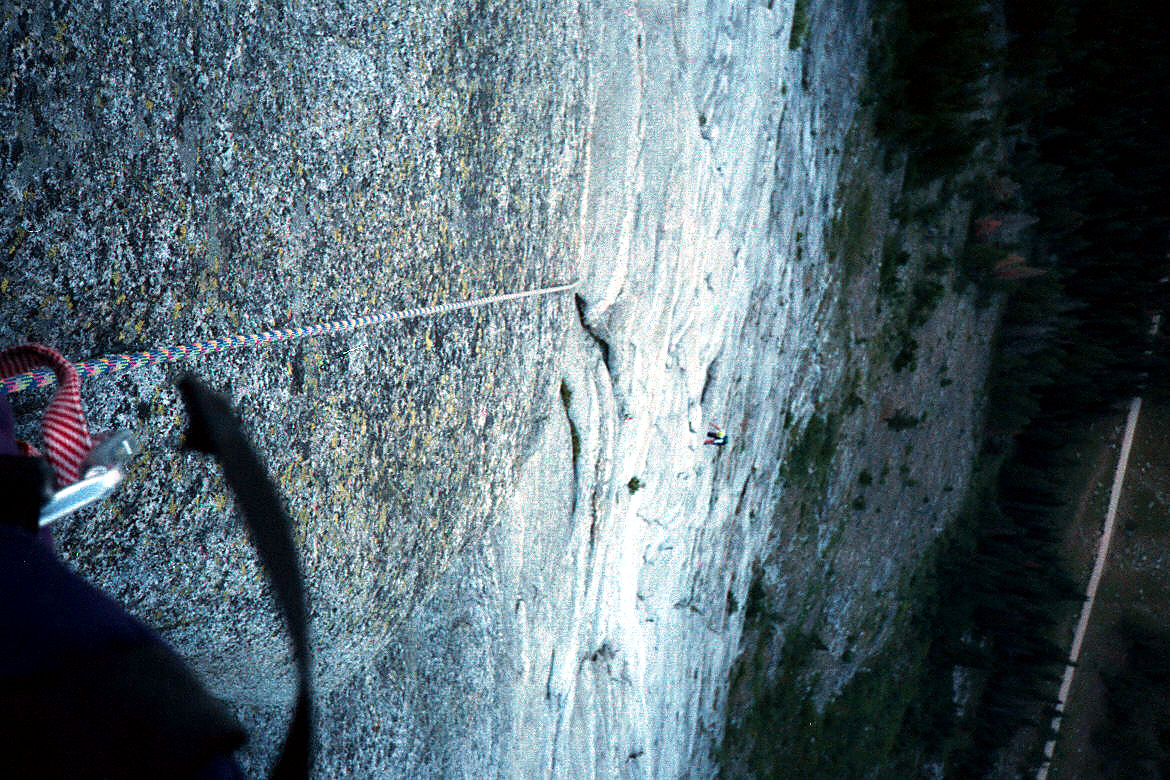
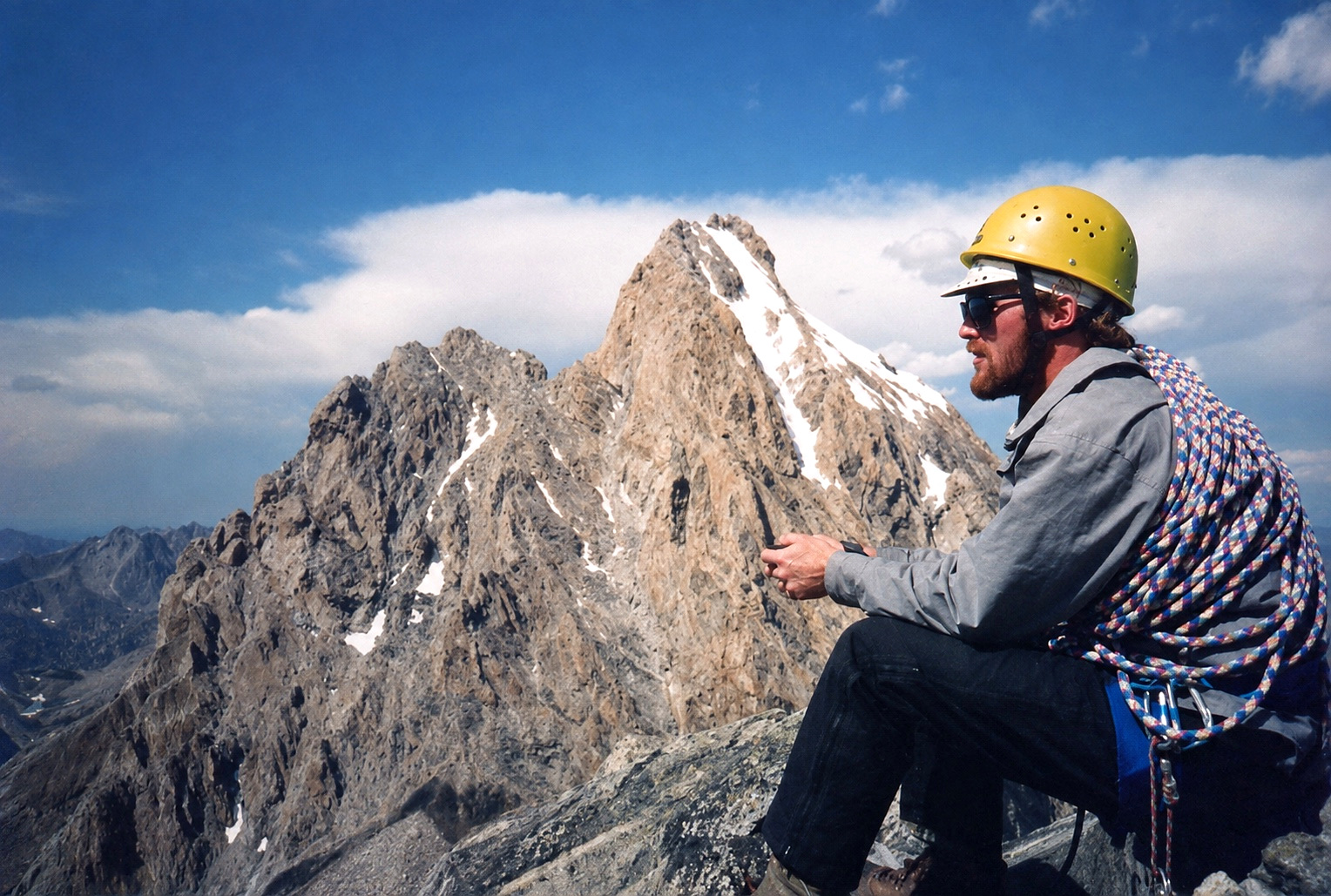
Me, on a 1,400 foot cliff, with the equipment that made the longer routes possible: helmet, rope, backpack, and a full rack of protection.
We climbed throughout the Northeast, especially in New Hampshire and the White Mountains, and we had already built the kind of trust that matters when you are on a rope, on a ridge, or trying to get yourself out of some questionable mountain situation. By the time we headed west in 1992, we were not just two guys taking a trip. We were climbing partners who already knew each other’s habits, strengths, stubbornness, and sense of humor.
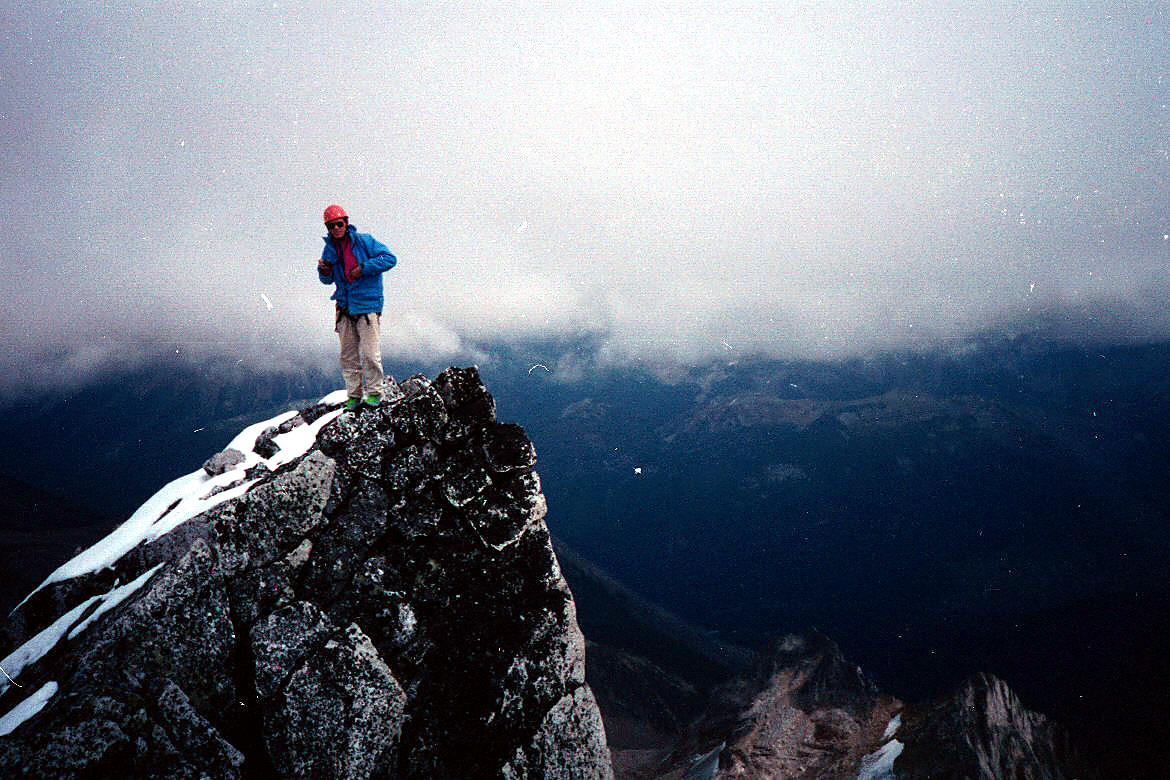
Summit of Bugaboo Spire in Canada. Years of climbing together in New England gave us the trust and confidence to take on much bigger western terrain.
One winter night on Mount Washington stands out as part of that history. Ricky and I got stuck up there in the dark and cold, and for a while it looked like we might have to both crawl into the one bivy sack we had carried. That would have been a miserable night, but it also says a lot about the kind of adventures we were having back then. We were pushing hard, learning constantly, and sometimes getting just close enough to trouble to remember the lesson forever.
So when Ricky got tired of receiving my postcards from earlier long road trips and decided to buy an old van for his own western climbing trip, it made perfect sense that we would go together. The postcards may have planted the seed, but the years of New England climbing gave the trip its foundation.
The Needles of South Dakota and Sylvan Lake
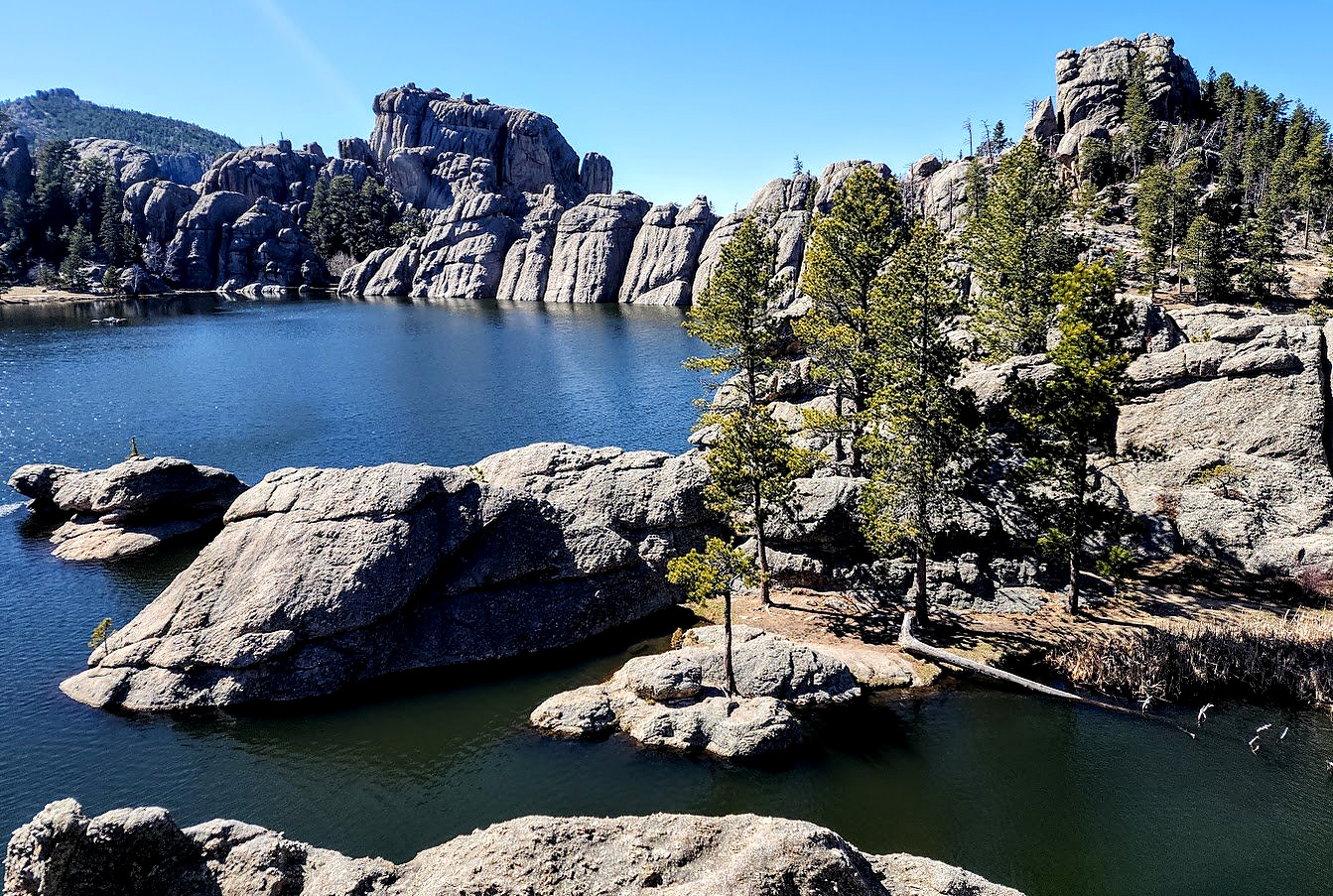
Our first extended lead climbing on the trip was in the Needles section of South Dakota, near Sylvan Lake. Those climbs were wild: straight-up spires sticking out of the ground, rounded and covered with crystals. The rock was beautiful, but it was also tough on the hands, and it demanded attention.
Sylvan Lake and the Needles—beautiful water, extraordinary granite, beautiful climbing on sharp crustals, and an ideal place to build confidence for the harder climbs ahead.
That was where we really started learning the systems we would need for the rest of the trip: leading longer routes, rappelling with two ropes, managing rope tangles, using anchors properly, belaying carefully, and thinking through how to get back down after committing to a climb. We had climbed plenty before, but this was different. These were real spires, real exposure, and real consequences if we got sloppy.
The Needles gave us room to practice leading, rappelling, rope management, anchors, and exposure before moving on to larger objectives, like this 1400 foot wall in Idaho.
We could have easily stayed longer in the Needles. There was so much good climbing there, and the whole area had that strange, beautiful Black Hills feeling. But we knew we had a lot of road and climbing still ahead of us, so eventually we moved on.
We also stopped at Mount Rushmore for about fifteen minutes, basically just to say we had been there. Neither of us was especially moved by it as a park experience. We both felt it made sense as a national monument, but not really as the same kind of national park experience as the wild places we were chasing. It felt more like something in the category of the St. Louis Arch: worth seeing once, but not the reason we were out there. But we did find some awesome climbing about a half hour away.
That said, the rock around the Black Hills and Mount Rushmore area was excellent. We found more climbing nearby and poked around on whatever good rock we could find. The Needles gave us a real push forward as climbers before the bigger western objectives that came later.
Devil's Tower: the climb that almost happened
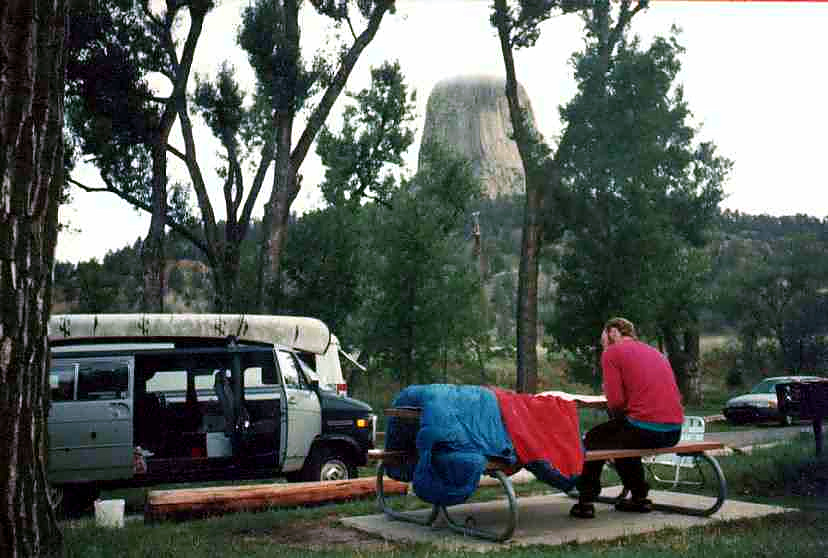
Devil's Tower, Wyoming was one of those sacred climbs I was really looking forward to. We were not completely sure if it was doable for climbers like us, but we set up camp right next to the Tower and spent the evening scouting a good route.
Camped directly beneath Devil’s Tower, studying the route and believing we would climb it the next morning.
Several climbers coming in for the evening assured us that we had the gear, experience, and time to complete one of the easier 5.6 or 5.7 routes. Finding the rappel station on the summit before nightfall would be critical. We decided: four thumbs up. We would give it a shot in the morning.
Then morning came. The weather was cool and perfect for climbing. As we ate our Wheaties, dried out our bivy sacks, and watched the fog burn off, Ricky realized we had to meet Ann at the airport in Montana later that evening. I think probably he knew even then that he might marry her someday, so we blew off the climb in favor of not leaving Ann stranded at the airport.
Knowing what I know now, and being one day closer to death, next time I would send a limo to the airport with a note saying, “Honey, thanks for understanding. Have the limo driver bring ya home, tip him well, and I’ll see ya around midnight if all goes well.”
The Grand Tetons
The peaks in the Grand Tetons of Wyoming were awesome. We had near-perfect weather and spent four days up high. We had permits for Grand, Middle, and South Teton, and summitted two of the three.
Moving into the Tetons with permits for Grand, Middle, and South Teton.
When we woke up to attempt the Grand Teton at 4 a.m., we were in the middle of an incredible thunderstorm. Almost every party blew it off and slept in. Sure enough, it cleared beautifully by late morning, too late to climb, so we spent the day chatting with other alpinists, scrambling ridges, and making the best of it.
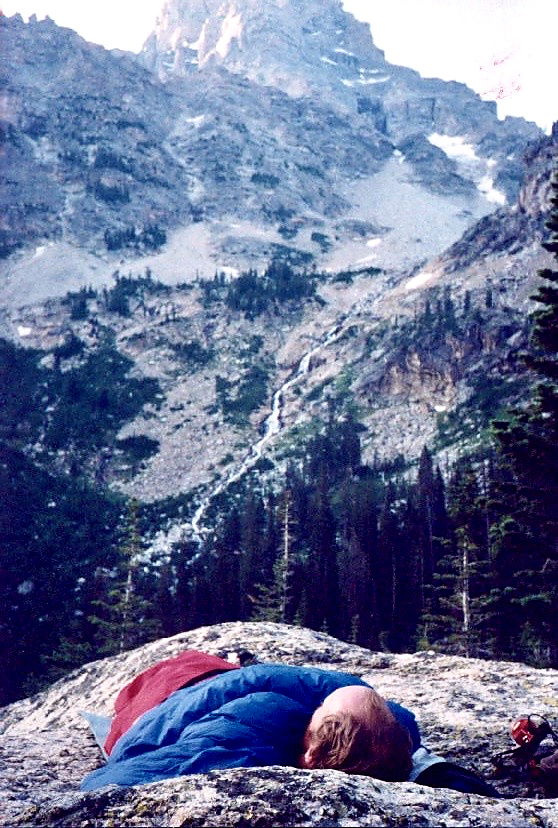
Ricky asleep high in the Tetons. This was how we slept in the mountains: no tent, just bivy sacks, sleeping bags, and whatever protected ledge or patch of rock we could find. Always great views!
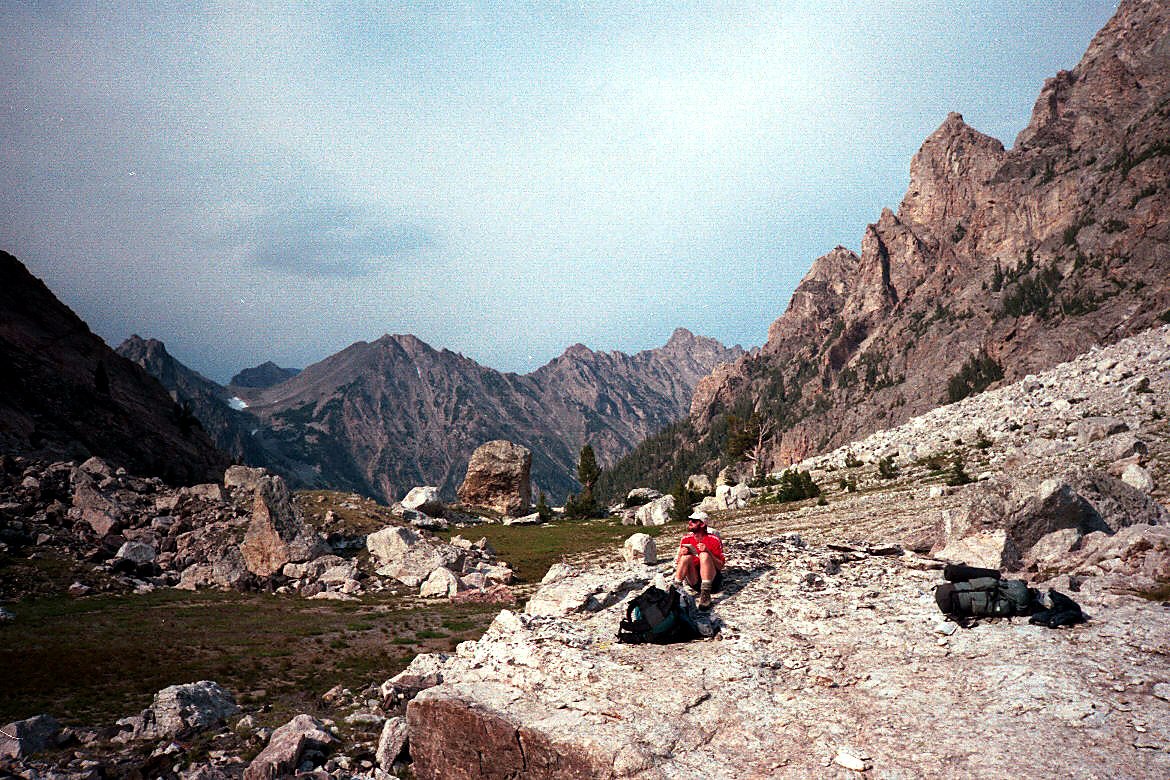
Our climbs up Middle and South were spectacular. At the end of it all, we exited west, just south of the Grand, down a new route we named the “Driskell-Johnson Death Gully.” It was steeper than you-know-what, full of scree, ledges, and tricky down-climbing, but between the drops were some of the most beautiful alpine meadows I have ever seen.
At one point Ricky had to drop his heavy pack to a lower ledge. The pack bounced, started rolling, and then accelerated down the gully in slow motion. It finally smashed into a boulder and exploded into pieces. He recovered most of his stuff, though half of it was trashed. We still laugh until it hurts whenever we remember that day.
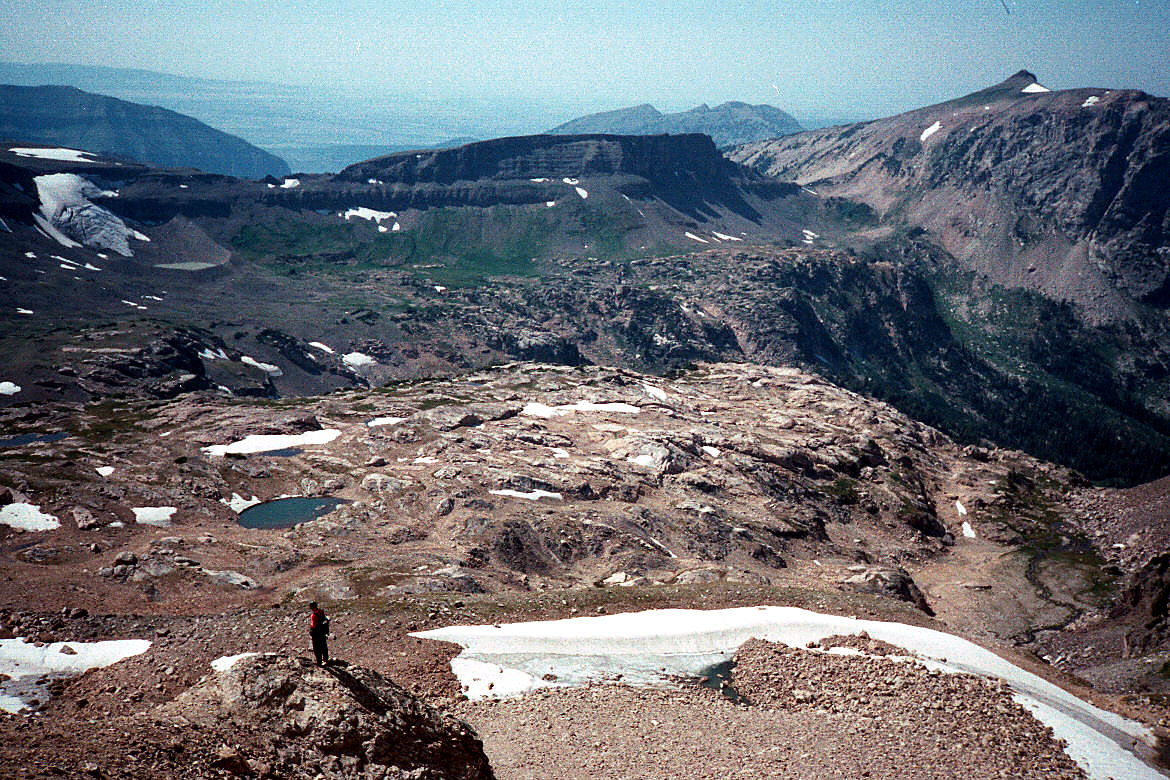
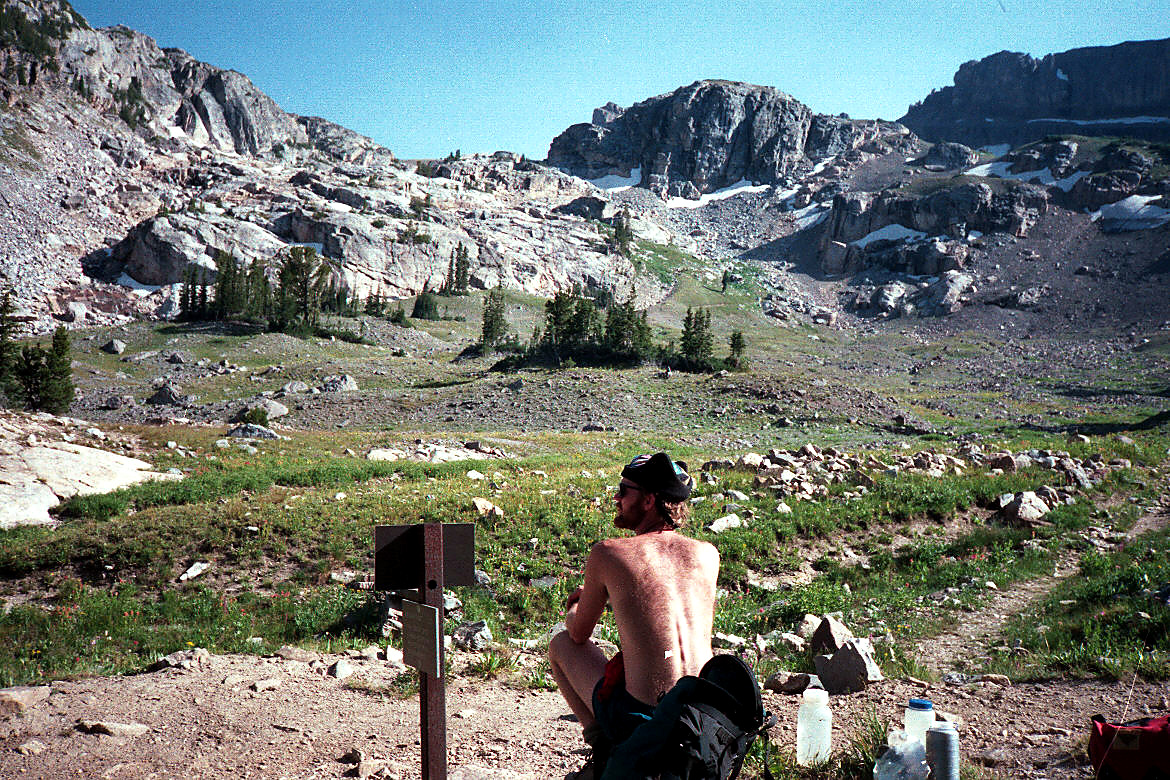
The alpine meadows and basins below the steep gullies were among the most beautiful places we saw.
Needless to say, we had an awesome bivouac that night on ledges near a river. Sleep never felt as good as it did that night.
That was exactly the kind of moment where years of climbing together mattered. We could get frustrated, laugh at disaster, make a plan, keep moving, and still end the day grateful to be out there.
The Bugaboos and the Canadian Rockies
The Bugaboos in Canada were one of the coolest places we visited. The place is a huge icefield with massive granite monoliths everywhere, and even getting in there felt like part of the adventure. The road in was rough, the approach was serious, and by the time you reached the Conrad Kain Hut, you knew you had arrived somewhere special.
The Bugaboos placed us in a world of granite spires, glaciers, snow bridges, and serious alpine climbing.
We met two Australian climbers on the way in who were carrying an extra case of beer up to the hut, which immediately told us that these were our kind of people. That was part of the Bugaboos experience too: serious alpine climbing mixed with hut life, strangers becoming instant friends, and the feeling that everyone there had worked hard just to be in that place.
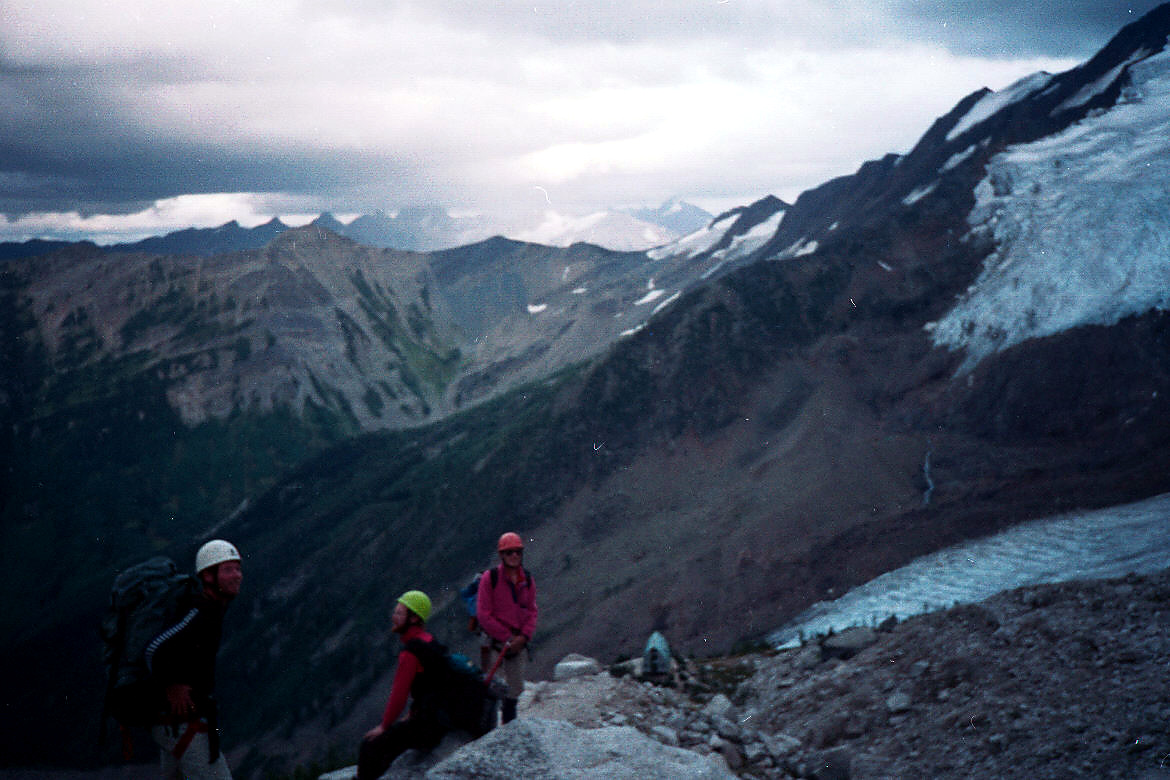
Approaches often meant roping up and moving across glaciers (and possibly hidden cravasses) before the rock climbing even began. Contad Kain hut, where we stayed, in the background.
We spent almost a week at the Conrad Kain Hut. The hut register itself felt like climbing history. I remember seeing names like Todd Skinner and Paul Piana in there, which made the place feel even more legendary. We were surrounded by glaciers, clean granite, spires, snow bridges, and big alpine routes that demanded attention.
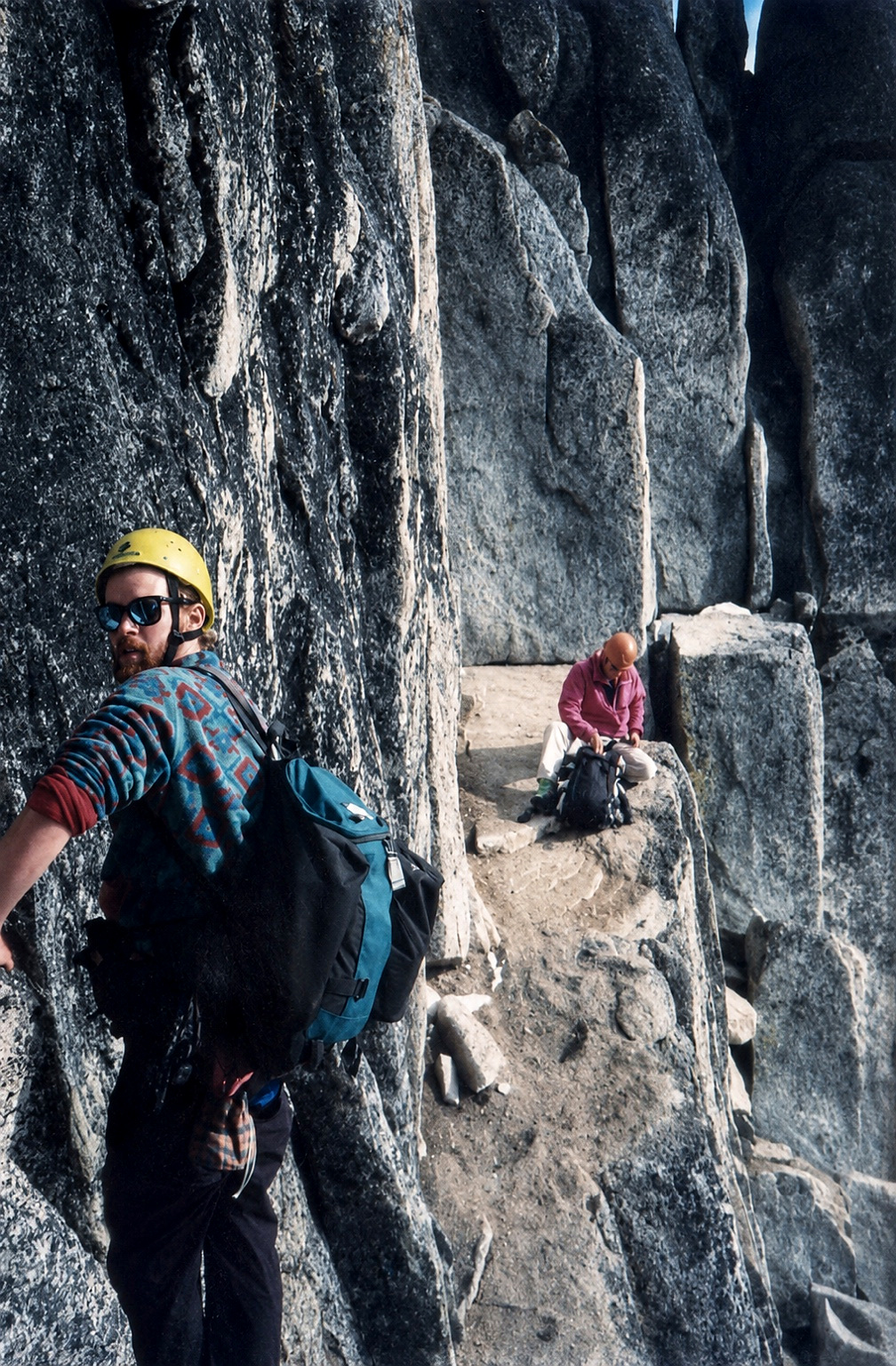
We hooked up with Jan from New Mexico and climbed Bugaboo Spire. Ricky and Jan teamed up for parts of the climb, and the whole route had that classic alpine feel: exposure, route-finding, rope work, and the constant awareness that the weather and the mountain had more authority than we did. There was also the Gendarme, and the usual question of who was going to lead what when the climbing got more serious.
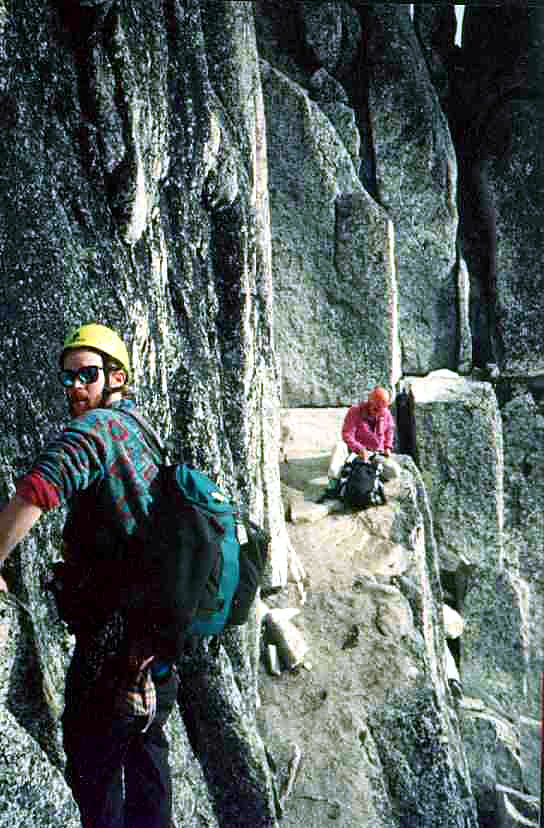
Me on a narrow granite ledge—the kind of terrain where every move and every decision about the route mattered.
One of the reminders that the Bugaboos were not just a playground came when a snow bridge collapsed overnight. Things like that have a way of sharpening your attention. It was beautiful country, but it was also real alpine terrain, where glaciers and snowfields change while you sleep.
After leaving the Bugaboos, we kept following that same mixture of climbing, wandering, and soaking. We moved on toward limestone cliffs above hot springs, which was just about the perfect combination for that trip: climb hard, soak afterward, sleep cheap, and then look at the map for the next place.
Ricky loved the Canadian Rockies so much that when he and Ann got married a few years later, they went back there for their honeymoon. That says a lot about how deeply those mountains got into him too. For both of us, the Canadian Rockies were not just another stop on the road trip. They were one of the places that helped define what real mountain travel could feel like.
City of Rocks
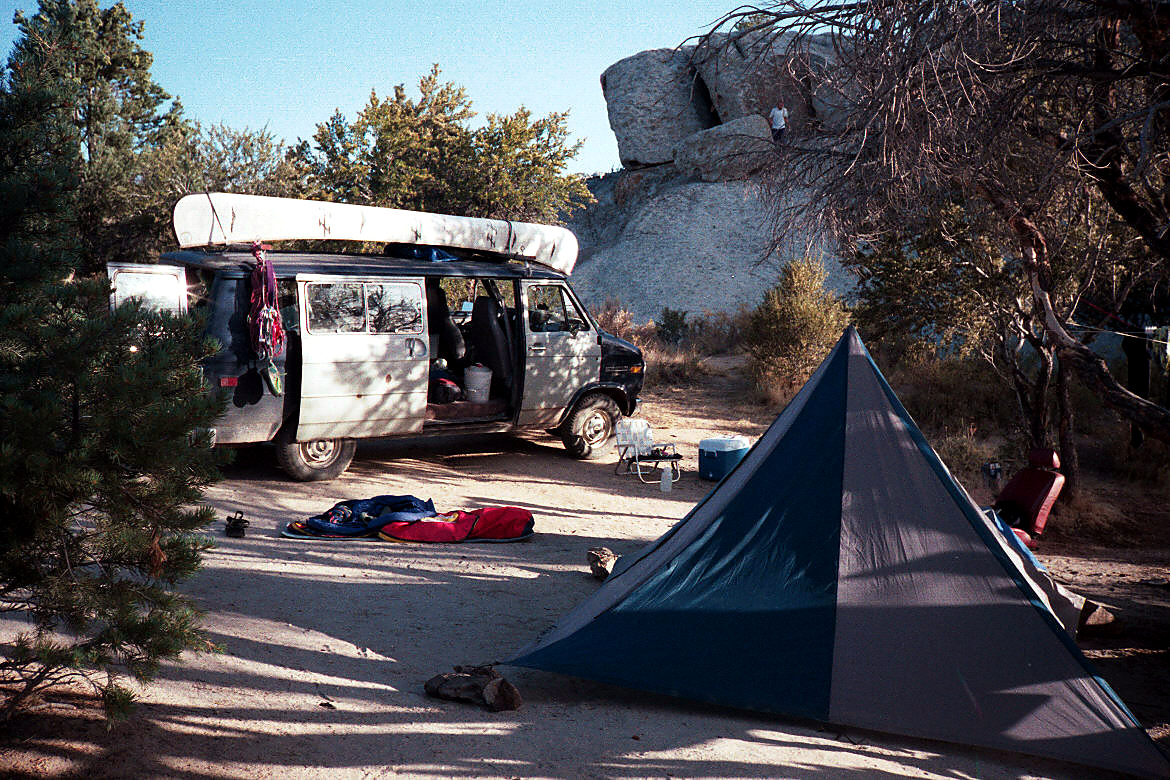
We spent almost a week at City of Rocks in Idaho, climbing as many of the classics as we could find on all the different crags. Every night we would sit around the campfire, drink a few beers, spread out the guidebook, and pick the next day’s targets: the best four-star climbs that were still within our grade.
Camped among the granite at City of Rocks, where every evening ended with the guidebook and plans for another day of climbing.
That became our rhythm. Find the crags with the most classic routes, seek out the lines that looked awesome, climb all day, then come back to camp tired, happy, dusty, and ready to start flipping through the guidebook again. In our opinion, City of Rocks has some of the best climbing in North America because there are so many different climbs available at every level, all packed into a beautiful landscape of granite fins, domes, walls, and towers.
Our camps were simple: cook, sort gear, sleep, and wake up ready to climb again.
One of the best parts was that you could camp right there in the middle of the monument, pretty much wherever you wanted — or at least you could while we were there. So the whole place felt like a giant climbing playground with campsites tucked among the rocks. Wake up, make coffee, look at the crags, climb until your hands hurt, then sit by the fire and plan the next day. It was exactly what that trip was about.
Hot springs, coffee, and Jack Daniels
We met so many cool folks on this trip. We met “Mary and the Juggler” at a hot spring that we slept in one night. The next morning their van was still up by the roadside, and they gave us some much-needed coffee to start the day. It was fifty percent espresso and the other half was Jack Daniels.
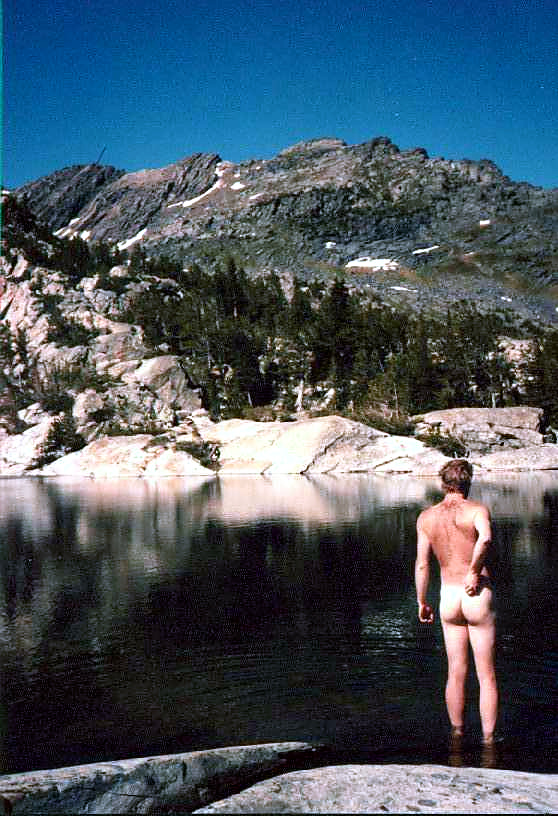
The trip constantly shifted between hard climbing, remote lakes, roadside stories, and hot springs.
I think we ended up back in the hot spring until noon, but I am not very clear on the rest of that day. I do know that sometimes we climbed for seven days straight, and kept pretending that we needed occasional days off for recovery and rest. Yeah right — the whole three-month road trip was recovery and rest.
Montana high country
Rick's girlfriend Ann came out to join us for three weeks in Montana, and the hikes we all took together are some of my best memories of the entire voyage. We would backpack into alpine lakes up around 12,000 feet to fly fish, only to find some of them still half iced over even in August.
The cutthroat trout up there were as wild as the country itself. Ricky caught a bunch. I caught one by hand, by trapping it against a rock, which probably says something about both my fishing skills and my persistence.
Solo in Idaho
Living together in a van for three months — climbing, hiking, eating, drinking, camping, and existing in the same small space — can wear on your nerves. Every once in a while I would head off for a week or so to give us both a break. One morning I hitchhiked over to Idaho, about 400 miles and seven rides away.
By strange coincidence, Ricky and I were at Ruby Ridge the day Randy Weaver surrendered after a 10-day standoff with the FBI, but that is a whole other story. While solo in Idaho, I spent a couple of days at Jigger Johnson Hot Springs and met some wonderful people there. One older guy, who owned the Grubsteak restaurant up on top of a mountain an hour away, offered me a ride back to town.
I spent the next three days at his place, riding horses with him during the day and working at the restaurant at night. That was one heck of a special place and time. He was in his sixties and getting ready to sell the whole place to his wife and go travel for a few years.
Cody, Wyoming: the Johnny Walker Black story
On the way toward the Tetons, with a little extra time, we stopped at a local cowboy bar in Cody, Wyoming. Sitting up on the top shelf was an old dusty unopened bottle of Johnny Walker Black. It was obviously too expensive for the locals to bother with, and it looked like it had been sitting there forever.
Somehow we convinced the bartender that it was just regular cheap scotch, so he opened it and poured us shots for $1.25. It was smooth — very smooth — and we immediately knew we had found a bargain. The bartender told us nobody else had ever touched the stuff and probably never would, so he wanted our assurance that we would be in town long enough to finish the bottle.
We tried. We honestly did. But we could not quite finish it off before moving on. We did promise him, though, that we would be back “soon” to work on it some more. That was one of those ridiculous little road-trip stories that probably would not happen twice, and that is exactly why it still makes me smile.
Home after three months together
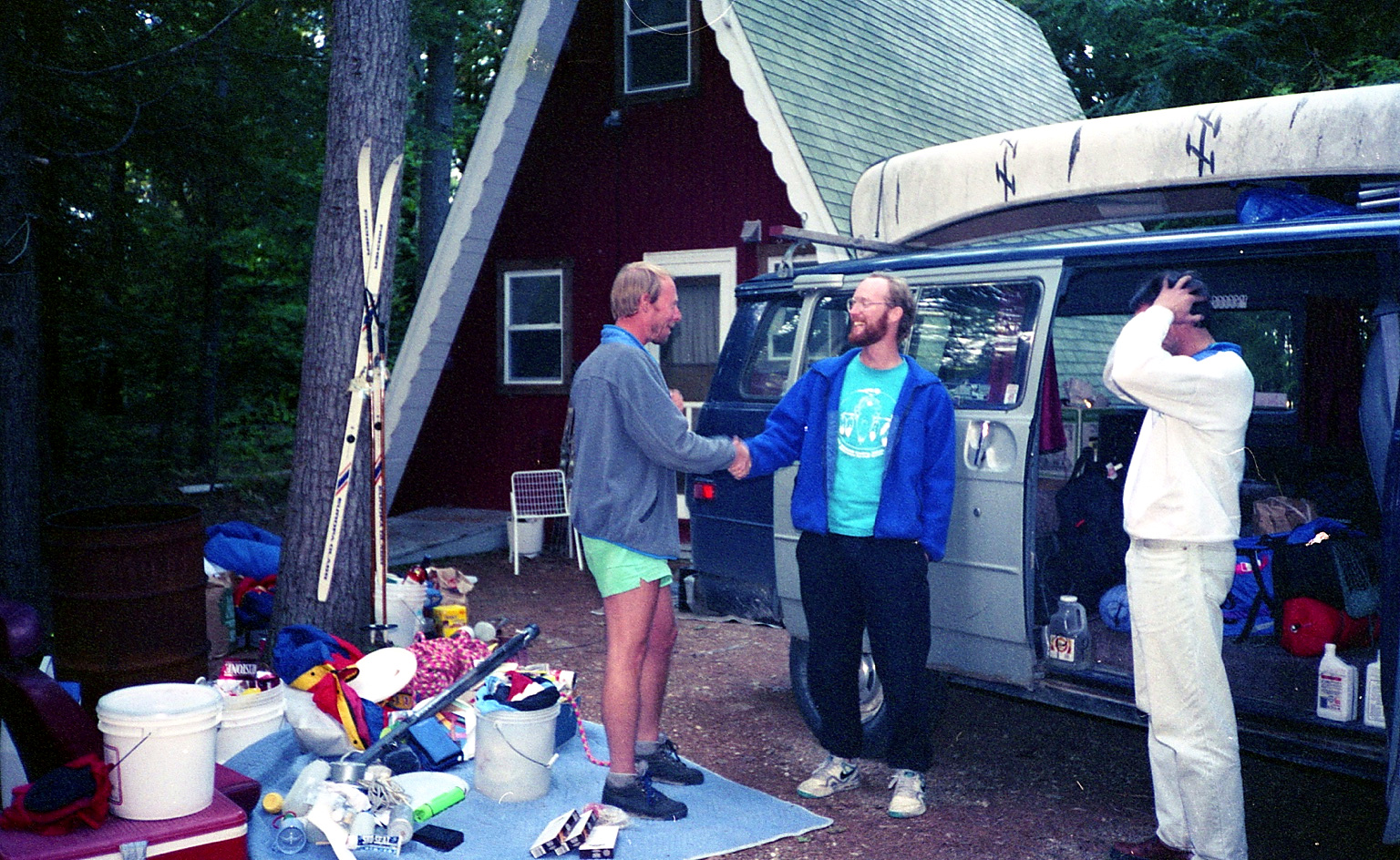
These photographs were taken at my house on the very last day after three months together. All of the gear spread across the tarp was mine—my ice axe, climbing rope, backpack, skis, camping equipment, and everything else I had carried through the trip.
Ricky and me shaking hands on the final day—still friends after three months and all the challenges.
Ricky and I had lived together in close quarters for a hundred days, through difficult climbs, changing plans, long drives, frustration, exhaustion, and a lot of laughter. The handshake says something important: after all of it, we were still friends.
The third man was an Italian traveler we met at the hostel on our final night. We were giving him a ride back toward Boston, so even the last day of the trip still included one more traveler and one more small adventure.
What the road gave us
The trip was about far more than collecting summits or classic routes. It taught us how to live simply, adapt quickly, trust one another, and keep moving when plans changed.
The mountains, the friendship, and the freedom of that summer have only become more valuable with time.
Some days were spectacular. Others were uncomfortable, wet, crowded, uncertain, or ridiculous. Together they became the kind of memories that grow more valuable with time.
Decades later, I still remember the granite, the cold alpine mornings, the dusty campsites, the laughter inside the van, and the feeling that the entire continent was open in front of us.