Some rivers are memorable because they are beautiful or fast. Whitewater Creek became unforgettable because it demanded nearly everything we had. Before the day was over, we would crawl beneath giant trees, drag boats through shallow shoals, scout obstacle after obstacle, make difficult decisions about safety, and learn that the remaining group was still fighting its way downstream long after sunset.
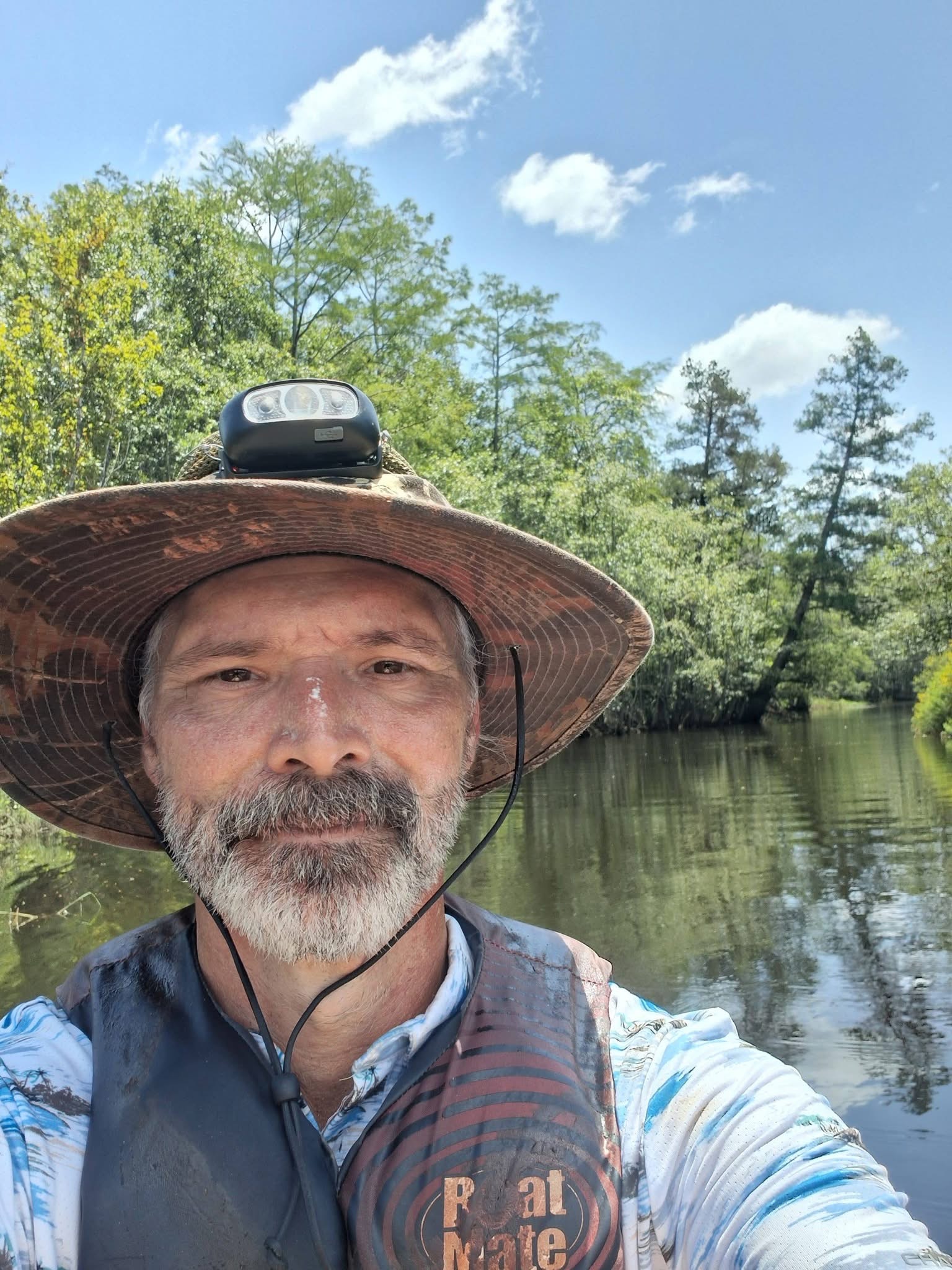
Meet Manning Minchew
This incredible paddle was put together by Manning Minchew of the South Alabama River Enthusiasts. Manning leads paddles almost every week throughout southern Alabama and is an excellent guy to spend a day on the water with.
In 2025, he set himself the goal of paddling 1,000 miles on Alabama rivers, and he accomplished it before the year ended. He became known far and wide for seeking out some of the state's more challenging and less-traveled rivers. Whitewater Creek was no exception.
The description warned that this could be a very difficult paddle, with endless obstacles on an incredibly wild creek that had seen very few descents and virtually no recent attempts to clear a passage. That warning made it even more appealing to the few diehards who love this kind of adventure.
A warning before we launched
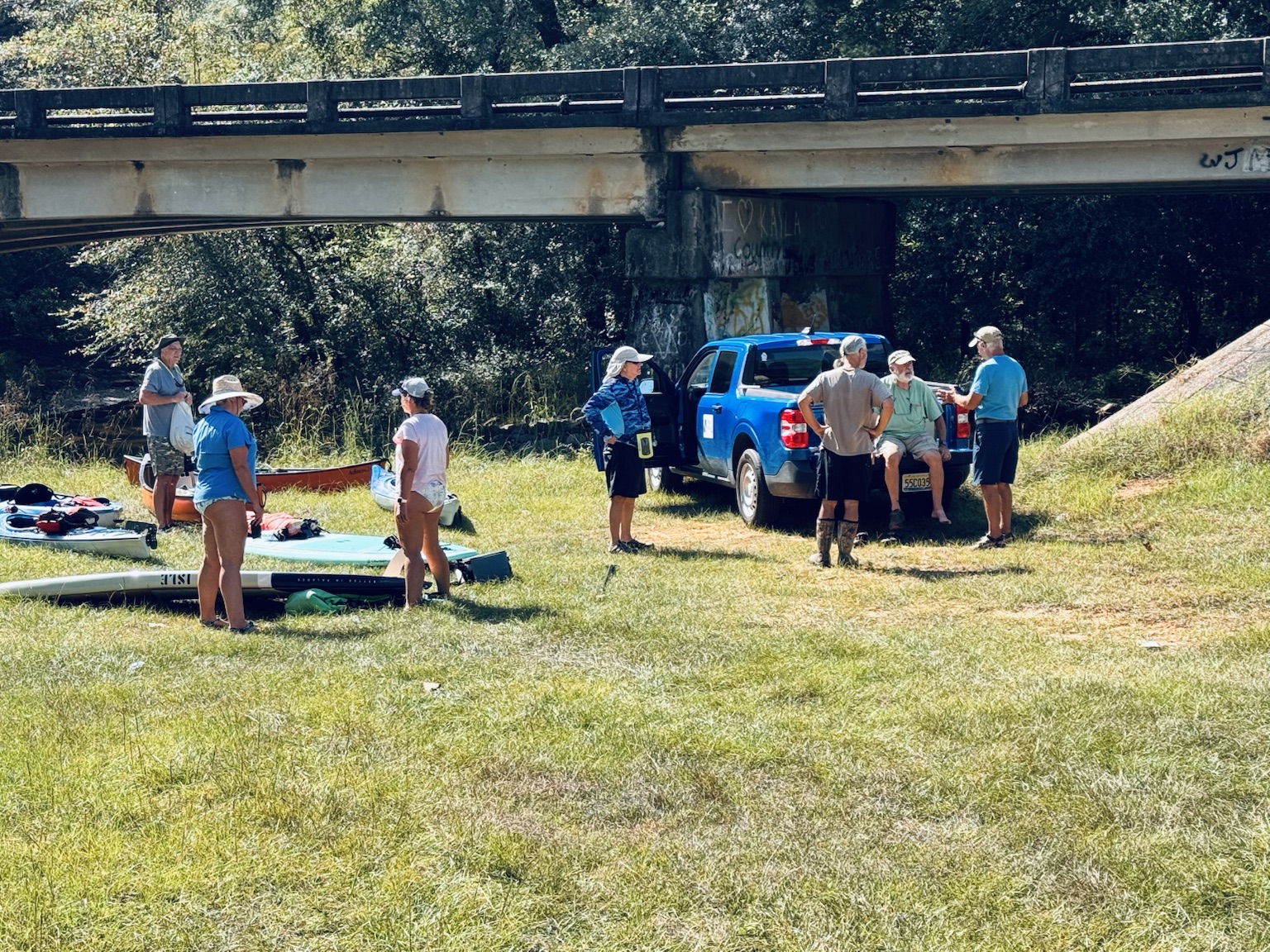
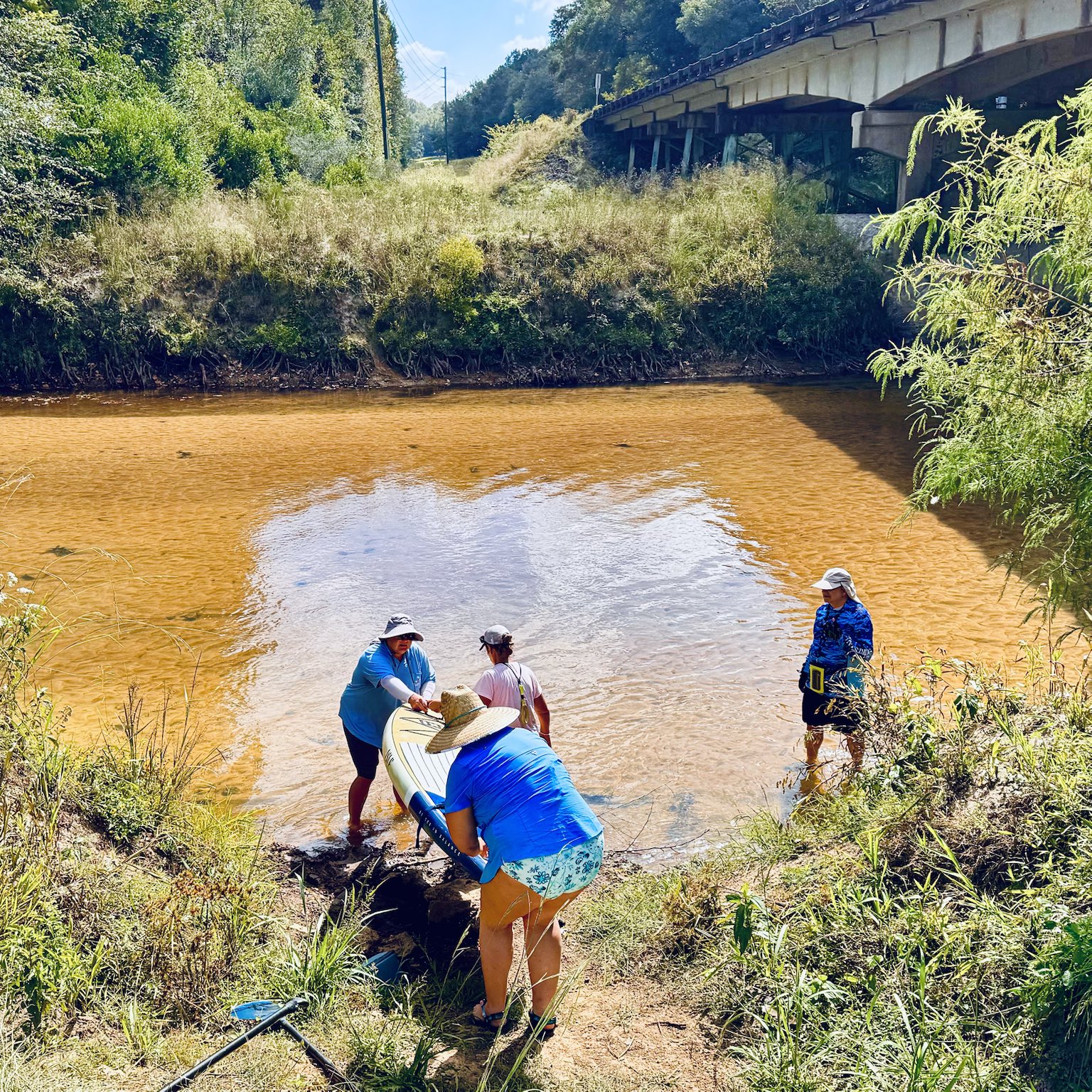
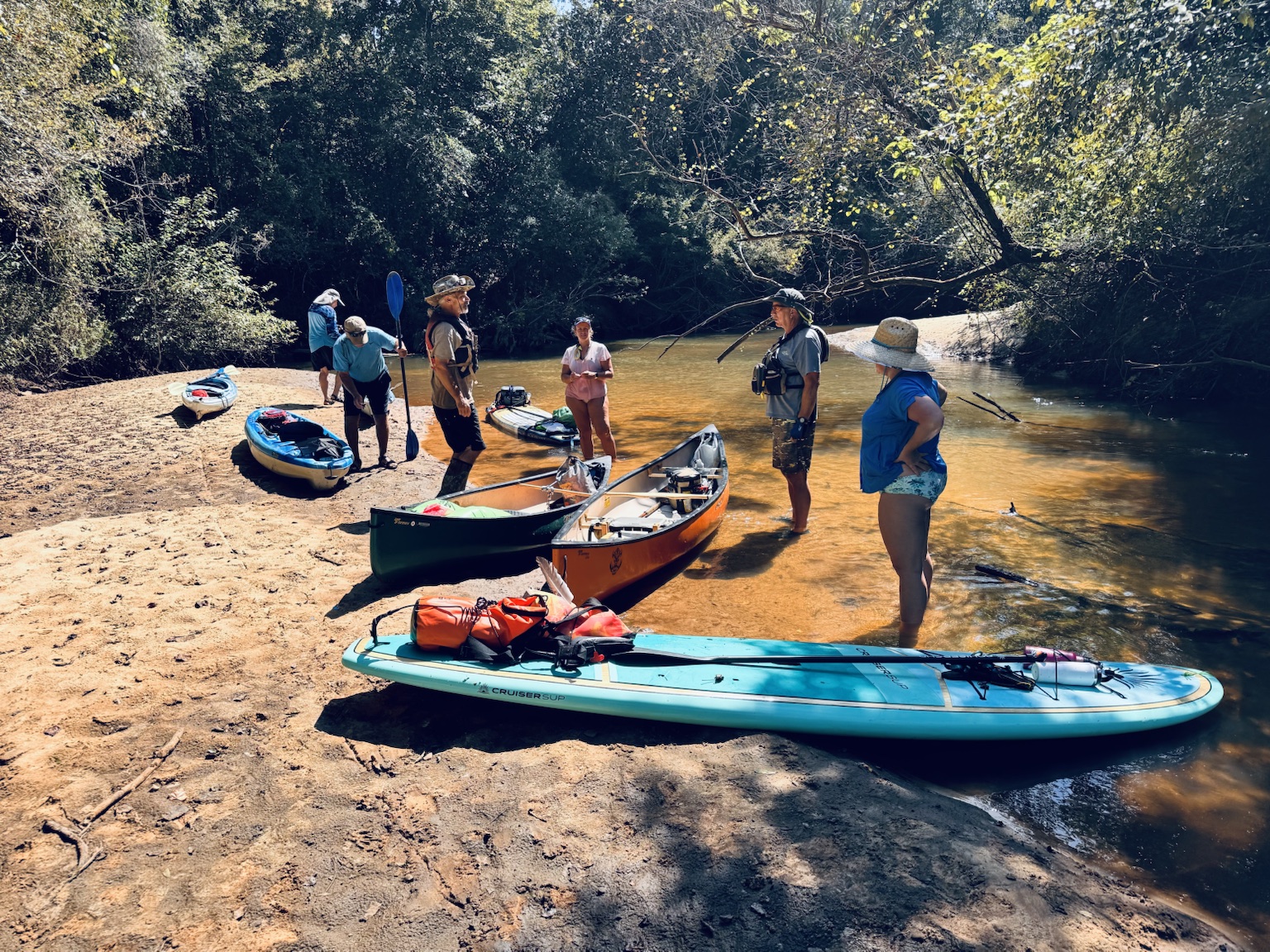
As we met to discuss the itinerary, a local resident and paddler drove by, stopped, and spoke with Manning and the group. In his opinion, the creek was really too low to navigate. This was the driest time of year, and 2025 had been exceptionally dry.
He expected too many sandbars and shoals to make the creek comfortably paddlable, never mind all the blowdowns, blockages, and logjams. His warning mattered because he knew the area. Still, this was exactly the strange combination of uncertainty and challenge that had brought us there.
Fourteen miles and a late start
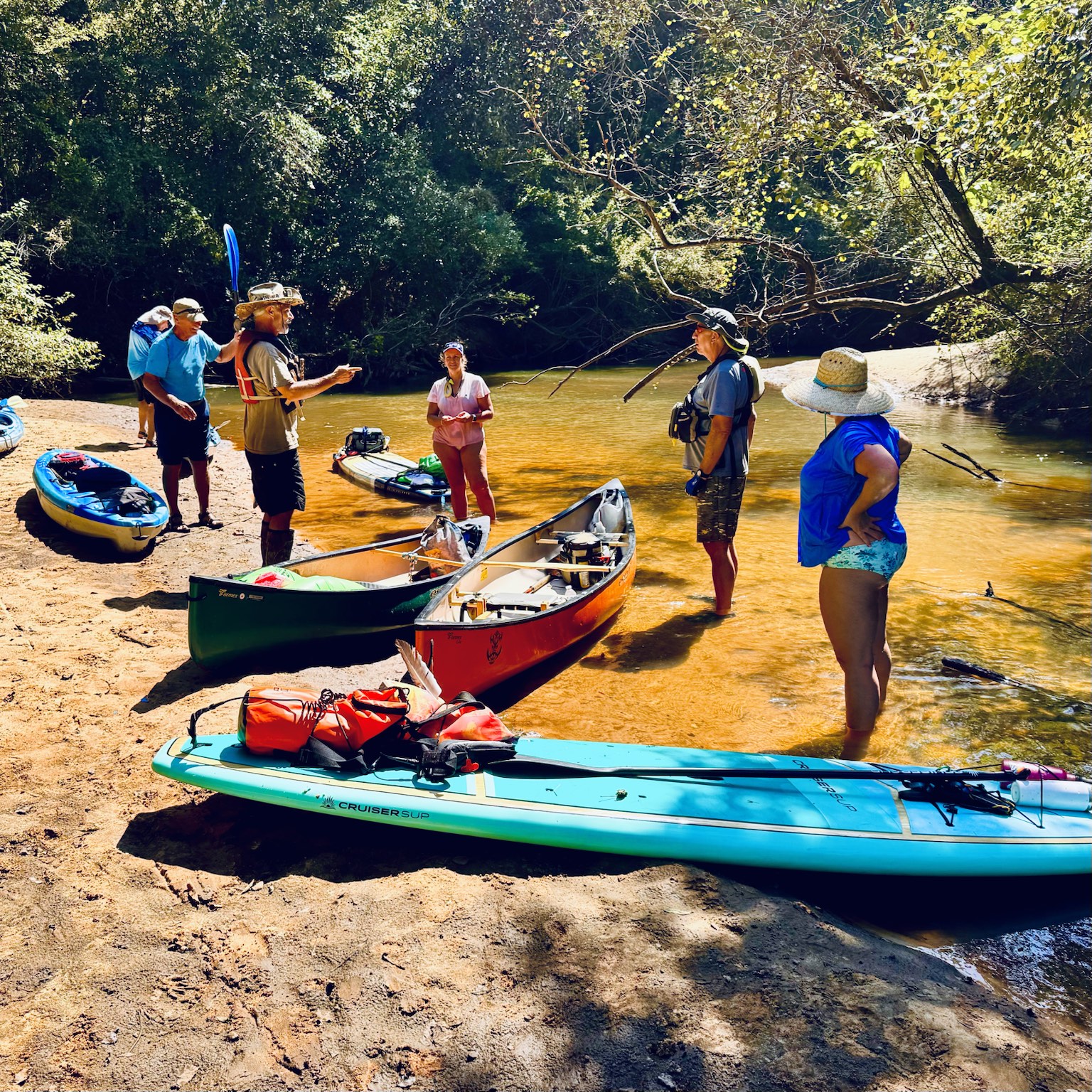
The route was somewhere on the order of fourteen miles. Even under perfect circumstances, that would be a long day. We were not launching until around ten in the morning, after driving roughly an hour and a half and then setting up the shuttle.
The three of us from RockADock—Brittany, Melanie, and I—huddled privately. There was only one road crossing along the route, a bridge about eight miles downstream. We decided to leave one vehicle there in case we ran out of daylight, suffered an injury, or encountered any other serious problem.
In hindsight, it was one of the smartest decisions we made all day.
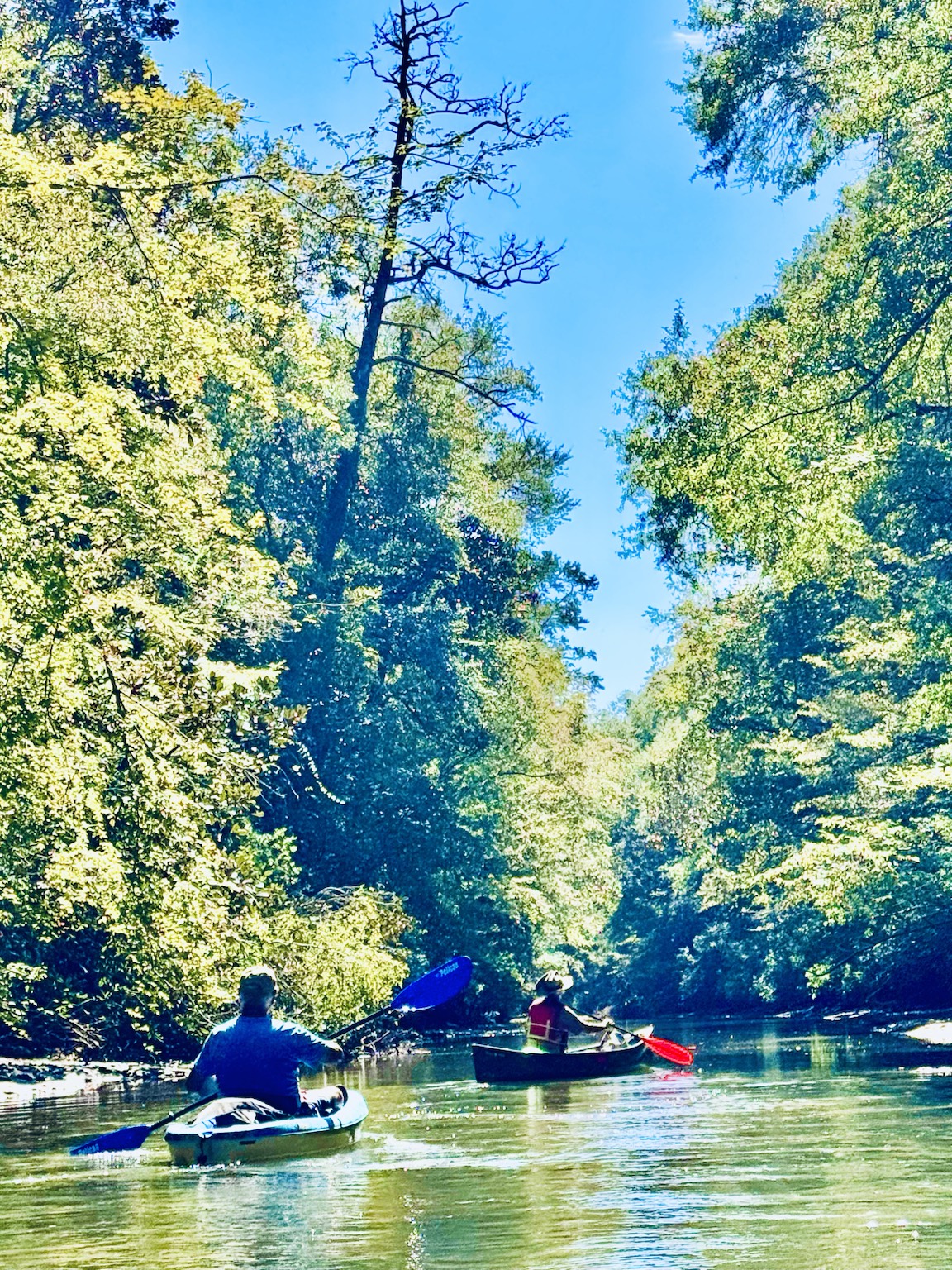
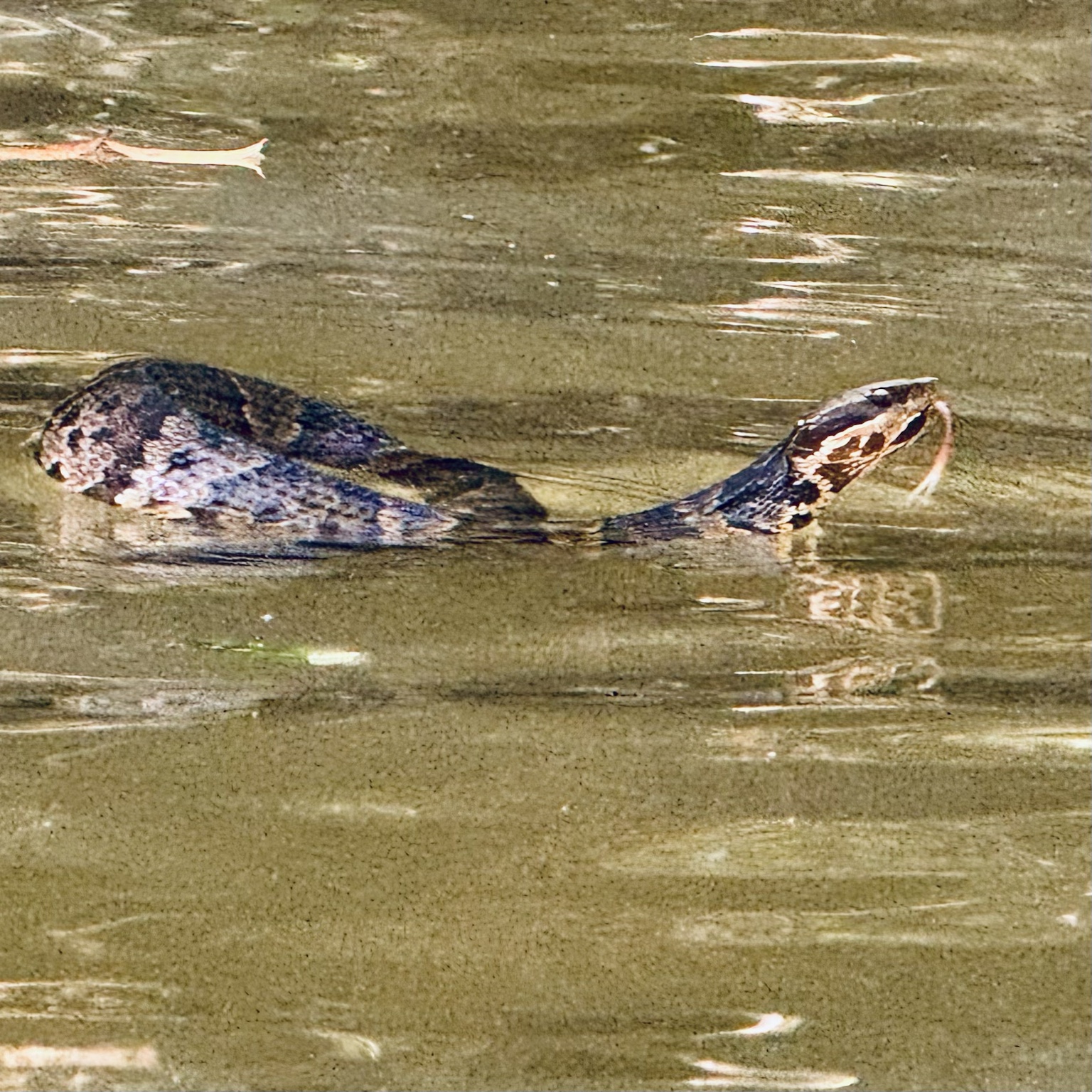
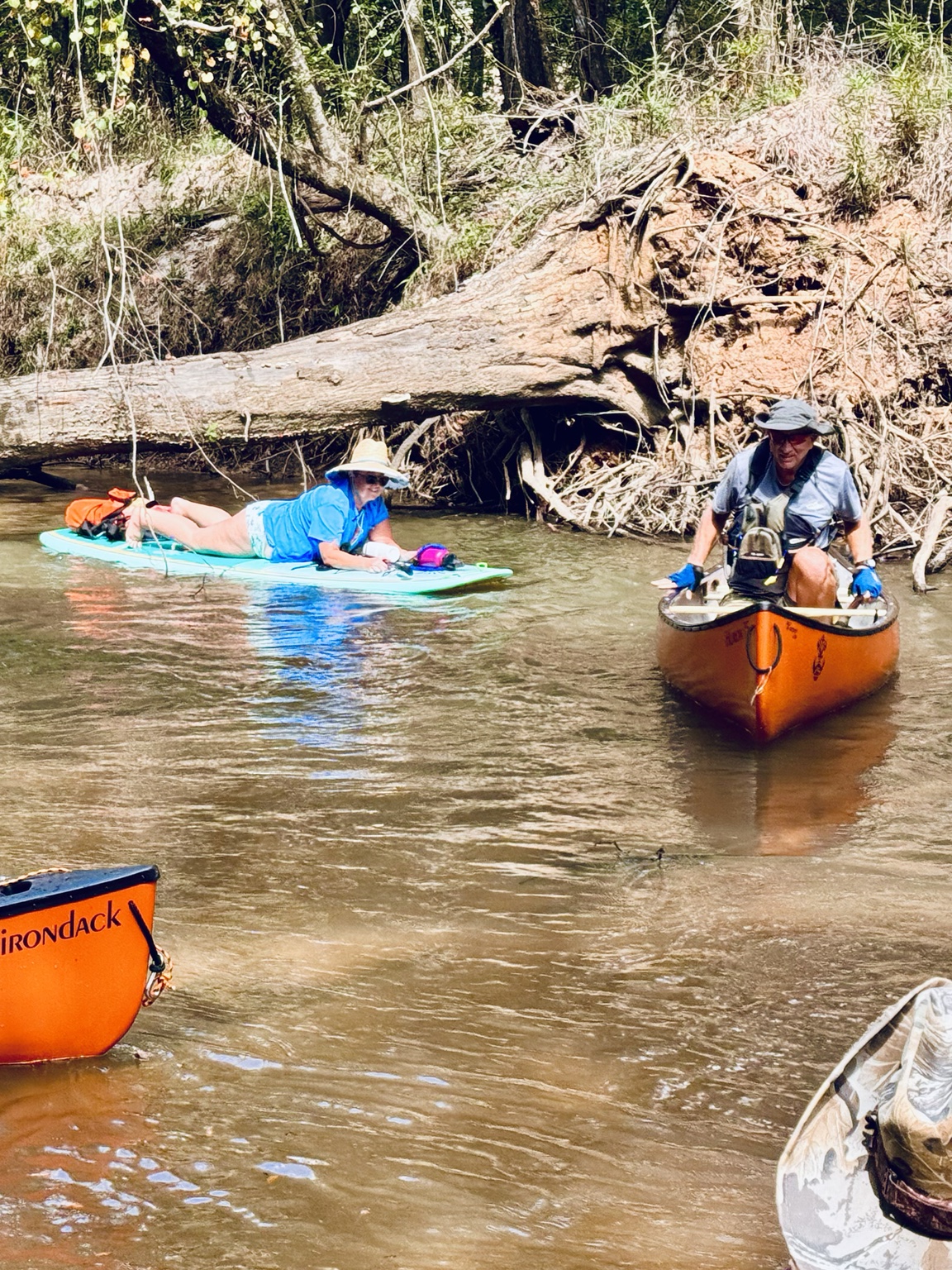
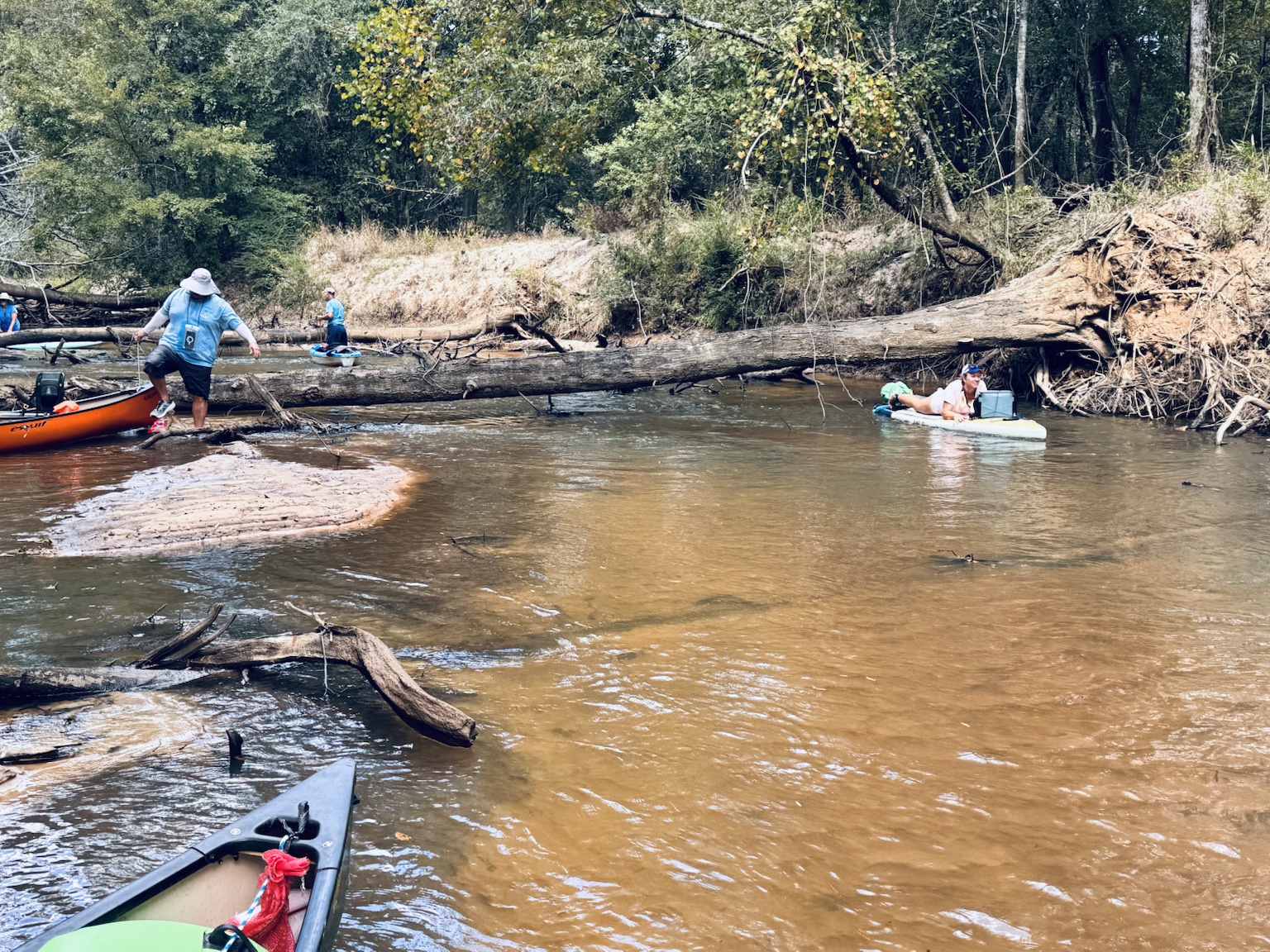
The local paddler was right
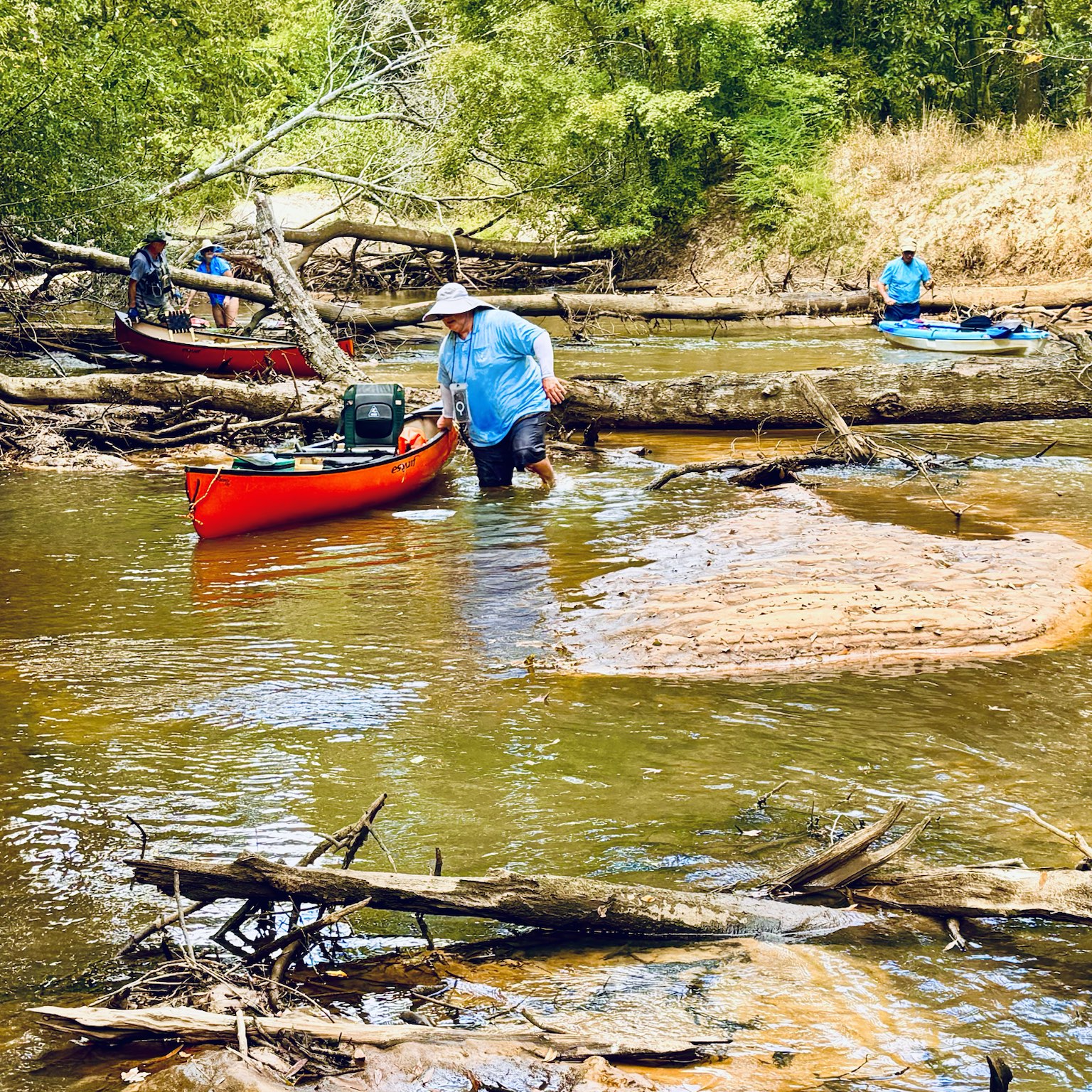
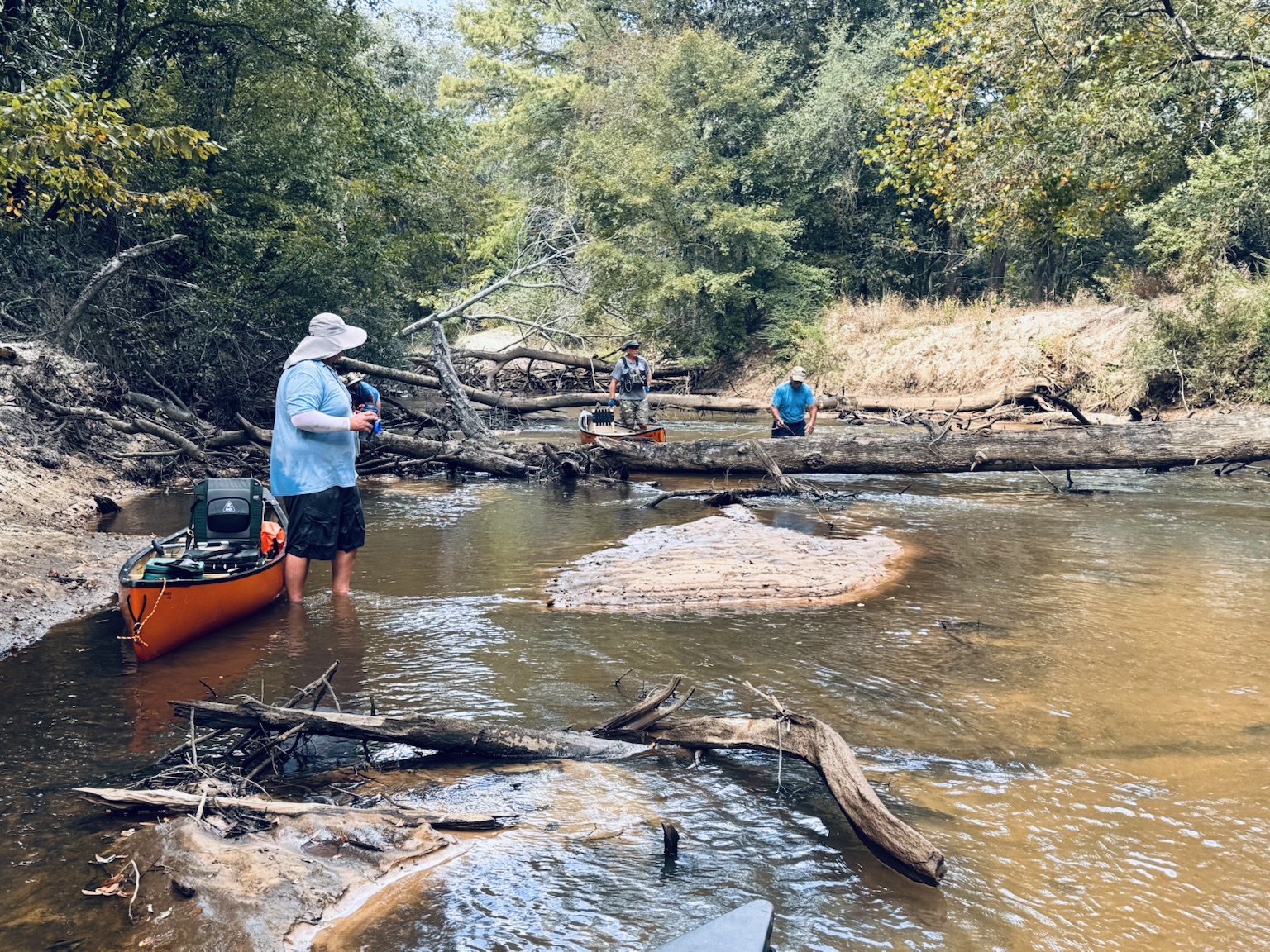
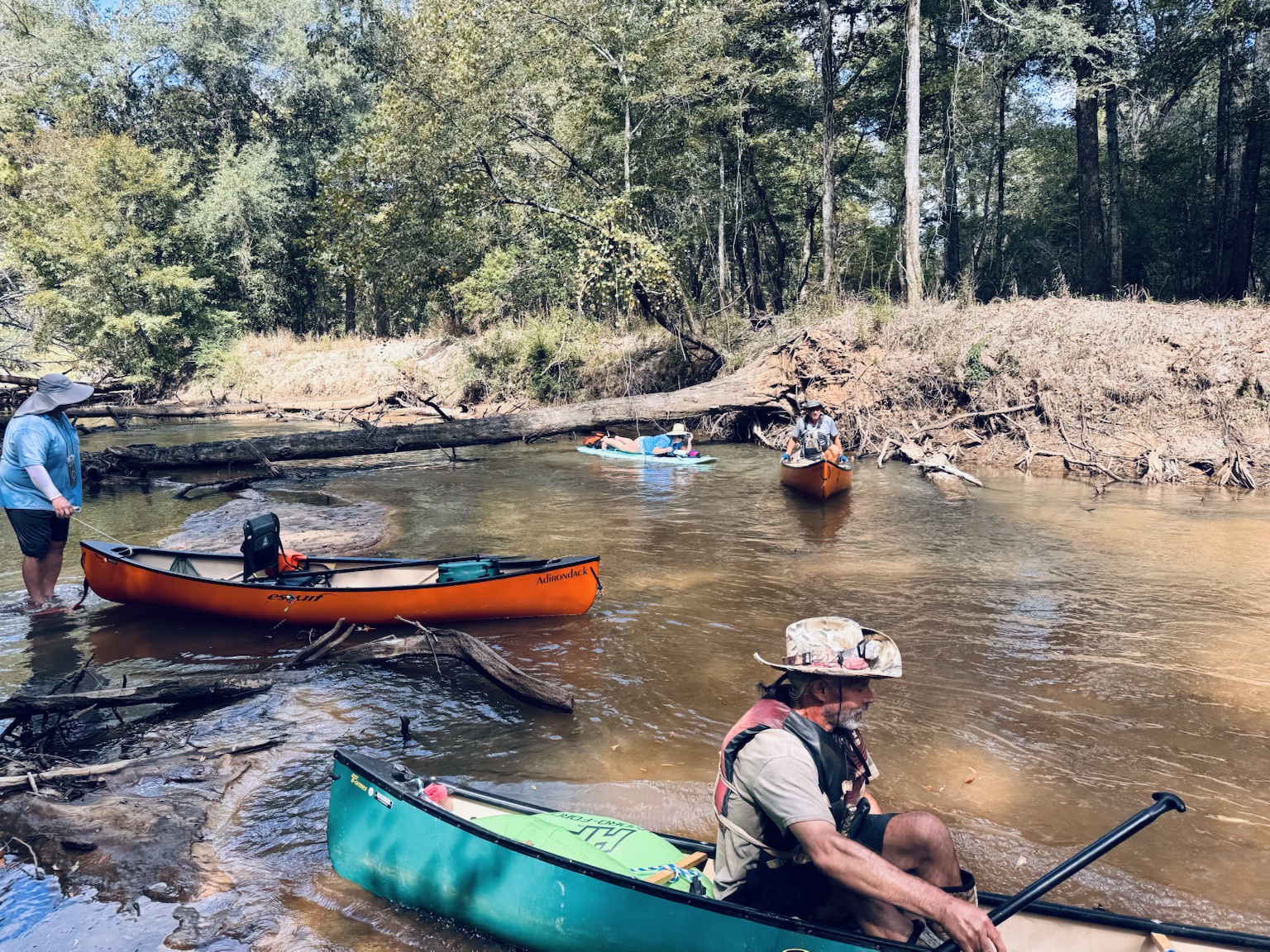
The water was extremely low. Sandbars and shoals repeatedly interrupted the channel, and the boats often scraped bottom or had to be pulled by hand. The creek might have been named Whitewater, but most of the day's difficulty came from too little water rather than too much.
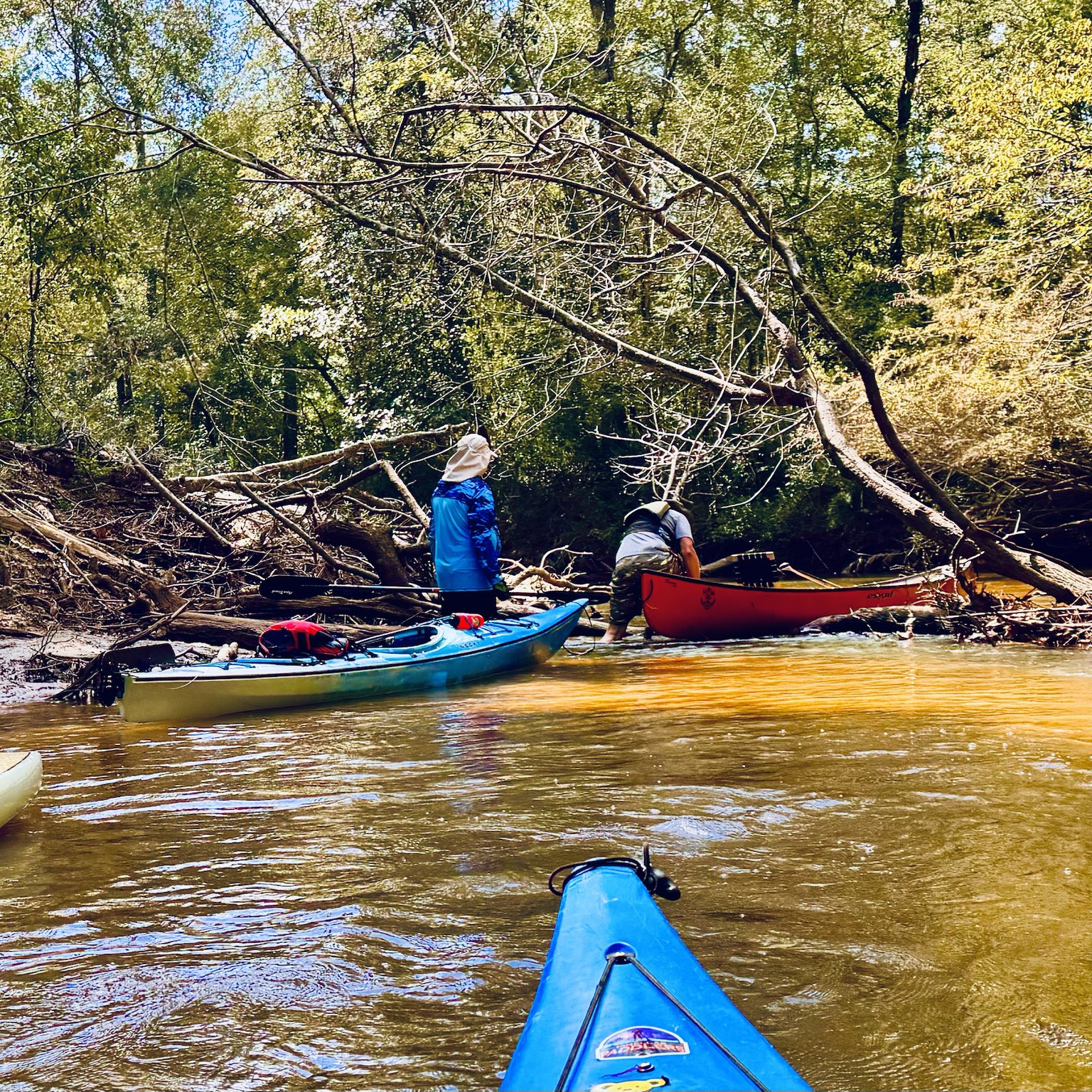
Then there was the wood. Trunks crossed the creek from bank to bank. Branches accumulated against them. Openings that looked promising ended in another tangle. Every bend seemed to present a new problem.
Endless obstacles
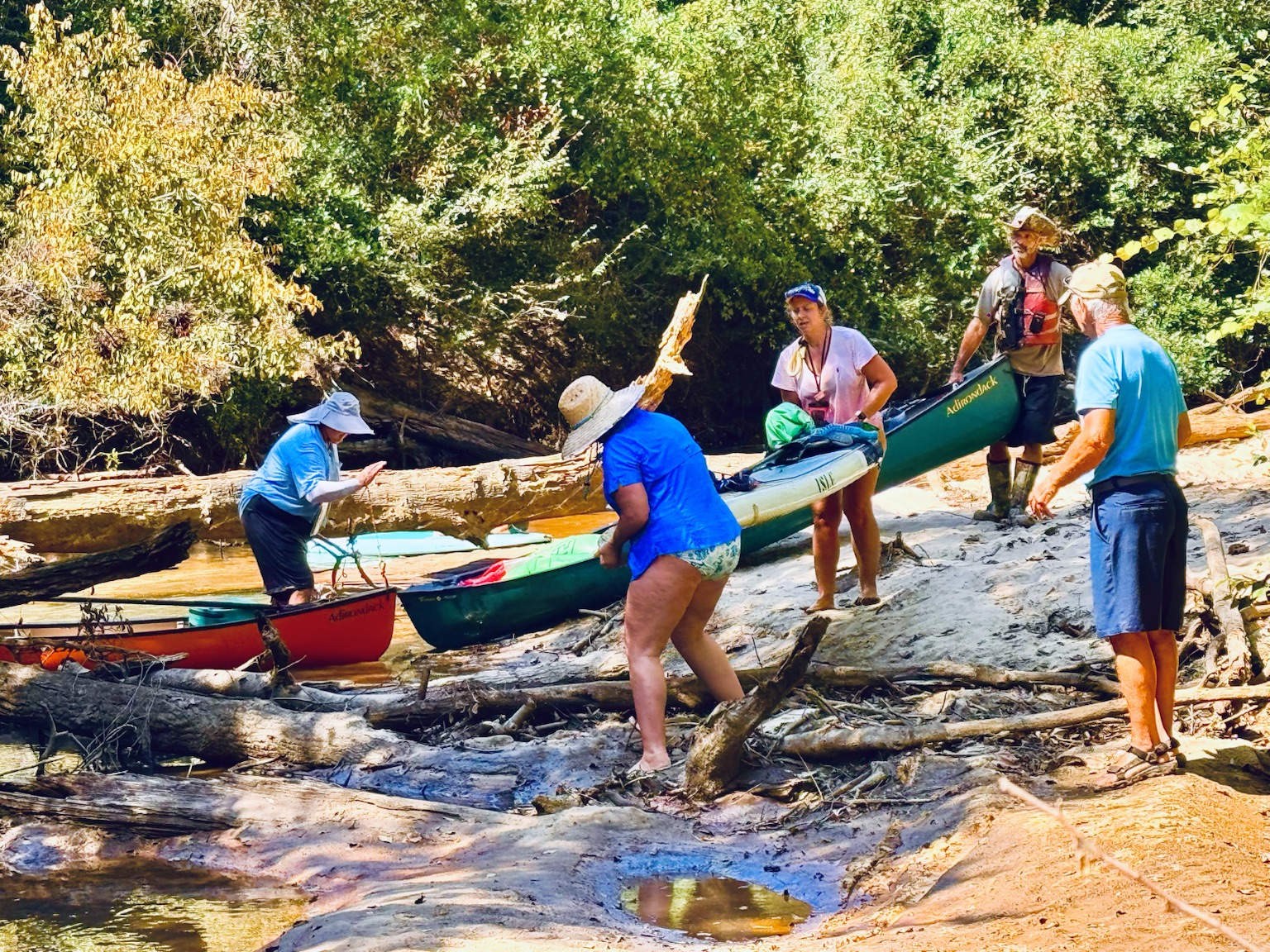
We spent a tremendous amount of time trying to find our way through. One person would inspect the left bank while another checked the right. Sometimes we backed out and tried again. Sometimes we climbed onto the logs and passed the boats through one at a time.
It was the kind of paddle where mileage barely described progress. We measured the day in problems solved: one logjam, one shoal, and one narrow opening at a time.
When the creek disappeared
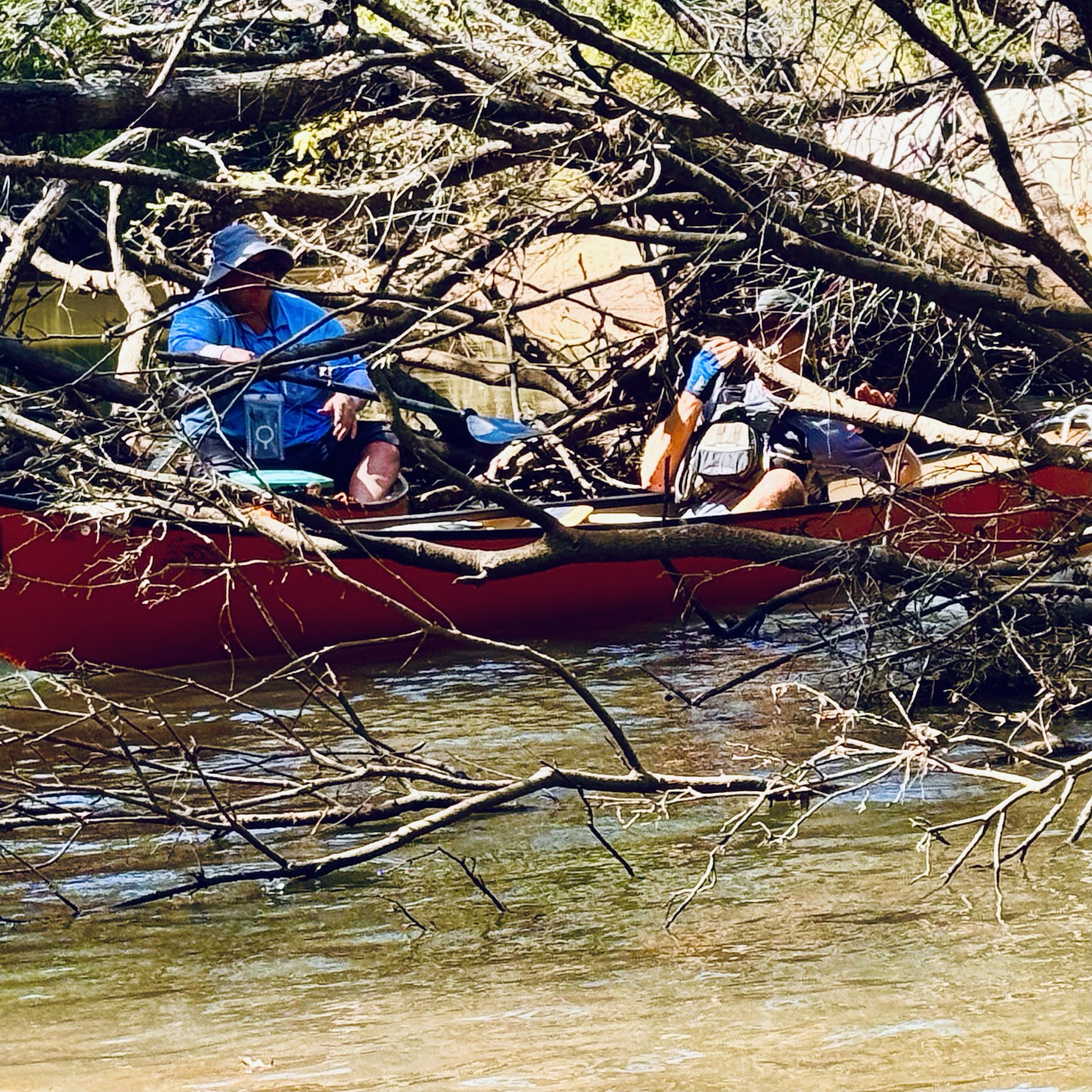
Some blockages looked absolute. The first apparent opening led to more branches. The second led into shallow mud. Eventually someone found a narrow slot, a low opening, or a route where the boats could be lifted over the trunks.
No single obstacle was the whole story. The difficulty came from having to repeat the same careful process again and again for miles.
Teamwork made the day possible
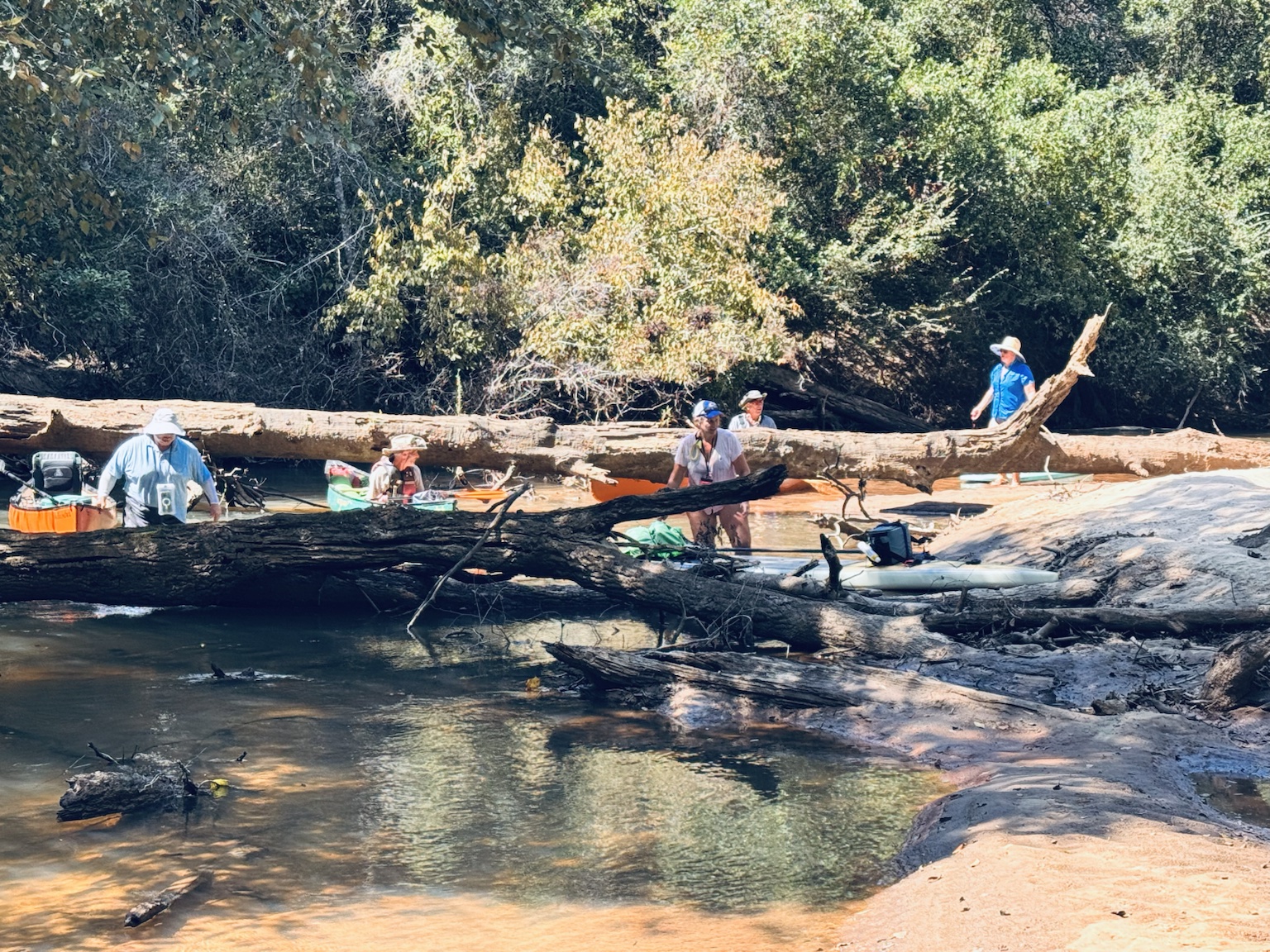
One person scouted. Another steadied the boat. Someone held branches aside while another carried gear. The first paddler through could guide the next kayak or warn everyone that an apparent route ended in another obstruction.
That is one of the great lessons of trips like this: on a difficult wilderness creek, paddling is not really an individual sport. The entire group shares responsibility for getting everyone safely through.
Over, under, around, and through
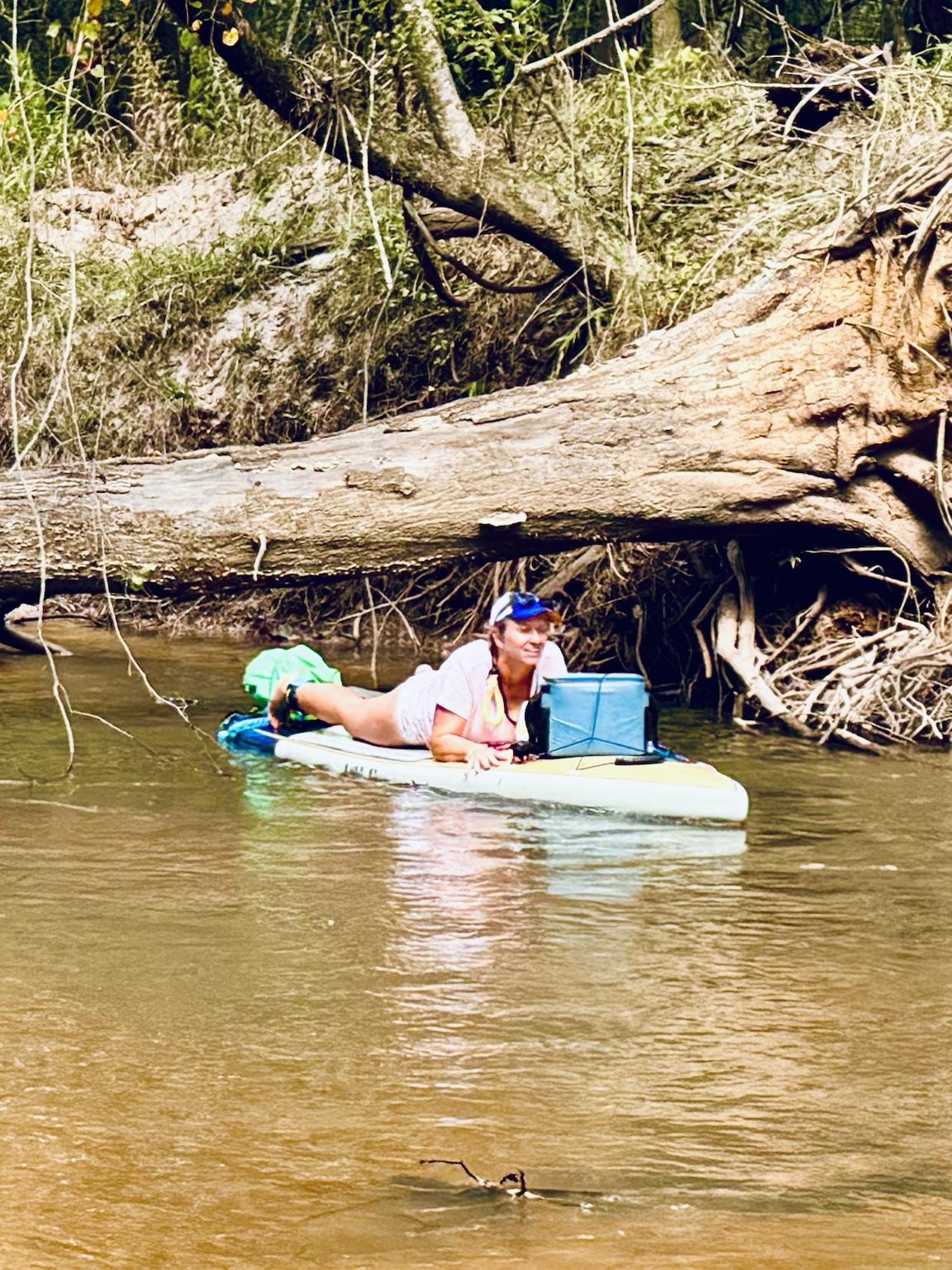
Some trunks were just high enough for a paddler to lie almost flat and inch underneath. Other places required climbing out, balancing on slippery wood, and lifting the boats across. Nobody treated the low passages casually. Even a mild current can pin a boat against a solid obstruction.
We used plenty of caution, moved one at a time through the shoals and drops, and waited until every person was safely through before continuing.
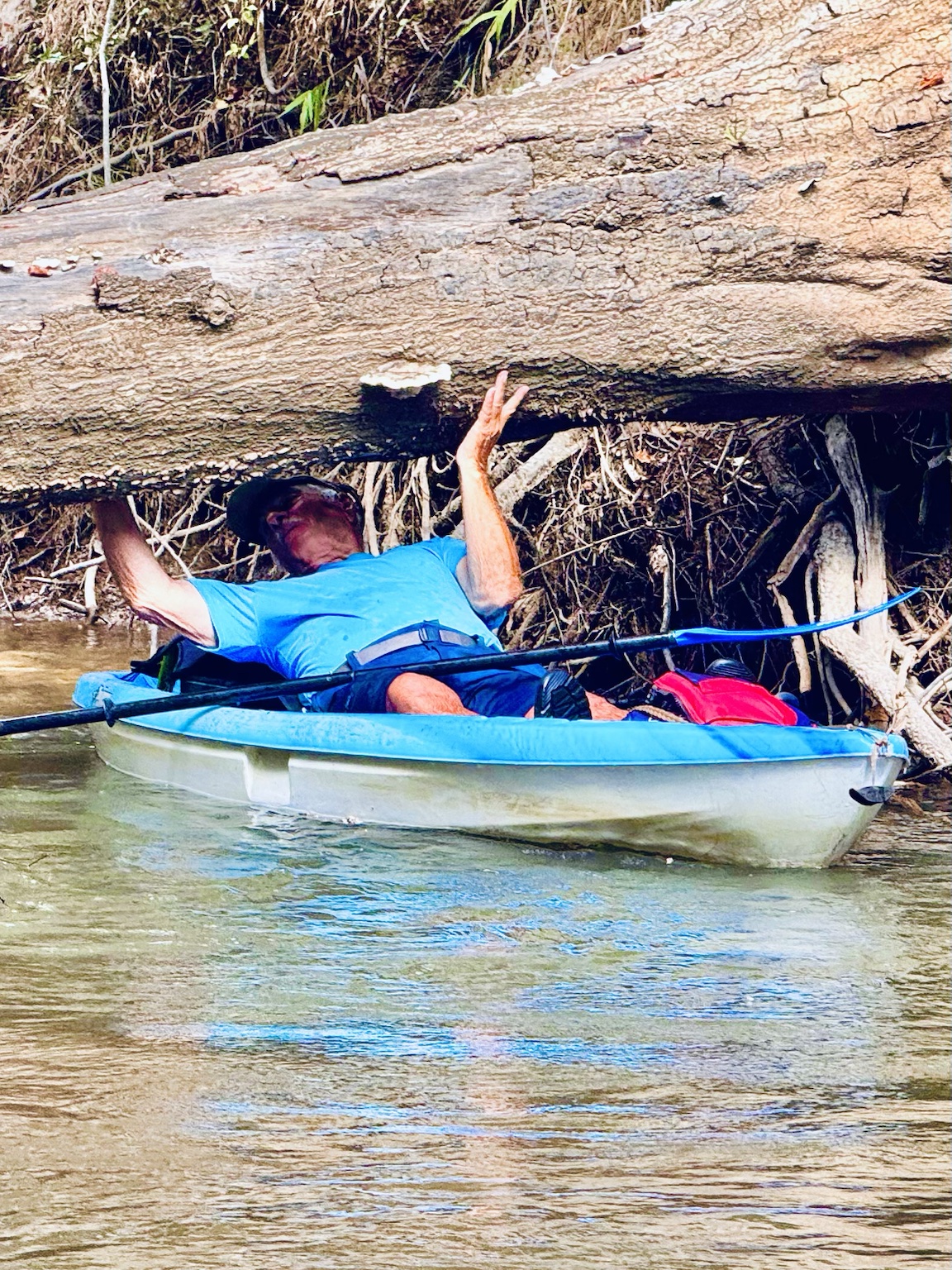
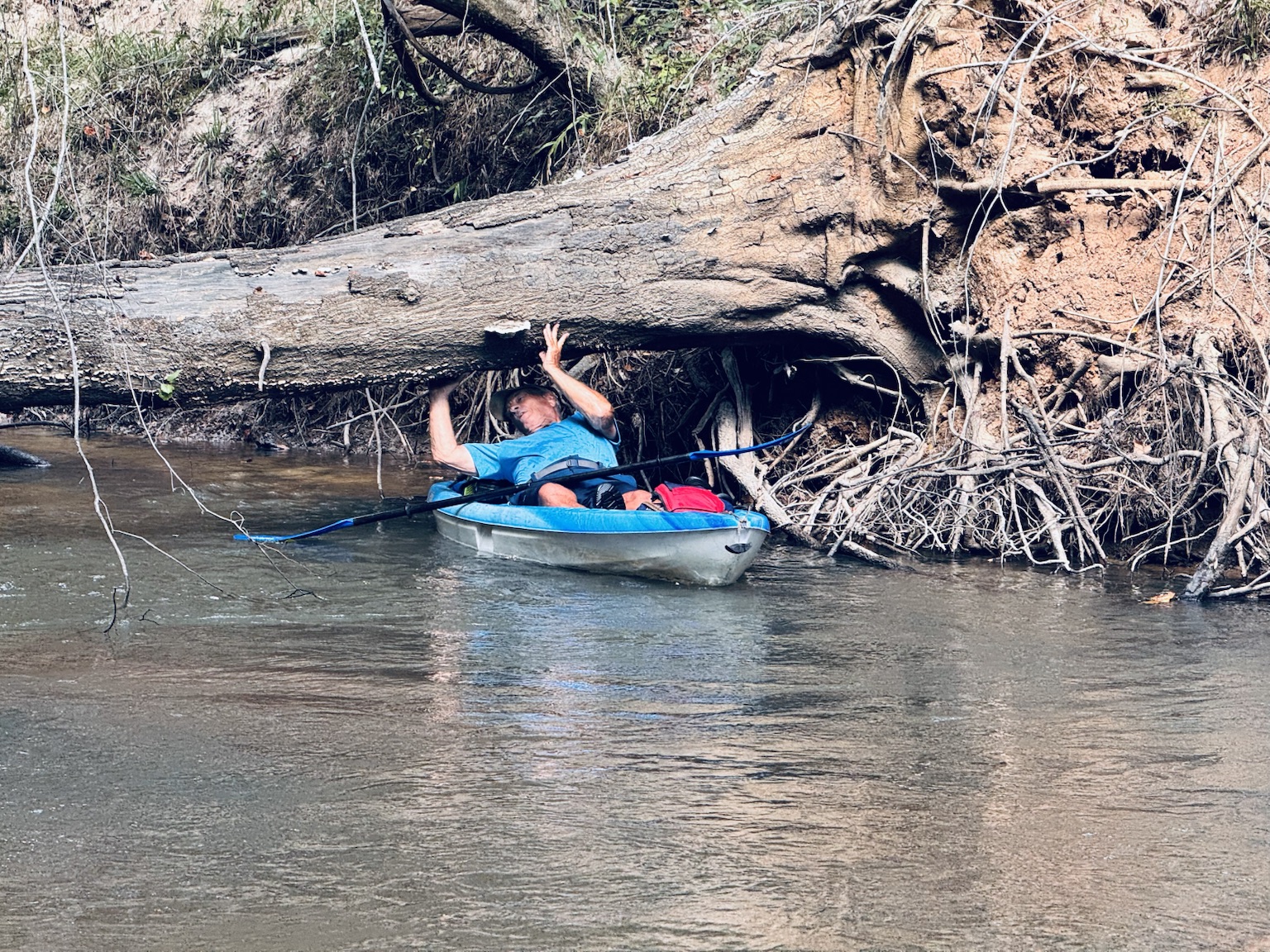
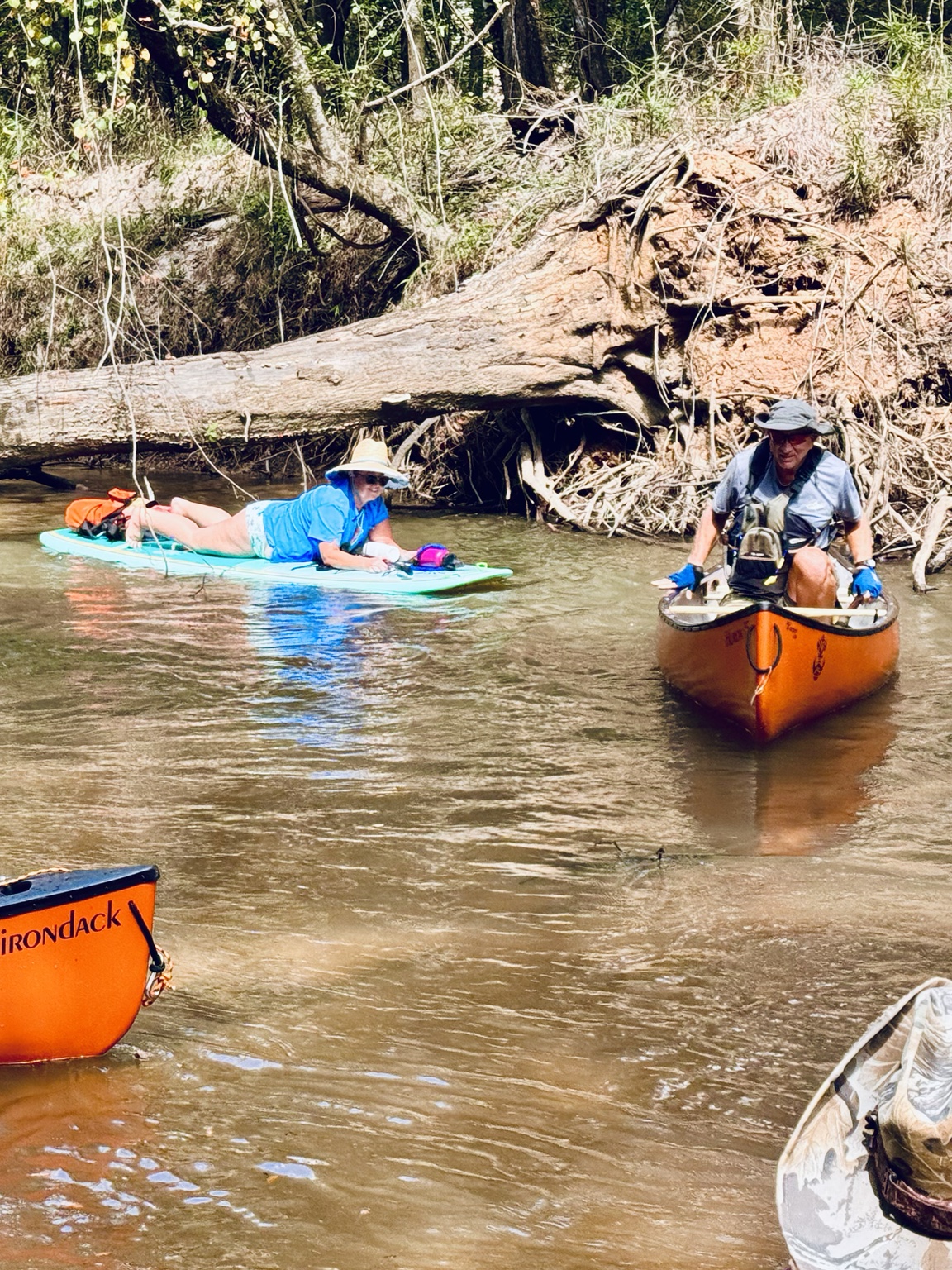
Some adventures are measured in miles. Whitewater Creek was measured by the obstacles we solved together. Every bend had to be earned.
The bridge and a difficult decision
It was already about three in the afternoon—perhaps closer to four—when we reached the bridge where we had left the vehicle. We still had roughly six miles to go, and there was no reason to believe the obstacles would become easier.
Somehow, we loaded all three boards and boats onto Brittany's vehicle and decided to end our paddle there. Everyone had flashlights, and some carried two, but navigating logjams, shoals, and drops after dark would still be extraordinarily difficult.
We were incredibly glad we had planned that bailout.
The others continued into darkness
The remaining six or seven paddlers continued downstream while Brittany, Melanie, and I headed back after our long day. Around eleven o'clock, while I was back at the RockADock campground, someone knocked on the window of my truck. It was Bill, one of the paddlers who had continued.
He described an epic adventure of trying to find their way in the dark. Several boats tipped in the shallow shoals. Flashlights were weakening. Visibility was poor, and the creek remained full of obstacles. Several paddlers stopped a couple of miles from the end and contacted a local outfitter for assistance. Others somehow continued and reached the take-out after dark.
It was an extremely tough situation, but everyone ultimately made it back safely.
One of my most memorable paddles
Despite the exhaustion, the low water, and all the climbovers and blowdowns, this became one of the most amazing paddles I have done in a long time.
We worked as a team and made it happen. Everyone helped everyone else. We learned to use caution, cooperate, move through hazards one at a time, and do everything possible to make it a good day for the entire group.
Those are the lessons that stay with you long after the scratches and sore muscles are gone.
Complete photo gallery
Every photograph used in the story also appears here and opens to its full-size version. The filenames use the date followed by a short description so they will be easier to identify and manage on the website.
Continue exploring
This paddle was part of a much larger community of adventurous paddlers who come together through RockADock and regional paddling groups.