Tim Driskell's Adventures

Lighthouses

Following the coast through New England, Atlantic Canada, California, Florida, and the Outer Banks—always wondering what life was like at the edge of land and sea.

For much of my adult life, if there was a coastline to explore, chances were I was driving and eploring it, climbing all thr lighthouses. They became a perfect excuse to take the long way around—to drive one more scenic road, catch one more ferry, or walk one more rocky shoreline.

During one of my summerlong road trips, I drove the entire Oregon coast, roughly half of the Washington coast, and about half of the California coast, stopping to visit and climb dozens of lighthouses along the way. I did much the same during a summer journey around the Gaspé Peninsula of Québec, and on many trips through the Maritime Provinces of Canada. Closer to home, Cape Cod, Nantucket, and Martha’s Vineyard gave me still more lights to seek out, photograph, and climb.

Looking back, I realize I was collecting coastlines as much as lighthouses. Each tower marked another road, another ferry, another beach, and another chance to stand where land, weather, and ocean all came together.

The 1994 road trip

An Entire Coastline of Lighthouses

On my four-month 1994 road trip, I followed the Pacific coast for an enormous distance—driving the entire coast of Oregon, about half of Washington, and about half of California.

The lighthouses became natural stopping points along the way. I visited and climbed dozens of them, often taking the scenic route simply because another tower appeared on the map. Some stood on cliffs above roaring surf, while others watched over quieter coves and working harbors.

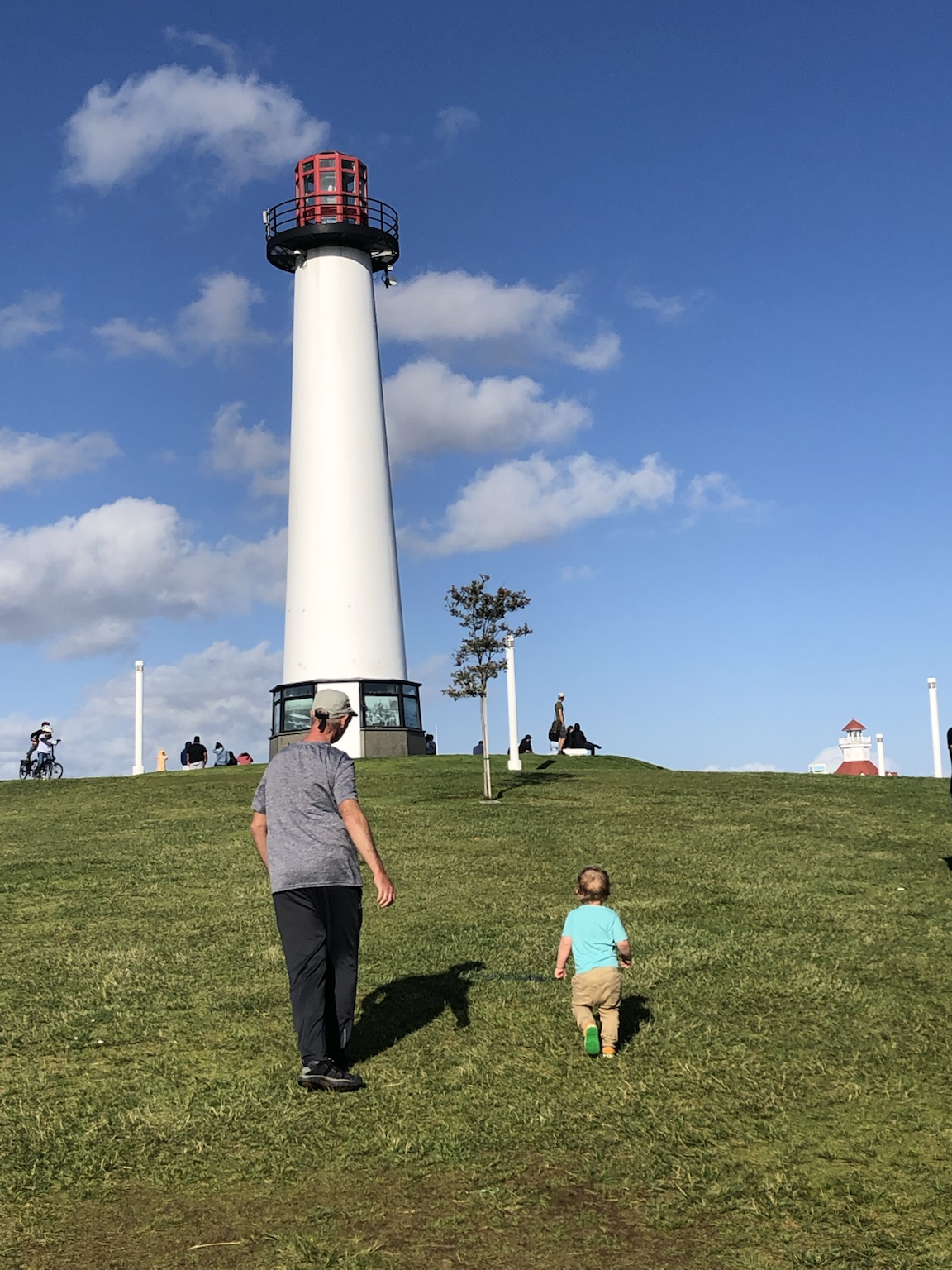
Walking uphill toward a white lighthouse
Walking toward another lighthouse with Leif in Newport Beach, California—one more stop on the journey along the Pacific coast.

Oregon and Washington

The Long Pacific Edge

Oregon offered one lighthouse after another along a coast that never seemed to stop changing. There were sea stacks, headlands, fog, wind, pounding surf, and roads that constantly pulled me toward the next viewpoint.

Washington brought the same sense of wild coastline, but with its own mood—darker forests, colder water, broad headlands, and long stretches where the lighthouse felt like the natural destination at the end of the road.

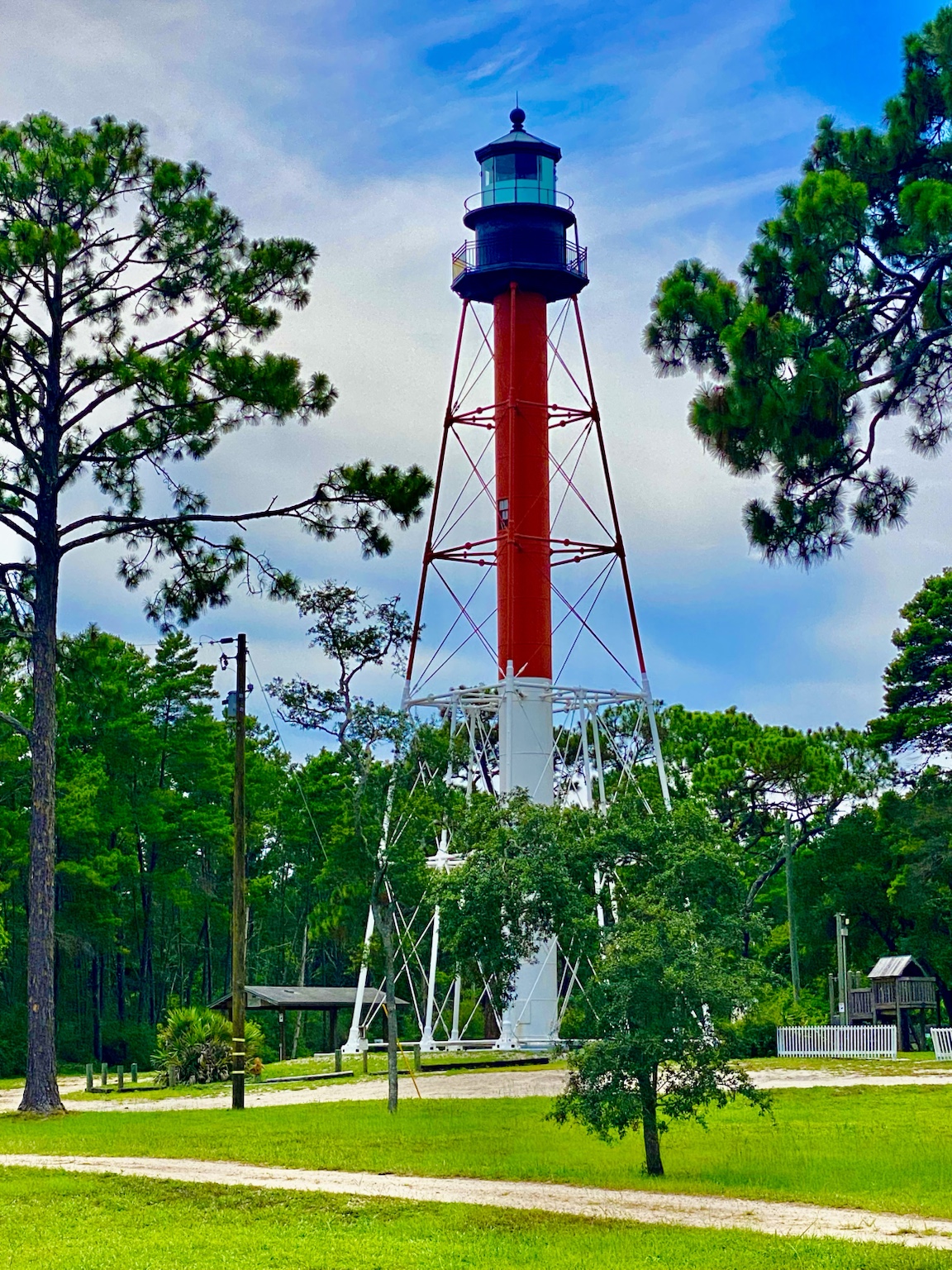
Red skeletal lighthouse rising above pine trees
A colorful skeletal lighthouse rising above the surrounding pines on the Florida Pandhandle. Of course I climb every one that allows it!

California

Climbing Towers and Sleeping Beside Them

In California, the lighthouses continued south along the coast. I visited and climbed many of them during the 1994 trip, and stayed at both of California’s remarkable lighthouse hostels.

Those overnight stays made the experience even better. Instead of simply stopping for a photograph, I could spend the evening and morning surrounded by old station buildings, sea air, cliffs, and the sound of the Pacific.

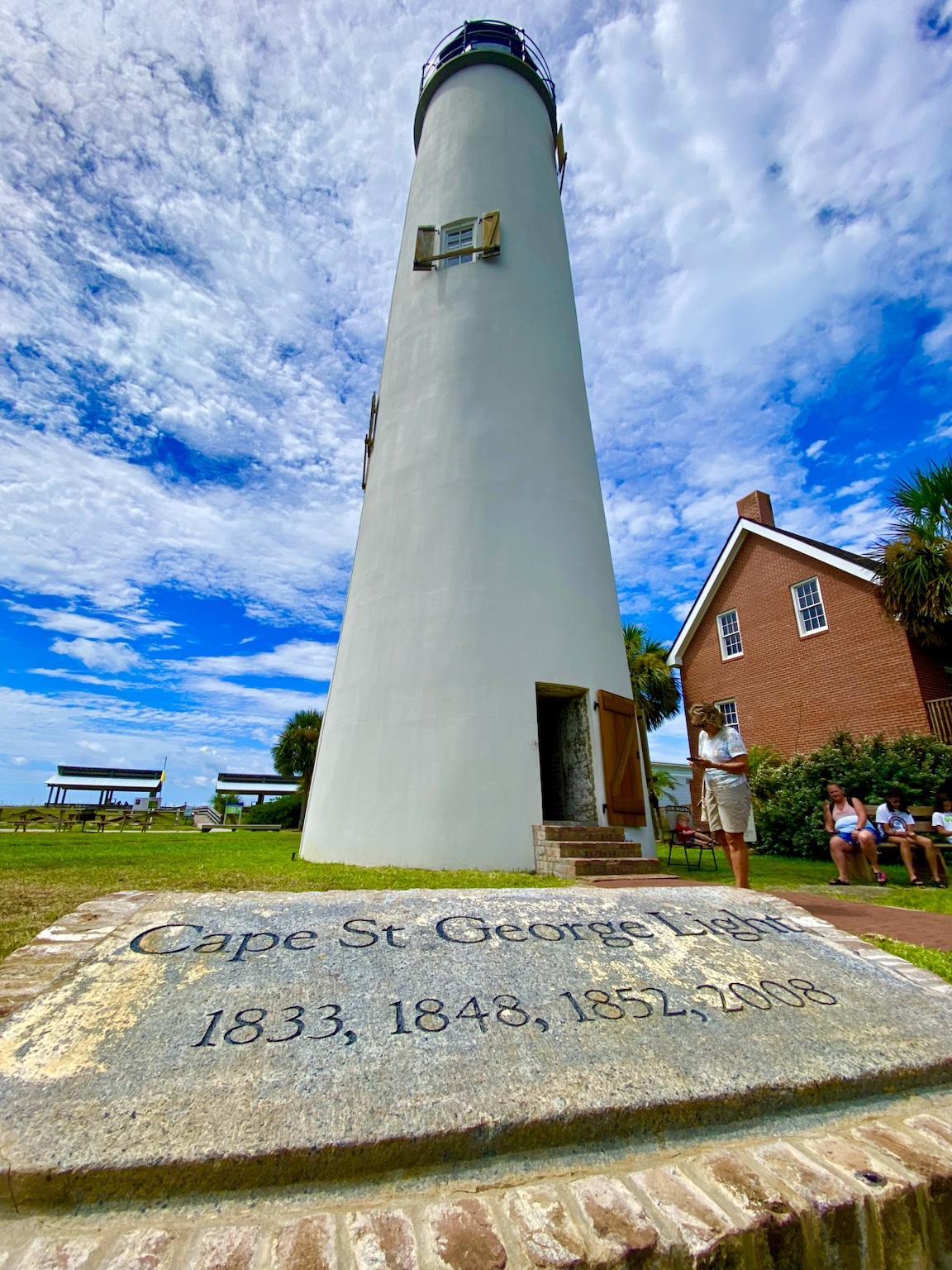
Historic lighthouse viewed from its stone base
Looking upward from the massive base of a historic lighthouse, emphasizing the scale of the tower.

Québec

A Summer Around the Gaspé Peninsula

One summer Marty and I traveled around the Gaspé Peninsula of Québec, following the shoreline where the St. Lawrence opens toward the Gulf. It was another landscape where lighthouses seemed inseparable from the communities and the coast. We spent another summer in Newfoundland and Labrador, where lighthouses were everywhere!

The routes brought fishing villages, rocky points, cold water, and long views across the river and gulf. As on the Pacific coast, each lighthouse became both a destination and a reason to keep exploring farther. 

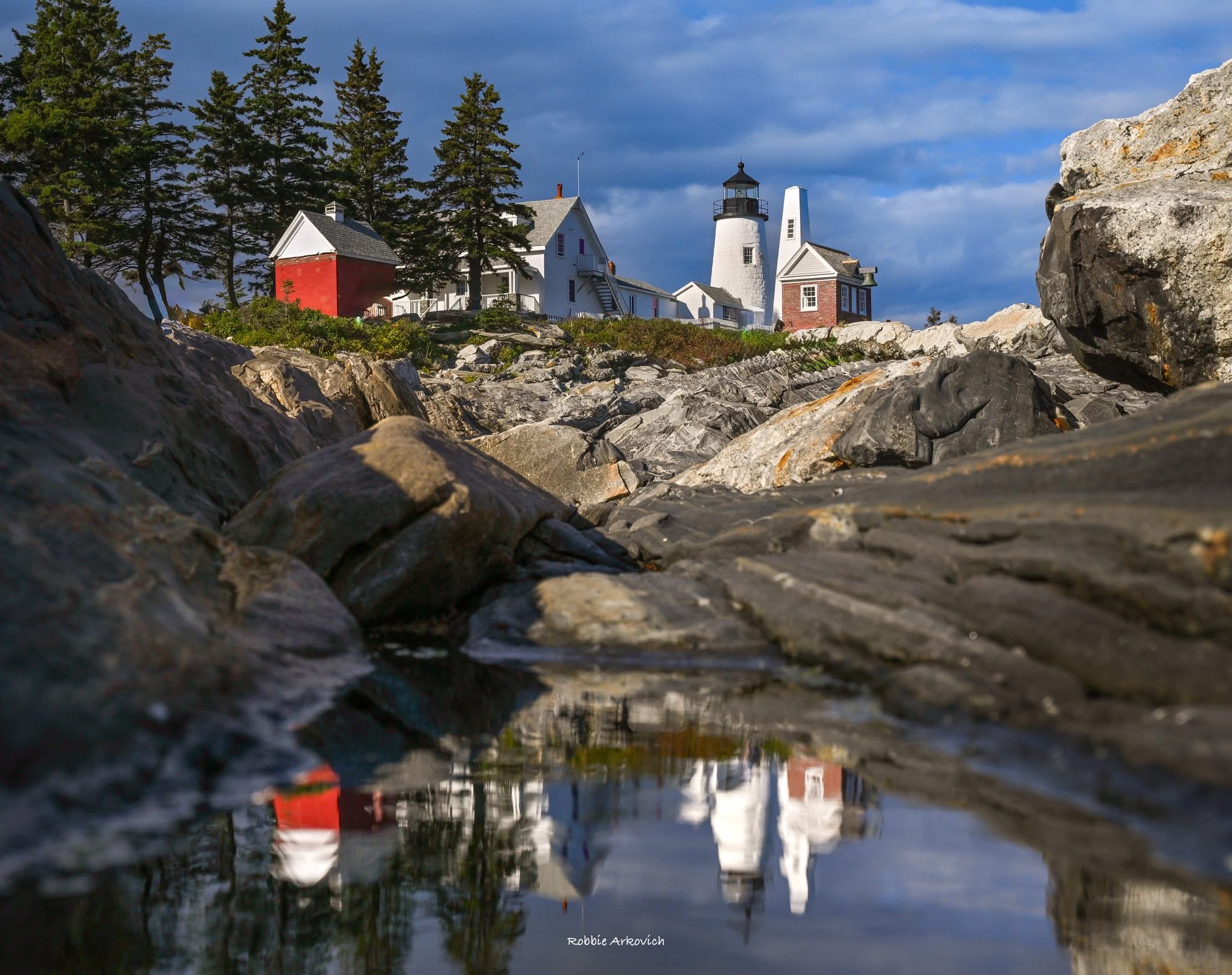
Lighthouse station on a rocky coast reflected in a tide pool
A lighthouse station framed by weathered coastal rock and reflected in a quiet tide pool.

Atlantic Canada

Many Trips Through the Maritimes

I made many trips through the Maritime Provinces of Canada, beginning when I was a young child, visiting coastal communities throughout Nova Scotia, New Brunswick, and Prince Edward Island. I lived just 6 hours from Nova Scotia, so it was a frequent summer destination.

Some lighthouses were famous and crowded, but many of my favorites stood in quieter places reached by small roads, ferry rides, or walks along the shore. The lighthouses were always part of a larger experience that included fishing villages, fog, rocky coves, and the Atlantic. Peggy's Cove is probably the one I'll never ever forget, same as for anyone who has ever been there.

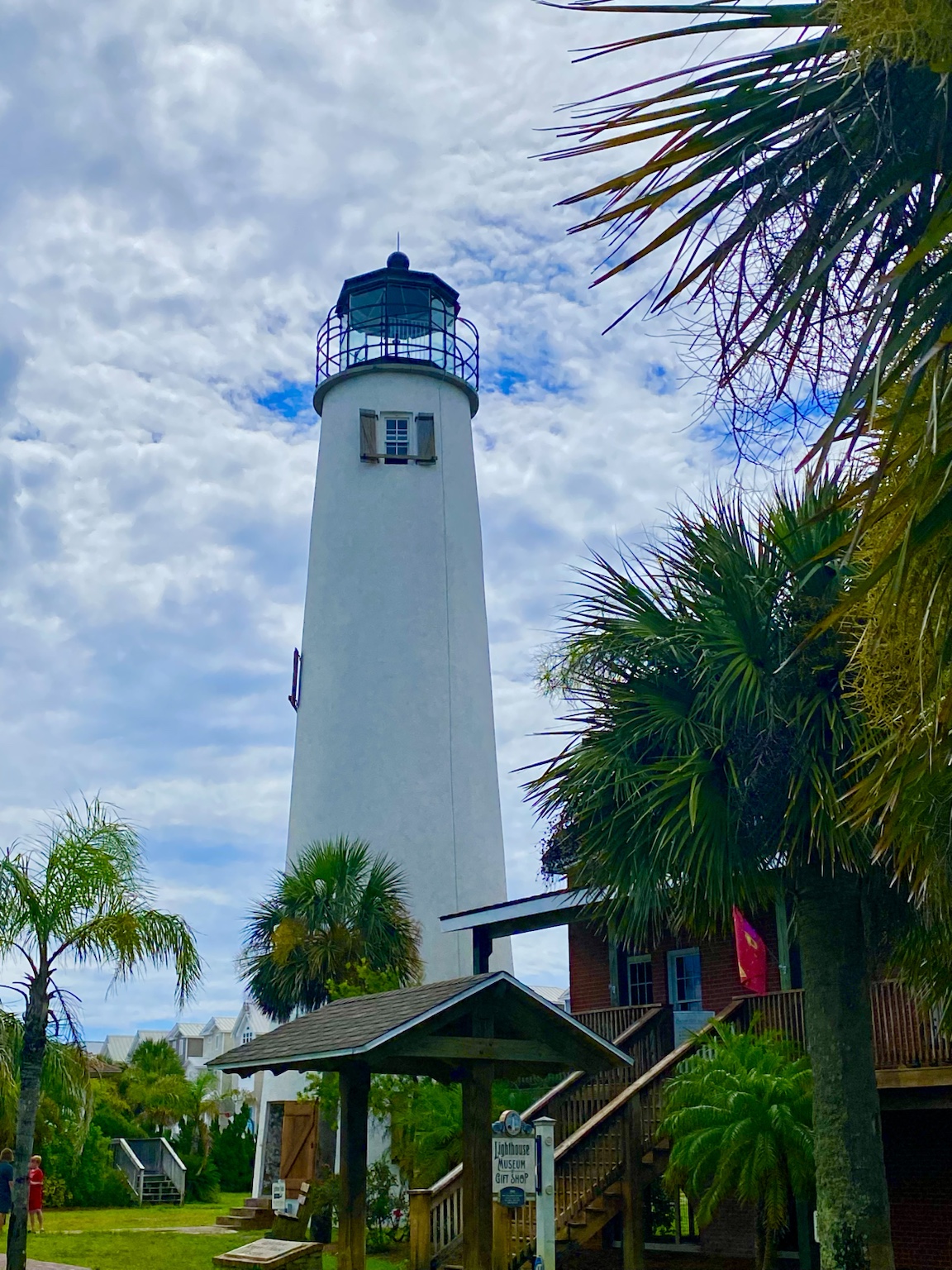
Close view of a white lighthouse framed by palms
A close view of a white tower and lantern, one of the many different lighthouse styles encountered over the years.

Massachusetts coast

Cape Cod, Nantucket, and Martha’s Vineyard

Closer to home, Cape Cod, Nantucket, and Martha’s Vineyard offered a lifetime of lighthouse trips without requiring a cross-country drive.

I returned to the Cape many times, usually at least once every summer, explored both islands, and visited lights surrounded by dunes, beaches, old harbor towns, and ferry traffic. These trips made the lighthouses feel less like isolated landmarks and more like familiar companions.

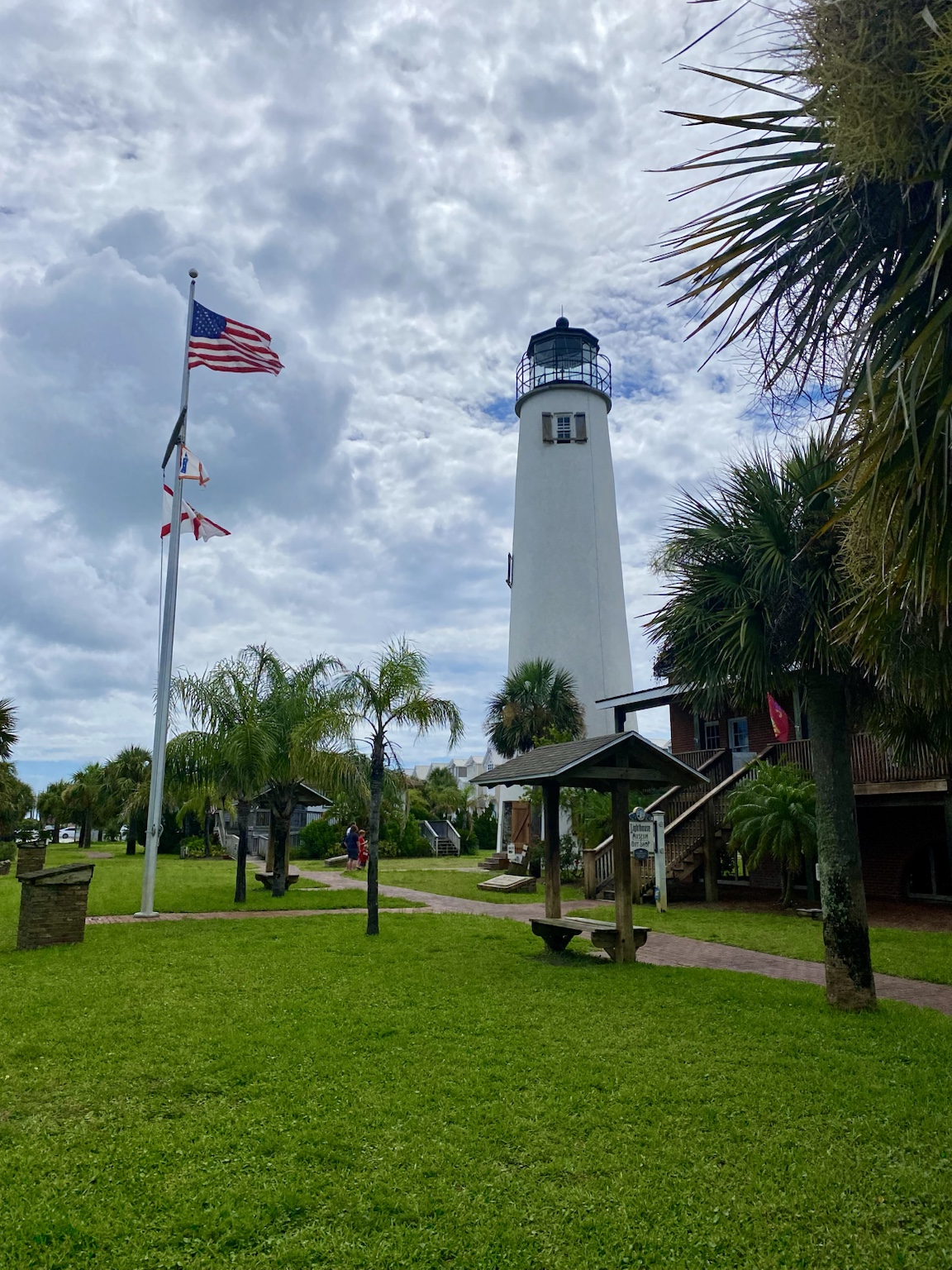
White lighthouse beside palms and an American flag
A classic white lighthouse standing beneath a dramatic sky—another reminder of how widely lighthouse architecture and settings can vary.

Pescadero, California

Pigeon Point: A Night Beneath the Great Tower

Pigeon Point had the dramatic scale I always imagined when I thought about a classic Pacific Coast light station. The tall white tower rose above a collection of former station buildings that had been adapted into hostel accommodations. Because I was staying there rather than simply visiting, I could walk around the grounds in the quieter evening hours and watch the changing light over the ocean.

The setting was extraordinary: rugged cliffs, waves breaking far below, tide pools, seabirds, and a long view up and down the California coast. The hostel cottages made the old light station feel almost like a tiny coastal village. The cliffside hot tub was another unforgettable feature. Sitting in warm water beside the Pacific while one of the West Coast’s great lighthouses stood nearby was the kind of experience that could never be duplicated in an ordinary hotel.

Pigeon Point was first lit in 1872. Staying there connected my love of hostels, coastal road trips, maritime history, and lighthouses in one remarkable place. Long after the trip, what I remember most is the feeling of being able to slow down and actually inhabit the landscape rather than merely pass through it.

Aerial view of Pigeon Point Lighthouse and its buildings above the Pacific
Pigeon Point Lighthouse and the former station buildings that now accommodate hostel guests, perched above the rugged California coast. I stayed here way back in the 1990s, and loved it.

Montara, California

Point Montara: A Smaller, More Intimate Lighthouse Stay

Point Montara was a very different experience, but no less memorable. The lighthouse is much smaller than Pigeon Point, and the station feels more intimate. The buildings sit on a bluff overlooking the Pacific near Half Moon Bay, with lawns, coastal plants, and paths leading toward the water.

There was something especially peaceful about waking up there and stepping outside with the ocean immediately in front of me. Instead of driving to a viewpoint or trying to fit a lighthouse visit into the middle of a travel day, I was already there. The hostel gave me time to notice the smaller details—the light changing on the water, the wind in the trees, the old station buildings, and the waves below the bluff.

The tower has an unusual history. It is widely known as a relocated iron lighthouse associated with the East Coast before being installed at Point Montara. Whether I was thinking about that remarkable journey or simply enjoying the grounds, staying beside a working historic light station made the night feel far more special than an ordinary stop along Highway 1.

Point Montara Lighthouse and hostel buildings above the Pacific Ocean
Point Montara Lighthouse and its bluff-top station buildings, now home to one of California’s most distinctive hostels.

Provincetown, Massachusetts

Race Point: The Lighthouse Night I Kept Saving for Later

Race Point Lighthouse remains one of the clearest regrets from all my years of lighthouse travel. I visited the outer end of Cape Cod many times and checked out Race Point more than once. I knew that overnight stays were available in the restored keeper’s buildings, becaused I toured it many times, and every time I thought the same thing: someday I would come back and spend the night. I even joined the "Friends of..." group for several years.

It seemed so close and so achievable that there was never any urgency. Cape Cod was familiar. Provincetown was a place I always visited again and again. I assumed there would always be another summer, another weekend, and another chance to make the reservation. That is often how we postpone the experiences nearest to us—not because they matter less, but because we mistakenly believe they will always remain available.

I can still imagine what that night would have been like: traveling across the dunes, arriving at the isolated station, watching the day visitors disappear, and waking before sunrise with sand and ocean surrounding the keeper’s house. Race Point is located within the Cape Cod National Seashore, and its restored accommodations make it possible to experience the place as more than a daytime landmark.

The regret is sharper because I did stay at both California lighthouse hostels. I know how different a lighthouse feels after dark, when the parking lot empties and the coast becomes quiet. I am deeply grateful that I took those opportunities in California. But Race Point reminds me not to assume that 'someday' is a plan. Had I treated it with the same urgency, it might now be one of my favorite overnight memories. Maybe I'll get back there yet!
Race Point Lighthouse and keeper buildings among the Cape Cod dunes
Race Point Lighthouse near Provincetown—the overnight stay I repeatedly considered, but kept postponing for another trip.

Web Photograph Sources

Most photos are mine, except:

A lighthouse was never just a building at the end of the road. It was usually an invitation to keep driving, walking, or wandering a little farther.

Surprise Me